Subscribe



Heart Health Across The Lifespan: A New Framework For Risk Factors And Women’s Heart Health
November 4, 2026

The news about cardiovascular disease and women is alarming. Estimates are that by the year 2050, 60% of US women will have cardiovascular disease, up from 50% in 2020. Driven by high blood pressure, obesity, and diabetes, a surge in heart disease cases among women is anticipated, and younger women are also increasingly at risk. In fact, heart disease is the largest cause of death among women, as 1 out of every 3 women dies from cardiovascular disease. It may be you, it may be an aging parent, or perhaps your daughter or even granddaughter. Moreover, research repeatedly suggests that the signs of heart disease in women can begin well before a woman reaches her post-menopausal years (The largest percentage of cardiovascular deaths occur among older women, though most could be prevented if treated early). Given what we know about women and heart disease, experts have begun to rethink how heart disease is diagnosed and treated among women of all ages. New efforts by several professional organizations are looking into early prevention efforts, better diagnosis, earlier treatment, and hopefully reduced deaths as a result.
In a landmark series of 3 reports published in the journal Circulation, four professional organizations— the American Heart Association, American Academy of Pediatrics, Society for Maternal-Fetal Medicine, and the American College of Obstetricians and Gynecologists — have joined forces to issue a new framework for considering heart health in girls and women. The goal is to integrate and examine heart health within the different life stages of girls’ and women’s health, including puberty, pregnancy, perimenopause, menopause, and post-menopause. Each of these life stages involves hormonal changes along with mental health and well-being challenges, all of which may impact heart health or may offer opportunities to protect the heart health of women. With better early detection, identification of risk factors, and early treatment, the hope is that we can reduce the long-term deadly effects of cardiovascular disease in women. We know that hormonal changes can affect cells in blood vessels, heart muscle, the brain, cholesterol levels, and blood pressure, and are connected to inflammation and stress responses — all of which can negatively impact heart health. So the changes detected by your OB/GYN, for example, or your PCP, may have serious consequences and should include and involve a cardiologist. The goal is to gather and integrate expertise — and reduce treatment fragmentation — to improve heart health for women. In essence, all of these health changes are connected and should be treated that way.
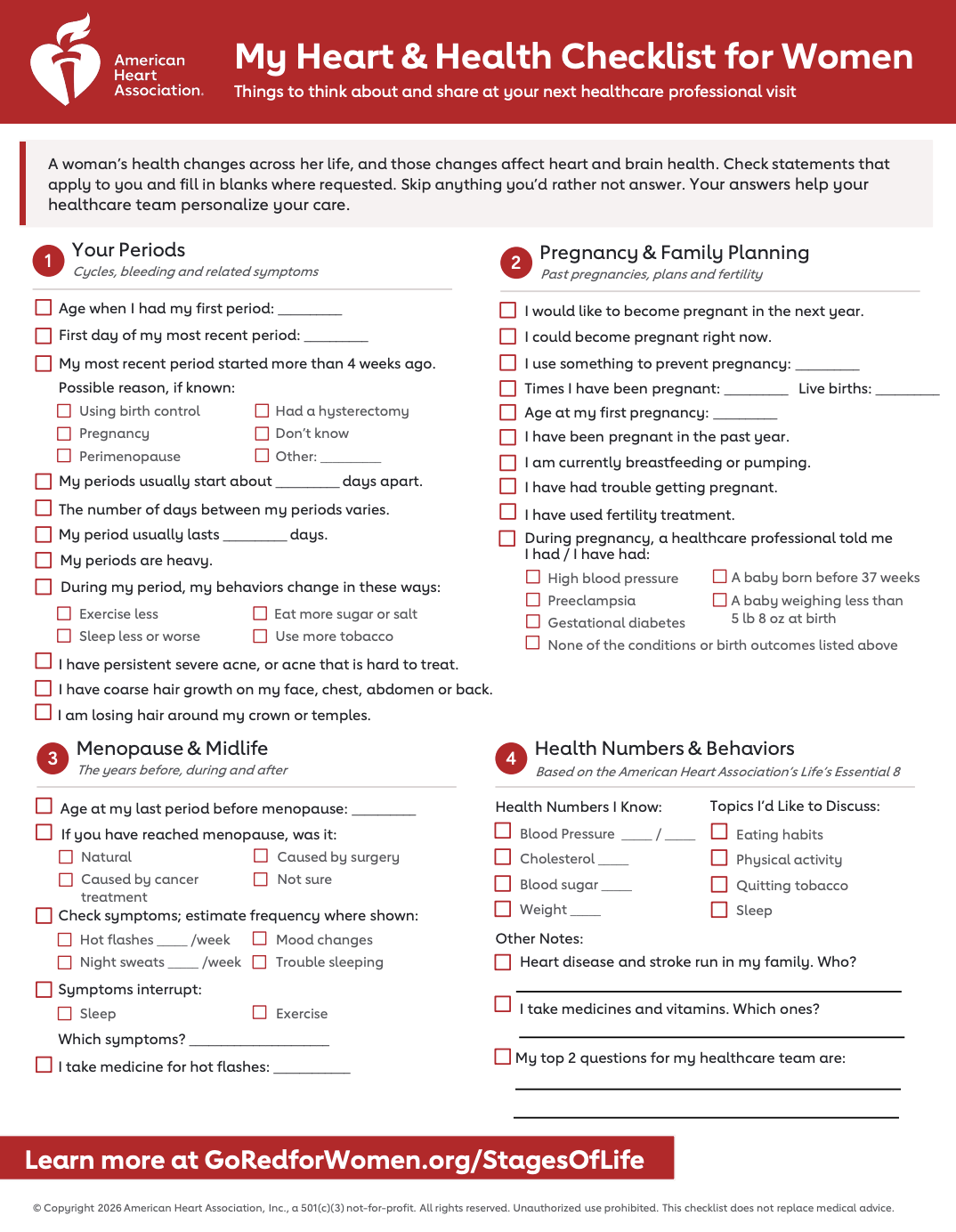
This is a long-term project that will require new ways of thinking among those who care for women of all ages, and it will require female patients to advocate in their health care encounters for the inclusion of heart health as one focus of proactive, preventive care. Take a look here at the types of information and questions you, your daughter, or granddaughter should include in future conversations with all of your health care providers:
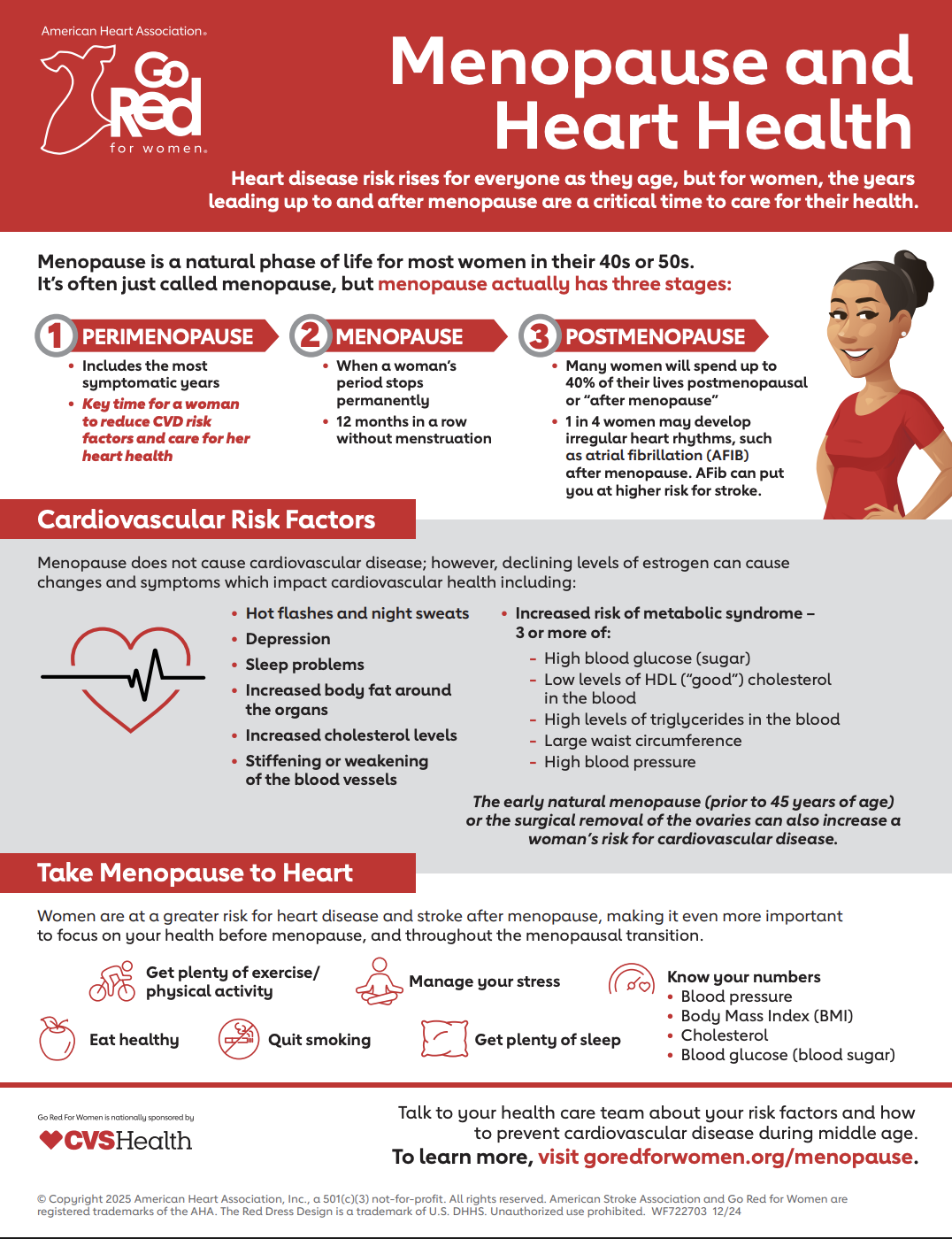
And for more information on heart health for women, particularly as they enter menopause and beyond, look here:
And in other news that aligns with the prevention and treatment of heart disease in both women and men, a new scientific statement was released by the American College of Cardiology, recommending that exercise become a routine part of cardiovascular care, essentially prescribed alongside medications and other heart health treatments to prevent and manage heart disease. The statement makes clear that “low cardiorespiratory fitness, or the body’s ability to deliver oxygen to muscles during sustained physical activity, is a predictor of future CVD risk comparable to established risk factors such as smoking, high blood pressure, high cholesterol, and diabetes.” Currently, it’s unclear how much exercise is consistently recommended as part of routine heart care, but this expert statement makes clear that even modest improvements in physical activity have a central role to play in cardiovascular care, akin to prescribed medications or blood pressure management.
The American College of Cardiology also issued a new scientific statement addressing the role of nutrition in prevention and management of cardiovascular disease. With a focus on a healthy dietary pattern, the statement makes clear that “suboptimal diet is a key risk factor for cardiovascular disease and diet and lifestyle modifications are widely considered essential for both primary and secondary prevention.” For more on what you can do to transform your diet and lifestyle more broadly to lower your risk for cardiovascular disease, start prepping your salad and click here.