Subscribe



Lower Your Risk: More Reasons & Resources To Help Lower Your Risk Of A Fall
October 21, 2026
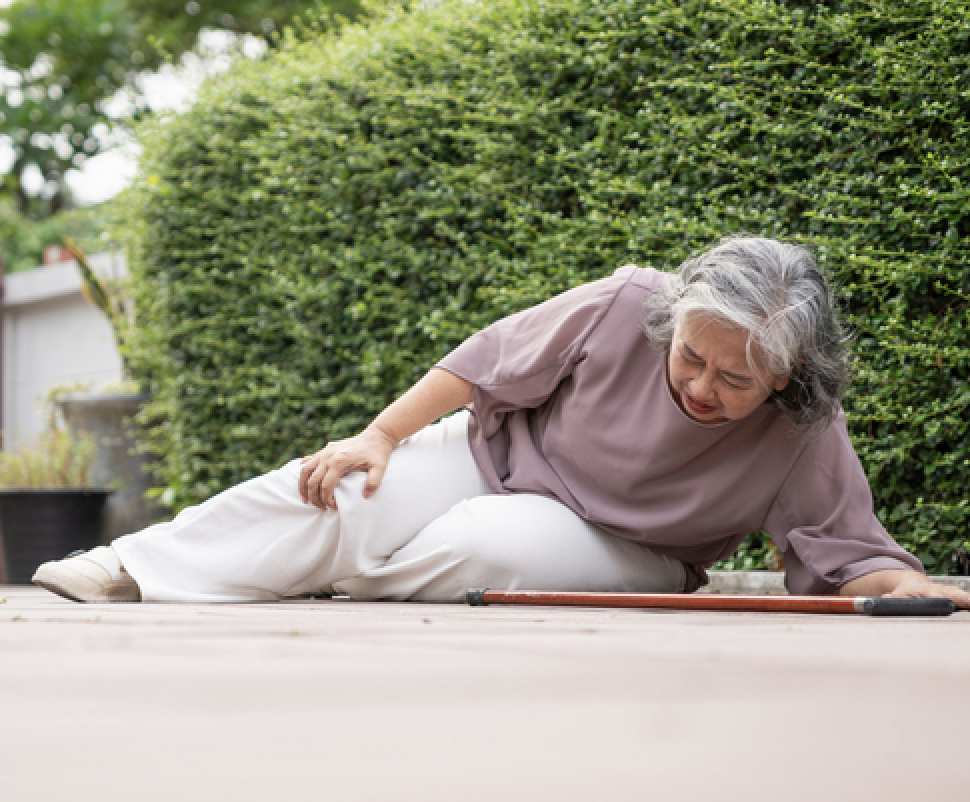
By now, you know that falls are a serious health concern for older adults. The older you get, the more risk you carry of having a fall, and once you’ve fallen, you may incur serious, life-altering injuries, and your chances of falling again increase. Falls are the most common reason for functional decline and disability in adults over age 65. Injuries such as hip fractures or traumatic brain injury are not uncommon when older adults fall, as are emergency room visits and even death as a result of a fall. In fact, a recent study published in BMC Geriatrics reports that 61% of adults aged 85+ hospitalized because of a fall (often due to fall-risk-increasing drugs) report acute complications, including fractures, lacerations, and traumatic brain injuries. Reports like this make it even more important to understand what puts you at risk for a fall, how to lower your risk, and how to take action to prevent one. For a range of previous agebuzz posts about fall risks and fall prevention, grab that handrail and read here.
In the last several weeks, new research has been published that further illuminates what may put you at risk for a fall. First, at the American Heart Association Hypertension Scientific Sessions 2026, researchers presented a new study linking masked high blood pressure (blood pressure that is higher at home than it is in a physician’s office) to an increased risk of falling. Lower blood pressure readings at the doctor’s office than those measured at home were associated with a higher rate of falls. This underscores that monitoring your blood pressure at home may help identify whether you are at increased risk of falling. So don’t assume normal blood pressure at your physician’s office is the end of the story concerning your risks, including your increased risk of a fall.
An additional new study published in BMC Public Health examined the connection between having a chronic condition and an increased risk of falling. According to this research, involving about 450 participants aged 45-90, the presence of even a single chronic condition significantly raised the odds of falling among the participants. It is true that chronic conditions tend to increase as one gets older (as does the risk of falling). It is hypothesized that a chronic condition (whether it’s cardiac, musculoskeletal, neurological, or respiratory) may compromise your body’s postural control, that is, your ability to manage your body in terms of stability and orientation. So a diagnosis of a chronic condition or the ongoing management of such a condition may also be the right time for a fall assessment from your physician.
How can you lower your fall risk or include fall prevention efforts in your regular activities? The act of falling is said to involve 3 factors: the person, what he or she is doing, and the environment in which they are doing it. We’ve previously discussed how your environment, especially factors such as trip hazards, poor lighting, or lack of handrails, can put you at risk of a fall. Regarding activities, you can easily surmise that tasks such as climbing a ladder, rushing down stairs, or reaching overhead, especially on a stool, can lead to a fall. But what can you do, for yourself, to lower your risk of a fall? One factor to consider is whether you have a fear of falling (which is estimated to affect up to 60% of older adults), and how that is affecting your future risk of another fall. The fear of a fall may be dampening your social engagement or limiting your physical activity, leading to muscle loss and balance problems as a result of inactivity. Signs of such fear? You or a loved one may hold onto furniture when walking, look down when you take steps, or even shuffle your feet due to caution. So if this sounds familiar, you need to take action to overcome that fear, which is putting you at more risk. For some suggestions about how to move on from the fear of a fall, put your head up and click here.
Of course, strength training and balance exercises will be some of the best ways to lower your risk and put you in good standing when it comes to your risk of falling. We’ve previously recommended many ways to improve your balance, and new options and resources continue to provide terrific guidance in this area. Recent research published in the Journal of the American Geriatrics Society supports the use of apps to help you enhance your strength and balance. A recent post from the National Council on Aging underscored the value of a specific app- the Health In Motion app– as an accessible way for older adults to engage in balance training without needing to go to in-person events. For some additional balance apps for you to try, consider the following well-rated recommendations: Feldy, Wobble Strength & Balance App, and Nymbl Training. Whatever you can do to lower your fear and build up your strength and balance, you’ll be better positioned to prevent an injurious fall.