Subscribe


Stride Right: Tips For Taking A Walk This Spring
April 15, 2026
The weather has finally turned to Spring (and in many areas it may already feel like Summer). And maybe you’ve decided that it’s time to get back out for a daily walk: to get some exercise, connect with nature, maybe clear your mind and boost your mood. All of these are great reasons to get out there and get back on the trail, sidewalk, or wherever you like to stroll. The health benefits of a regular (hopefully daily) walk are numerous: walking can lower your blood pressure and your risk of cardiovascular disease, diabetes, and cancer; lower your risk of dementia; improve your sleep and mood, reduce your stress levels, help manage your weight, and even strengthen your bones. And a walk after a meal not only helps regulate your blood sugar but also substantially improves digestion, allowing for quicker gastric emptying and reducing uncomfortable feelings of being full, or experiencing reflux or abdominal pain. For more on the health benefits of walking, you may want to avail yourself of an upcoming webinar from the McMaster Optimal Aging Program, “Walking Your Way To Better Health,” online on April 29th.
But one question then arises: Is a daily walk an ideal amount of exercise? Can you assume that by walking every day, you’ve met your weekly exercise needs? There’s no doubt that walking is a very popular form of exercise: In fact, a recent study published in PLOS One found that walking is America’s most popular leisure activity. More than 44% of Americans consider walking to be their primary workout. Yet Federal guidelines recommend that adults engage in 150 minutes/week of moderate-to-vigorous aerobic activity, plus at least 2 sessions/week of muscle-strengthening exercise. Based on those recommendations, walking alone is unlikely to get you to that goal; in fact, according to this study, only about 25% of adults surveyed (including those who regularly walk) hit this mark. While walking may get you toward your aerobic requirements, it falls far from the mark in terms of strength training.
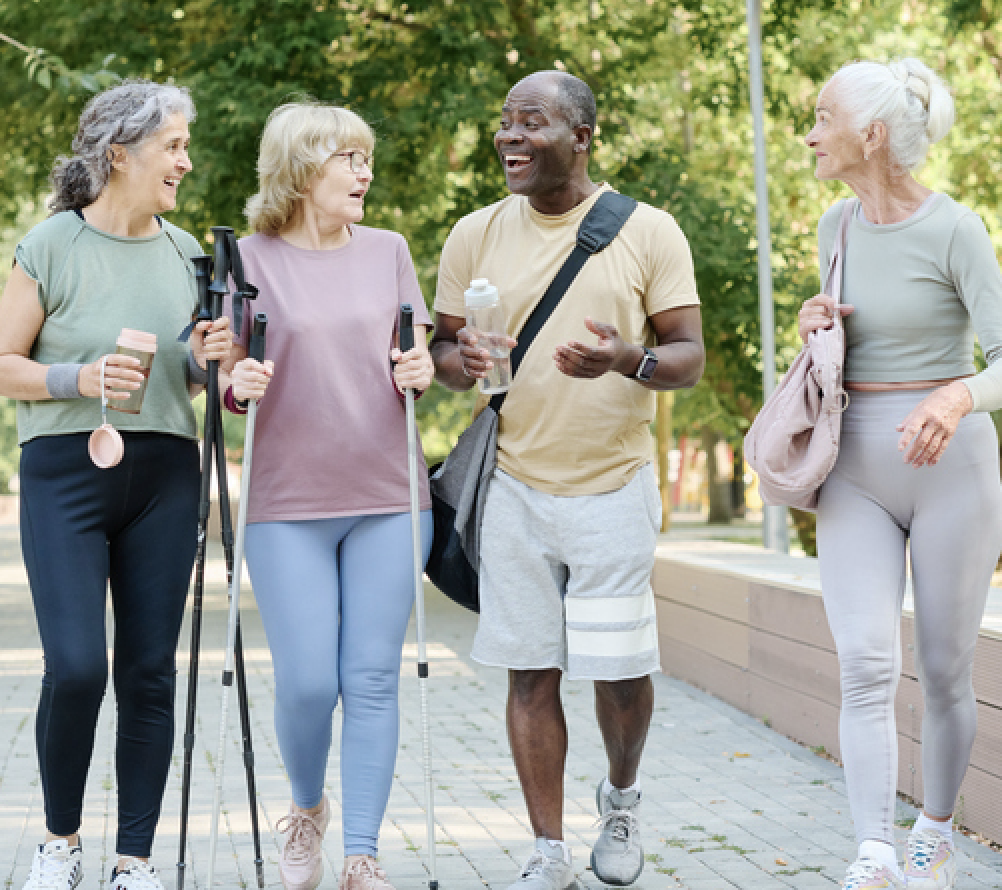
Is there a way to enhance the strength-building value of a walk? There are certainly tweaks you can use to modify your walking to build muscles while you move. There is some research to suggest that in older, sedentary adults, walking can help build muscle (though no one would confuse a walk with an ideal strategy for strength training). Nonetheless, if you want to try to get more out of your stroll, consider the following: try walking on an incline; use props to enhance your effort, such as walking poles or a weighted vest; interject a body weight movement into your walk, such as the occasional lunge or squat; walk on different terrains to challenge yourself (such as a beach or wooded path); and consider interspersing some high intensity intervals into your walk. A recent post on The Liv Report recommends a basic interval walking format of 3 minutes of fast walking, 3 minutes of normal walking, and then repeat that pattern 5 times, to get to 30 minutes of walking. They suggest that with just this tweak, you can improve your leg strength by 17%.
But what if your legs don’t feel ready for all of this walking? Are there some exercises you can practice to get your legs stronger? Especially if you see yourself hiking trails or walking fields, what can you do to get yourself ready? A recent post in Fit & Well recommends some basic exercises, such as glute bridges, wall sits, and step-ups, as a way to strengthen your leg muscles, especially for those of you whose knees are not always cooperative. And British physical therapist Will Harlow, in a recent Instagram post, suggests that older adults may struggle with their walking due to reduced hip extensions, from years of sitting and underused glute muscles. He states that older adults who maintain strong hip extensions walk faster, more efficiently, and with better endurance than peers the same age who don’t maintain their hip extensions. For better hip flexors, he also recommends glute bridging exercises, along with standing heel raises and kneeling hip flexor stretches. You can find out more of his advice (he exclusively works with adults over 50) by watching his YouTube channel here.