Subscribe


Earshot: New Insights About Hearing Loss During Better Hearing Month
May 20, 2026
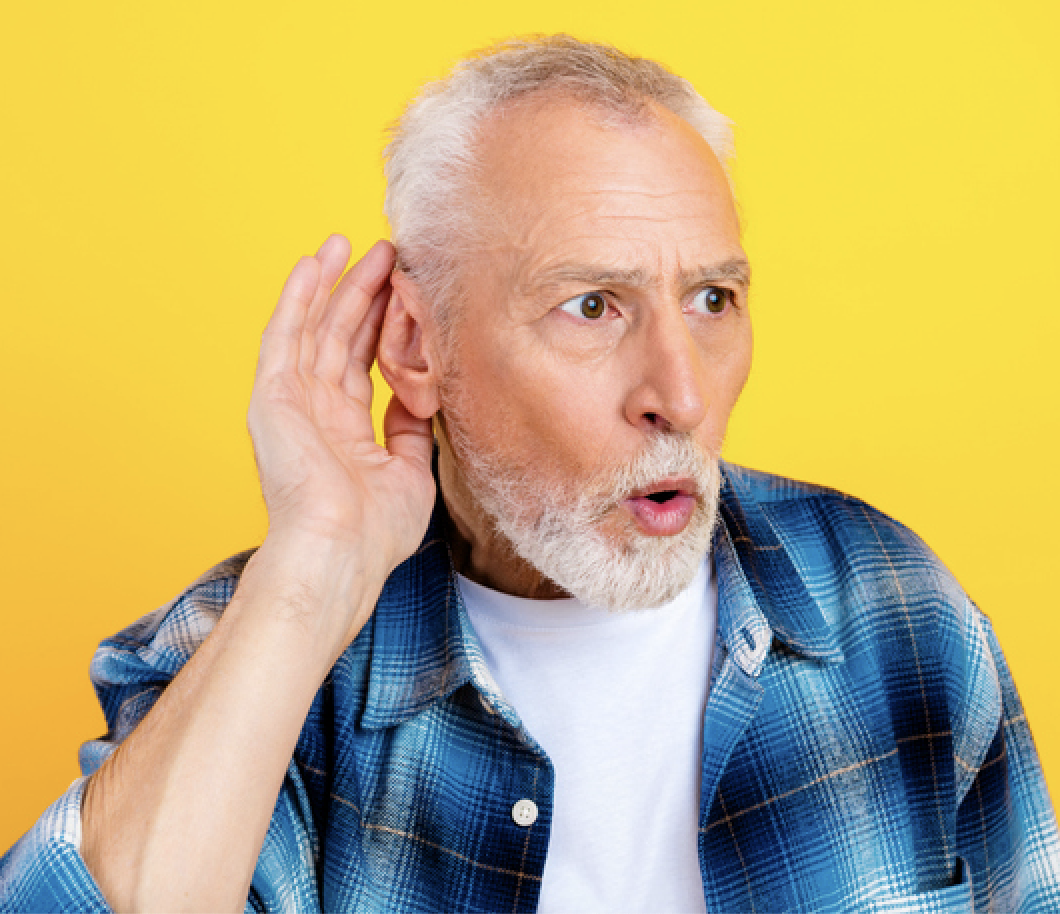
Did you hear? May is Better Hearing Month, a good time to review what we know about hearing loss and how research is opening new opportunities to address a condition affecting millions of older adults in the US and worldwide. Age-related hearing loss (presbycusis) affects more than 65% of people aged 60 and above worldwide, with estimates that by 2050, more than 700 million people around the world will live with disabling hearing loss. As you may know, untreated hearing loss raises your risk for dementia, cognitive decline, and falls, among other conditions. For a good general review of the causes and implications of hearing loss, cup your ear and click here.
While getting older doesn’t automatically mean you’re heading toward hearing loss, there are some typical signs that you may have a hearing loss problem and need to get your hearing tested. Everything from asking others to repeat themselves to turning up the television volume is certainly a classic sign. If you’re thinking that people are now mumbling and not speaking clearly, the problem may be with you- and your hearing, not them. Do you find yourself mistaking what’s been said to you, or even withdrawing from social situations because you can’t follow the conversation? All of these suggest it’s time to get your hearing checked and perhaps acquire a set of hearing aids.
One thing that is clear about hearing loss is that its impact extends far beyond just hearing, potentially harming other aspects of your health. For example, a recent study conducted by Apple and the University of Michigan, using data acquired (with permission) from over 50,000 iPhone users, found a correlation between hearing loss and walking speed. Those with hearing loss appear to walk more slowly, a worrisome sign in older adults. Why is that? It could be that loss of hearing leads to more cautious walking, or social isolation caused by hearing loss might lead to weaker leg strength and thus slower walking. Or perhaps if you can’t hear your footsteps, you may not realize you are walking more slowly. No matter the cause, the correlation between gait speed and hearing loss may portend further health problems in older adults.
We know that hearing loss can also tax the brain and cause the brain to work harder to pick up more subtle sounds. Recent research using brain scans in people with age-related hearing loss reports that certain regions of the brain appear to shrink and lose volume as a result of hearing loss, potentially affecting memory and cognitive abilities. It’s not clear, however, exactly how hearing loss may impair cognition. While we know that hearing loss raises your risk for dementia, the exact mechanisms by which this happens have yet to be demonstrated. Experts make clear that “we do not yet have clear evidence that hearing loss directly causes dementia.” But hearing loss is implicated as a risk factor for dementia, either because your brain is working harder, and therefore may have fewer resources available for memory and cognition, or the social isolation that often results from hearing loss may mean less brain stimulation. And while hearing aids may not forestall or prevent dementia, they do improve the quality of life and social lives of those with disabling hearing loss.
We know that hearing aids can make a meaningful difference in the life of someone with hearing loss, but many still refuse to wear the aids or do so only sporadically. Why is that? There continues to be stigma, along with discomfort and even annoying feedback from the aids. The technology also still lags in certain aspects. One area where hearing aid wearers often have challenges has to do with “the cocktail party” problem: that is, in a noisy setting where multiple voices are competing, hearing aids are not able to single out a specific voice for you to listen to. In normal human hearing, the brain has the natural ability to filter and isolate a specific voice that a person wants to hear. A new research study from Columbia University, published in Nature Neuroscience, has now demonstrated that scientists may be on the cusp of developing a brain-controlled hearing aid that would permit the device to operate more like natural hearing in a noisy environment and pick up specific sounds, rather than just generally amplify overlapping conversations. While the technology has not yet been perfected and tested, it appears that in the not-too-distant future, hearing aids will be better able to mimic, if not restore, the selective and nuanced hearing abilities of the natural human ear. So listen out for updates on this exciting new technology and read more about it here.