Subscribe



Time Earned: Exercise, Longevity & Healthy Aging
November 18, 2026
They say “Time Is Money,” meaning time is a valuable commodity. Well, time is also health, another valuable commodity. That is, the time you put in today to exercise and stay physically active will likely buy you better health for tomorrow. Exercise is one of the critical factors in maintaining your life and extending your longevity as you get older, so today’s time spent exercising likely yields healthier aging going forward. In fact, a recent article in the Washington Post makes this point concretely: They provide a calculator that shows you how the time you put into physical activity today will likely yield extra life for you in the future. There’s no time like the present to find out how to be healthier and live longer for tomorrow!
It appears that the research and medical communities are coming around to the concrete realization and recommendation that exercise is a non-negotiable, essential element for maintaining health and functionality as you age. A new series of articles in The Lancet makes this point clearly. Calling physical activity and sedentary behavior key modifiable factors of physical, cognitive, and psychosocial functions that shape how you age, the articles note that physical inactivity has dramatically surged among older adults and that it’s time to recommend and integrate exercise back into all aspects of aging, no matter where an older adult finds herself — at home in the community, in a hospital, or in a long-term care community:
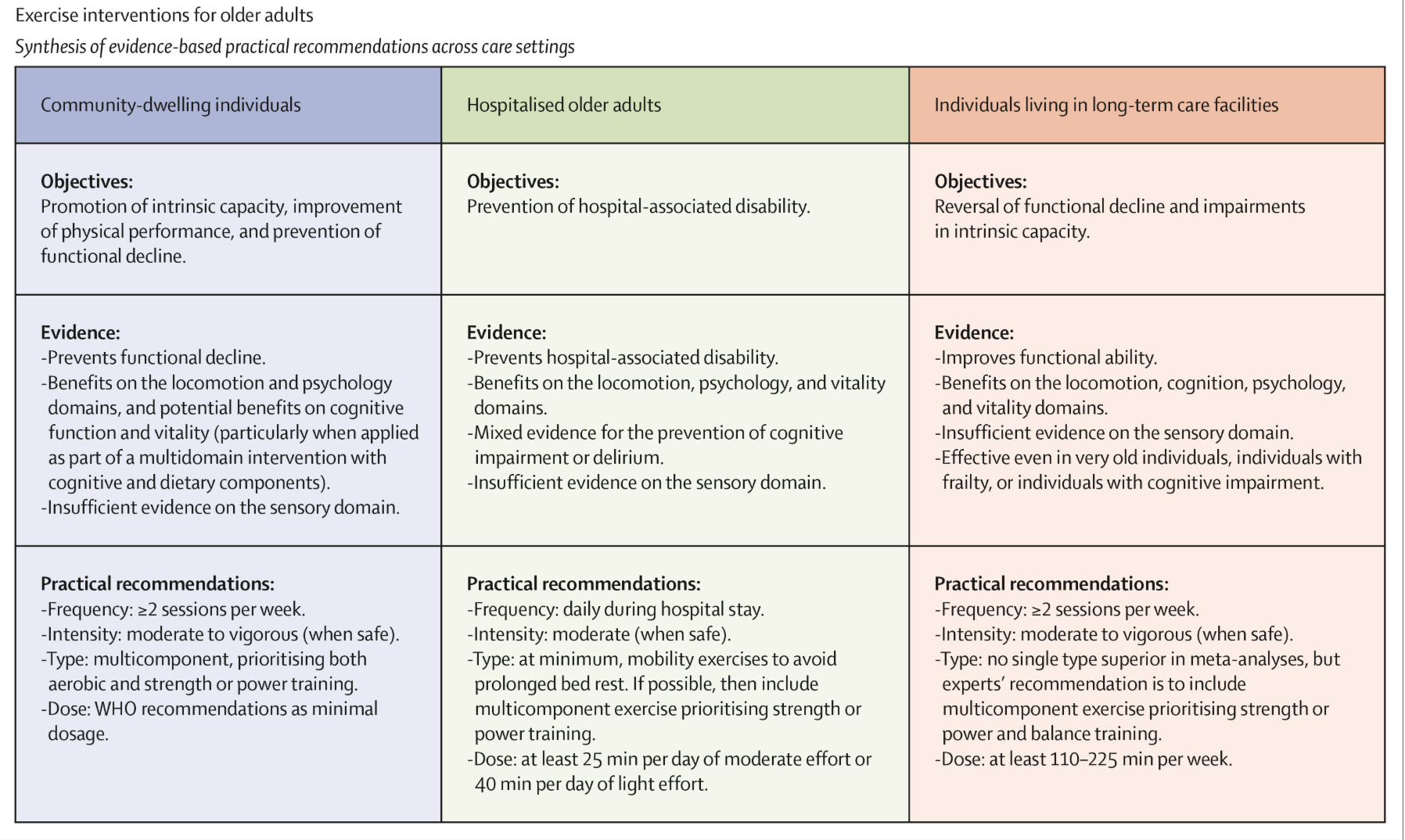
The point being that exercise can help preserve or restore functionality at every stage and place of life.
While exercising as an older adult may require some modifications of standard routines, and while it may be more challenging to build muscle as an older adult, by no means should these factors dissuade you from putting in the effort. In fact, as one recent post on exercise and aging made clear, “Being overly cautious may prevent healthier aging.” And while the more time you put in likely yields better results, the reality is that, especially for those currently physically inactive or largely sedentary, any additional movement will get you better results than never doing anything. A new article in Scientific American drives this point home. Given that less than 50% of us meet the standard exercise recommendations of 150 minutes per week of moderate physical activity, plus 2 sessions of strength training per week, it’s essential that we all understand that even less than that is still valuable. If you can’t get up to 150 minutes per week, that’s not a reason not to do whatever you can. Minimal physical exertion can still be valuable. In fact, the Scientific American article quotes the statistic that if middle-aged and older Americans would just add an additional 10 minutes per day of moderate to vigorous physical activity, over 100,000 deaths could be prevented each year.
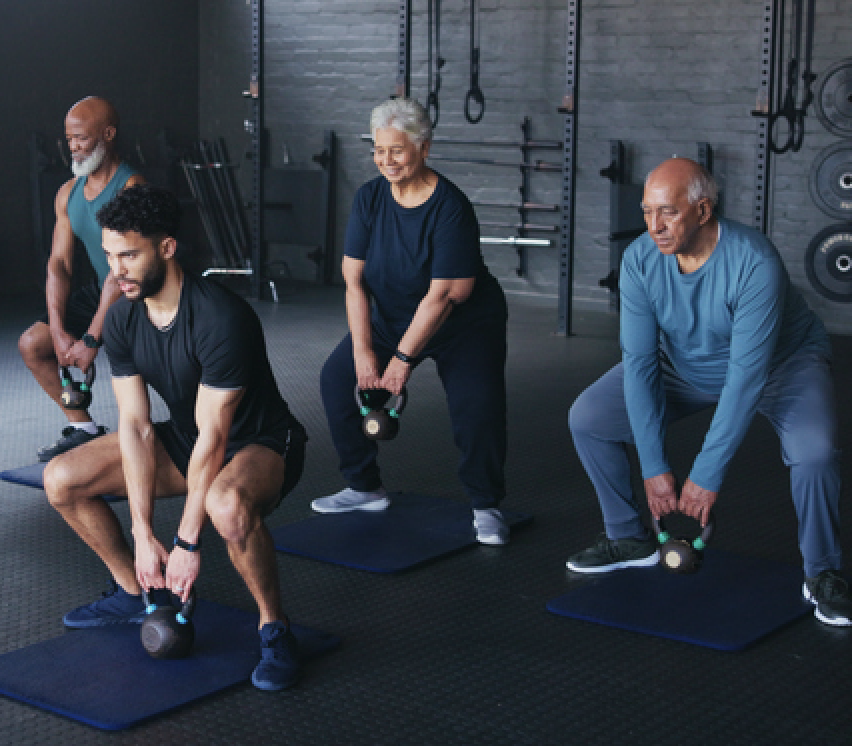
So, knowing that exercise is crucial, where and how should you spend your time doing it? One recent article in Very Well Health suggests that there is a single best exercise, at least for maintaining strength as you age: that is, the squat. It’s a common-sense, functional movement that you incorporate throughout much of the day, whether it’s getting on and off the toilet, up and down from a chair, or in and out of a car. You can modify your squats to start by holding on to a counter or using a chair underneath you, and then build up and challenge yourself by doing more or adding weights. This article suggests you start with 10 squats per day. Another recent article on the website Health suggests that men 65 and older should be able to do 22-28 squats at one time, while women 65 and older should be able to do 17-23 squats at a time. If you want to put in more time with more challenge, you may want to follow the advice of 66-year-old functional medicine expert Dr. Mark Hyman, who only started strength training at age 59 and has a list of 6 essential exercises that he swears are simple and effective for promoting healthy aging and longevity. His exercises utilize machines at a gym and include core and arm rotations using cables, bench pressing dumbbells, and hanging from a bar. So put on your spandex and watch his recommendations in motion here.