Subscribe


In One Stroke: Fast Action Can Lower The Damage Of A Stroke
November 11, 2026

The recent stroke suffered by Connecticut Senator Chris Murphy underscores both the prevalence of strokes and their rise in occurrence in younger adults. Estimates are that over 800,000 Americans have a stroke each year. At age 53 and seemingly in good health, Senator Murphy first felt the onset of arm numbness and was later diagnosed with a stroke after being rushed to a hospital. While older adults account for the most strokes, the incidence of stroke among adults aged 20-54 is rising fast (while falling in older adults), although the reasons for this rise are not clear. Experts report that over 90% of strokes in adults under age 55 are caused by modifiable factors, including high blood pressure, physical inactivity, diabetes, obesity, smoking, stress, and poor diet (high blood pressure is the reason for almost ½ of the strokes in younger adults, followed by a lack of exercise). One thing is quite clear when it comes to stroke, whether in a younger person or an older adult: Time is of the essence when symptoms arise, and the need for intervention is immediate.
So what are the symptoms to be on the lookout for that signal the need for immediate attention and emergency care? The acronym BE FAST captures the essence of concern:
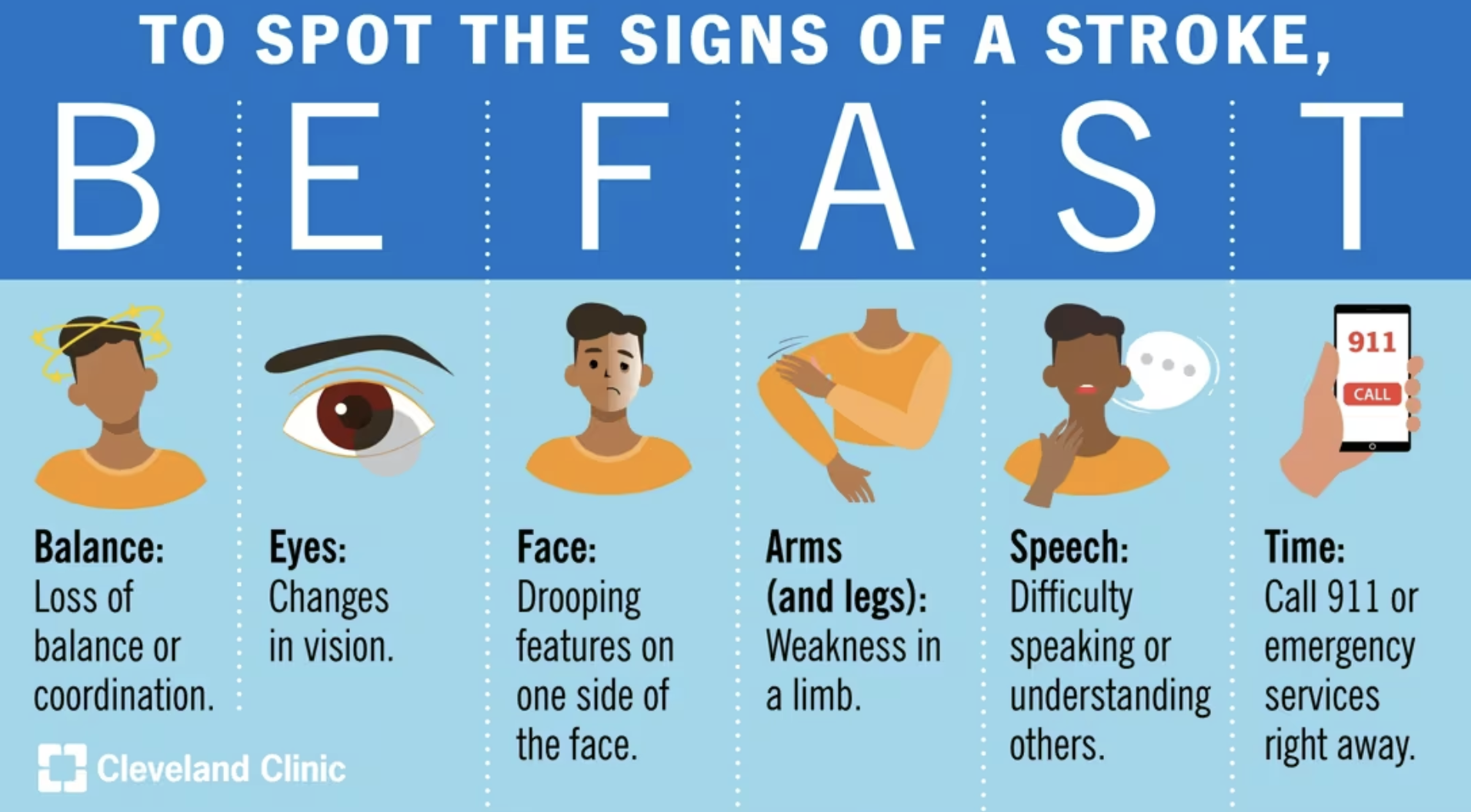
Any of the six signs captured in the image above are reasons to call 911. Additional signs could be the onset of a sudden, intense headache, confusion, or numbness on one side of the body. A quick response to stroke symptoms can mean the difference between survival and recovery, or disability and death. A stroke is caused either by an artery blockage due to a clot or the bursting of a blood vessel in the brain. Either way, blood flow to or within the brain is blocked, and when brain tissue is deprived of oxygen, it can become permanently damaged, leading to disability or death. Intervention needs to occur before permanent damage sets in. Waiting to see if the symptoms subside is never a good move, as physicians only have a set period of time to intervene before damage to the brain is irreversible. One interesting note: A recent article in the Washington Post noted that your risk for a stroke is up to 70% higher in the morning hours of 6-9:00 AM, as blood pressure rises when you first wake up and your blood is more likely to clot and less able to dissolve those clots during those hours. For a good overview of what happens when a stroke occurs, click here, and for a range of resources dealing with strokes, treatment, and recovery, click here.
Recent research has pointed to other possible factors that may raise your risk for a stroke. For example, a new study presented at the recent American Heart Association Scientific Sessions reported that the use of cannabis, even just occasionally, is associated with an elevated risk of cardiovascular disease, especially stroke. While the study didn’t prove that cannabis use (whether smoking, vaping, or edibles) causes stroke, it does appear that use of cannabis should be considered when evaluating the cardiac health of a patient. Another recent study, this one published in JAMA Network Open, found an association between high consumption of ultra-processed food and brain damage, suggesting an increased risk of stroke in the future. But perhaps the most worrying sign that you may be at risk for a future stroke is the occurrence of TIAs (transient ischemic attacks), also called “mini strokes,” caused by a temporary blockage of blood flow to the brain, which resolve on their own and don’t cause lasting damage. While the good news is that these TIAs are short-lived without long-term effects, they also present a warning, as 1 in 3 people who experience a TIA will eventually have a real stroke, with ½ of those occurring within a year of the TIA. This means that a TIA should be the impetus for serious evaluation of your stroke risk factors, such as high blood pressure, smoking, physical inactivity, or poor diet. Furthermore, a recent study was conducted to examine whether a TIA is connected with a future dementia diagnosis. Published in the journal Neurology, this study found that those who experienced a TIA had a 34% higher long-term dementia risk compared to those who had not experienced a previous TIA. What that means practically is that “a TIA should never be dismissed simply because the symptoms went away.”
Speaking of action that should be initiated as the result of a stroke/mini stroke, the American Heart Association and the American Stroke Association issued a new set of guidelines in 2026, which provide a framework for adult stroke rehabilitation and recovery. Included in this new set of guidelines is the recommendation that rehab begin as early as 48 hours after a stroke; just as early intervention when symptoms of a stroke emerge can limit or eliminate damage from the stroke, early rehab sets a patient up for the best long-term recovery possible. Furthermore, recognizing that stroke involves a multitude of systems in your body, including movement, communication, memory, thinking, and emotional health, means that responding to stroke recovery requires a multidisciplinary approach. A recent article in The Guardian reported that, at least in the UK, a lack of sufficient post-stroke rehab is widespread, with stroke survivors struggling in their recovery as a result. There’s no doubt that many stroke patients face an uphill battle in their recovery and return to their previous lives. What is clear is that preventive measures, quick actions, and responsive, intensive rehab can add up to a positive outcome for those willing and able to put in the work to recover.