Subscribe


Pounds Off: New Medicare Pilot Program To Cover GLP-1 Weight Loss Drugs
July 8, 2026

It’s perfectly normal and perhaps even beneficial to put on a few pounds as you get older. But according to recent data, ⅔ of adults on Medicare are either overweight (with a BMI between 25-29.9) or obese (with a BMI of 30+). This additional weight as you age can have significant and serious health implications. For example, 85% of those diagnosed with Type 2 diabetes are overweight or obese. Furthermore, obesity is implicated in a range of chronic and debilitating conditions as we age, including achy joints and inflammation causing arthritis, blood clots in legs or lungs, cardiovascular events including heart attacks and stroke, kidney disease, and even cancer. Until very recently, however, Medicare was unable to pay for any of the GLP-1 medications for the purpose of helping older adults lose weight. Federal Medicare regulations do provide obesity counseling and even payment for bariatric weight reduction surgery, but for GLP-1 use, Medicare recipients had to have a non-weight loss diagnosis that would benefit from a GLP-1, such as obstructive sleep apnea or Type 2 diabetes. As of July 1st, however, a new pilot program has begun that will permit certain Medicare recipients to access GLP-1s for weight loss purposes, under specific conditions prescribed by your physician, for a monthly co-pay of $50.
The new Medicare program, known as The Bridge Program, requires that you are a participant in the Medicare Part D prescription drug program or receive prescription drug coverage from your Medicare Advantage program. However, this new program does not actually provide the GLP-1 through the Medicare drug plan (If you’re already on a GLP-1 through Medicare, you are not eligible for the Bridge Program). Your $50/month co-pay will not be eligible for your Part D deductible and will not count toward your annual out-of-pocket cap for prescription drugs under Medicare. This pilot program, begun on July 1st and slated to end at the end of 2027, will give eligible Medicare recipients access to many of the popular weight-reduction medications on the market, either in injectable or pill form. For a good summary of the program eligibility requirements and benefits, see the chart below from The Medicare Rights Center:
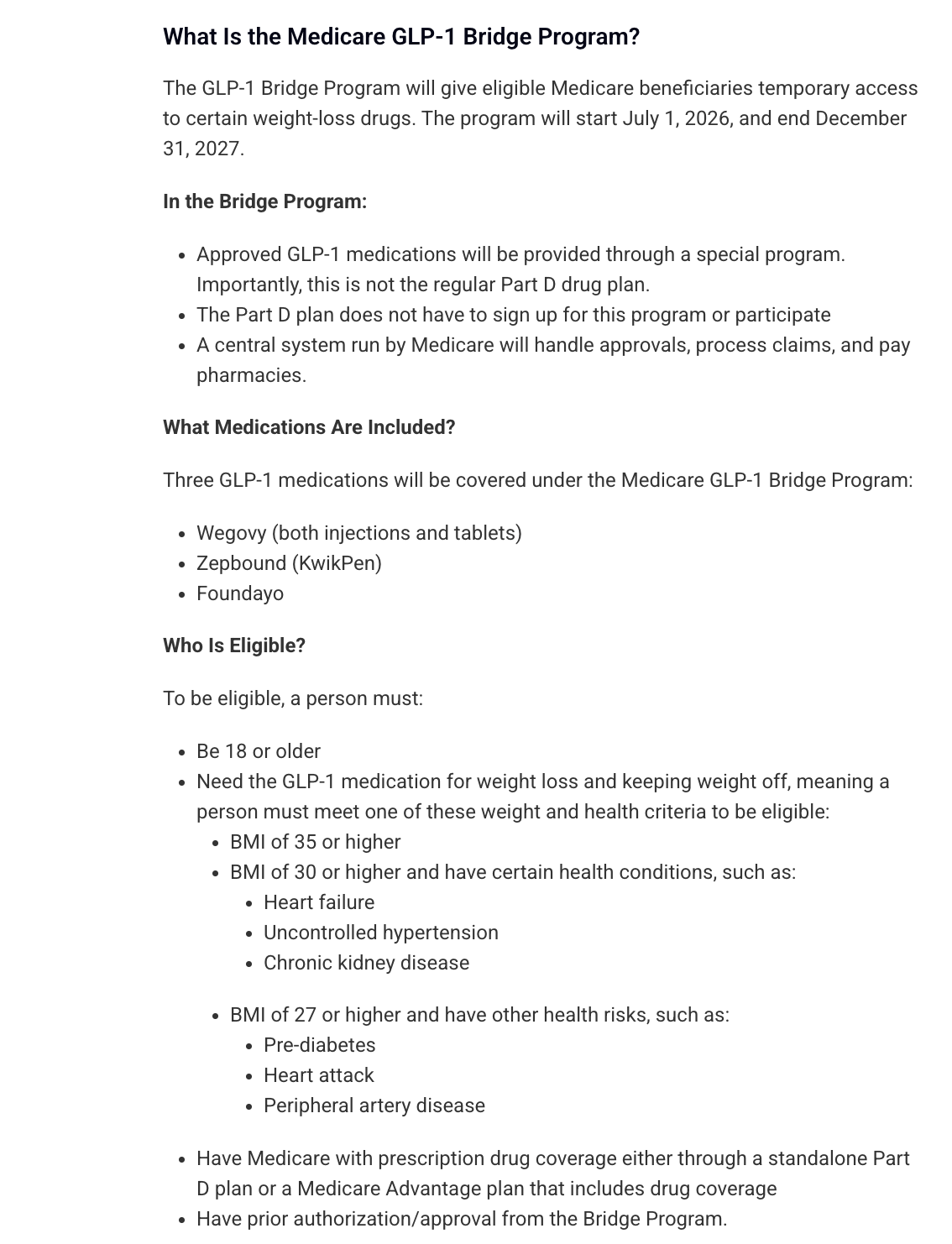
The Bridge Program will give access to the weight-reduction benefits of a GLP-1 to a Medicare recipient who is not currently on a GLP-1 and who qualifies because of a physician diagnosis of a BMI of at least 30 and certain accompanying health conditions, or a BMI of at least 27 with such medical conditions as pre-diabetes, prior heart attack, or peripheral artery disease. Your physician will submit a prescription. It will be centrally processed to confirm your eligibility, and then you will be able to pick up the medication from the pharmacy once you pay your $50 co-pay. This cost, while still substantial for many, is much less than the typical price for these medications without insurance coverage. In fact, US Taxpayers will be making up the difference between the Medicare co-pay and the actual cost of the medication (Medicare will pay $245/month per patient to manufacturers, which means US Taxpayers will spend about $195/month for each Medicare recipient in the Bridge Program). Estimates are that this 18-month pilot program could cost US Taxpayers $10 billion, which is the yearly budget of the FBI. One wonders if it’s financially sustainable beyond that, and if not, what happens to all of the recipients who took advantage of this access to a GLP-1? This is just one troubling aspect of the Bridge Program. There is hope that the health benefits from using a GLP-1 will translate into lower Medicare costs to help support this plan. Whether that happens remains to be seen.
So, if you meet the eligibility requirements under Medicare for a GLP-1 weight loss medication, should you go for it? First and foremost, that is a conversation to be had between you and your health care provider, based on your current health status. There are many demonstrated or promising health benefits attributable to GLP-1s, including evidence related to longevity, cancer, heart disease, and addiction, beyond treatment for diabetes and weight loss. But for older adults, certain risks may come with taking a GLP-1. As one expert was recently quoted, “The risk-benefit calculus for these drugs is very different for older adults than younger people, because the risk, the potential for harm, is greater.” So, for example, quick and significant weight loss in an older adult could trigger concerns about muscle loss, frailty, and fall risks, along with bone density concerns. The diminishment of appetite that comes from a GLP-1 could also put an older adult at risk for inadequate nutrition or dehydration. GLP-1s may also interfere with the existing medications you take. Gastrointestinal problems are common for those taking GLP-1s, including constipation, already a challenge for many older adults. And if you stop taking the GLP-1, you may regain the lost weight but be in a more precarious health situation. For a good summary of some of the benefits and risks of GLP-1s for older adults, click here.
So, while this new pilot program may be a boon for many Medicare recipients (along with the drug manufacturers), it is not without its challenges and controversies. The initial rollout of the program is expected to be a bit rocky, with a surge in demand that clinics or pharmacies may not be able to meet and complications about the certification process. There is also concern about the cost of this program. To make it permanent would likely require an Act of Congress. So what happens at the end of 2027 when this pilot program ends? No one knows for sure, but millions of older adults may likely be left in a lurch if they can no longer count on subsidized access to what many describe as a life-changing medication. Stay tuned.