Subscribe


About (Your) Face: Is Collagen A Solution For A Youthful Appearance?
June 24, 2026
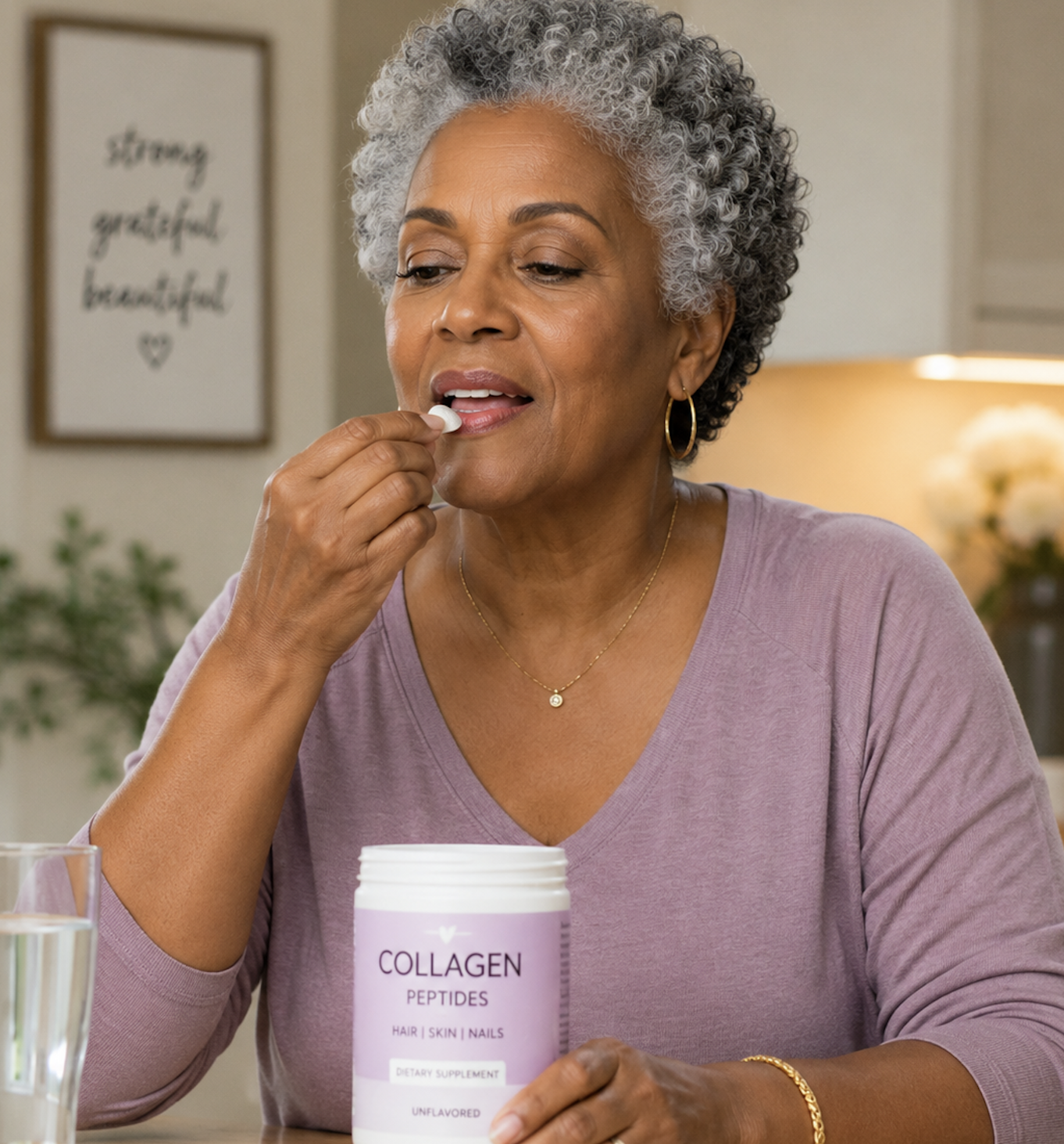
Previously, we examined the use of collagen supplements to help with joint support and skin aging. The research available suggested there may be some benefit, but not as a primary support system. It seems that taking a collagen supplement would only be useful as an adjunct to an otherwise healthy lifestyle, including a well-balanced diet, exercise, and restful sleep. As we previously noted, collagen is a protein, in fact, the most abundant protein in your body. It supports your skin, bones, muscles, tendons, and ligaments with strength and structure. However, due to external environmental factors such as sun exposure or alcohol consumption, along with the natural decrease in collagen everyone experiences as they get older, collagen levels go down, and thus your face takes on an older appearance, with skin sagging and wrinkles, and you may experience more joint pain, among other physical problems. There are food sources to try to get more collagen into your system, including poultry, beef, pork, and seafood.
However, collagen supplements are a big business (estimates are that the market value is over $9 billion and counting) as young and old alike try to get more of this protein into their bodies to improve strength or skin texture and appearance. There’s a big business of all sorts of food and beverages touting their collagen ingredients, though the consensus is that eating a protein bar with collagen is probably not the best way to fulfill your need for protein, nor is there real proof that eating or drinking these products will actually boost the collagen in your body.
There does seem to be scientific evidence that collagen supplementation may, in fact, improve bone strength and joint mobility, though they are not a quick fix, and the jury is still out on exactly how much you would need to consume and for how long to make a valuable difference. Most of the collagen trials showing positive results have been funded by supplement makers, so the results may be skewed to promote their products. But it appears that the most trustworthy research has been done on joint health and cartilage wear and tear, so those seeking help for osteoarthritis or joint pain in their knees, for example, might find relief from using collagen supplements.
However, when it comes to your skin and facial appearance, the scientific evidence is just not there to show much benefit. For example, a recent post in The New York Times Wirecutter largely dispelled the notion that facial creams containing collagen can do much good. As the article noted, your skin is a barrier that prevents collagen molecules in such creams from penetrating below the surface and replacing lost collagen. Touting its properties for creating moisture in your skin, collagen creams may get you a temporary plump improvement, but for deeper, more effective collagen building beneath the surface of your skin, the Wirecutter recommends a Vitamin C product (as we recently discussed in agebuzz). A recent study published in the journal Food, Nutrition and Health also found that topical potions containing collagen have not been found to boost collagen beneath the surface, but that collagen peptide supplements taken orally show promise, though evidence is still lacking concerning optimal doses and long-term safety.
Finally, there has been some recent chatter about the use of the mineral silicon as another supplement that might be able to boost collagen production. There is some early research suggesting silicon might be useful for boosting hair, nail, and skin health, but much more research needs to be undertaken to validate and better understand its effects. However, in the manner in which these sorts of supplements often take off and become popular, Vogue magazine recently touted silicon as the next best “natural” supplement to boost collagen, skin appearance, and other beauty benefits. While there’s likely no harm in taking such advice (though those with kidney disease are advised to steer clear), there’s also insufficient evidence to demonstrate that silicon is the answer to your skin care prayers. Nonetheless, with that word of caution, grab a cup of water and read more about silicon supplements here.