Subscribe


Baseline Balance: Are You Doing All You Can To Support And Improve Your Balance?
September 9, 2026
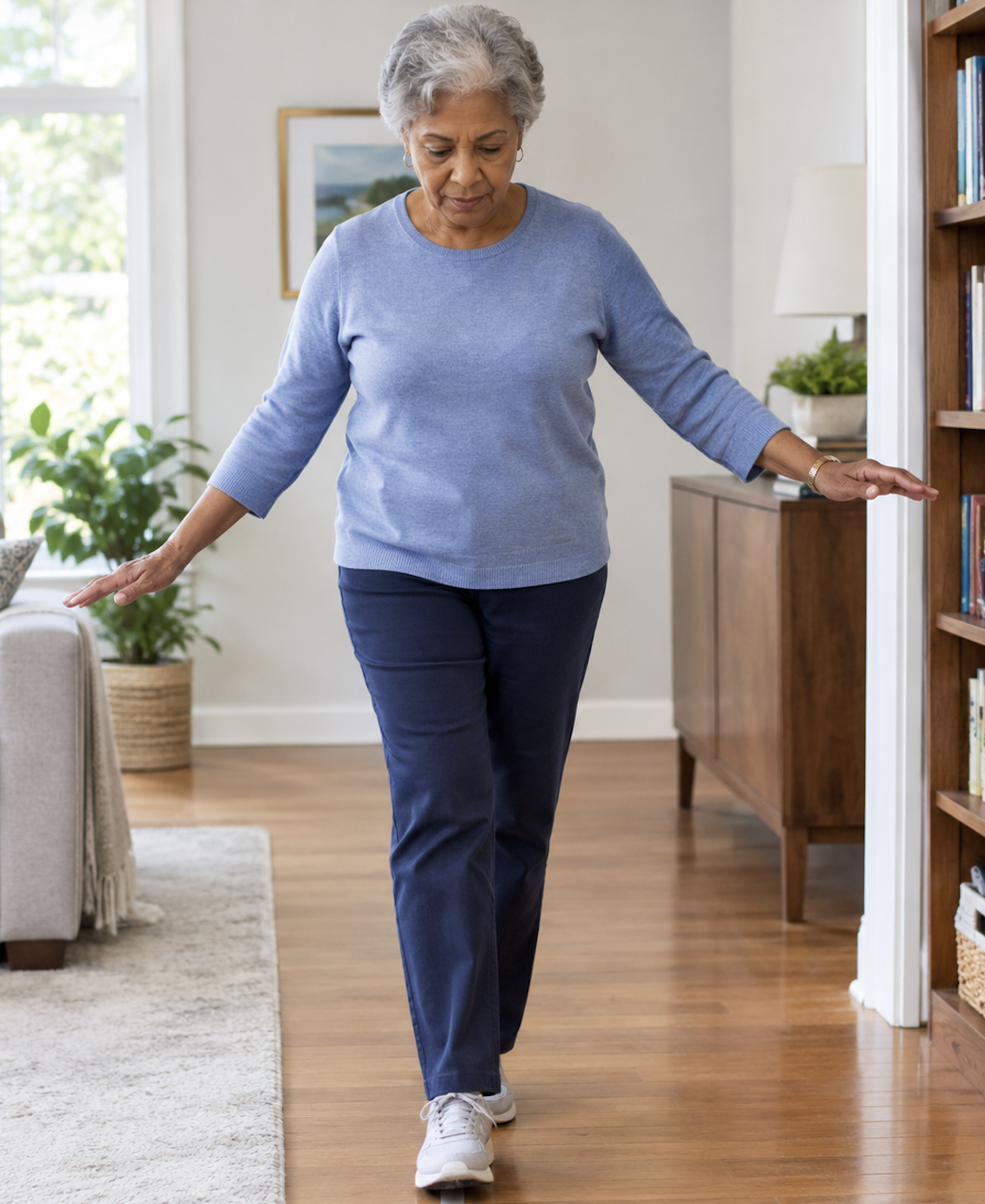
One moment you’re walking tall and the next, your head is face down on the ground. Maybe it was just an unfortunate tripping incident- or maybe your balance needs examination and improvement. Whether or not you realize it, multiple systems in your body need to work together to support your balance, and many of these come under stress or diminish as you get older, even if you regularly exercise. Your sensory systems- eyes and inner ear (vestibular)- along with your proprioception (your awareness of where your body is in space) all need to coordinate to keep you balanced, and you need muscular strength and joint flexibility to cooperate as well. Not only do you need strong legs, but your core, feet, and ankles all have to work together to keep you upright, stable, and balanced. As a recent New York Times article makes clear, “Balance isn’t a single skill but rather several physical, sensory, and cognitive systems working together.”
There are ways to test your balance on your own to see where things stand (literally and figuratively), though if you already know that you feel wobbly, have had a recent fall, or are fearful of falling, you may be best off starting your balance journey with a professional (such as a physical therapist) who can take you through the paces and expertly evaluate you. But if you’re capable of evaluating your balance on your own, a recent article in the LA Times has a “Balance IQ” test for you, including such challenges as positioning yourself heel to toe, standing on one leg, or the sit-to-stand test. While no one test will conclusively tell you exactly how well you can balance, the sooner you understand your problems, the more time you have to pursue strategies that can shore things up. And the good news is, no matter your age, you can improve your balance. This is important to understand, as good balance is a critical skill in order to age with more independence and with fewer injuries due to a fall.
Improving your balance should be a slow and steady effort, as you would with any exercise routine. In a series of recent articles in the LA Times, activities specifically focused on balance were recommended, including 4 simple exercises, totalling just 5 minutes a day, as a way to gradually build up your balance with both static and dynamic movements (the article includes video demonstrations). Also recommended was a series of 4 simple Tai Chi positions, highlighted as the “modern gold standard for balance training.” The exercise website Yes2Next also recommends a series of balance exercises to gradually help you build up your strength and stability, using a 15-day challenge with 15 different videos to demonstrate the routine.
For those of you who specifically want to focus on your leg strength and stability to improve your balance, we’ve got some resources to share for that as well. Prevention recently outlined a series of 6 different leg exercises (with photo demonstrations) that will not only strengthen your legs, but will also work your hips, glutes, and ankles as a strategy to recognize all the different muscle groups that help support your balance. In particular, strengthening your core is an important part of balance improvement, and Prevention also has a post demonstrating exercises to shore up your core with the guidance of fitness expert Denise Austin.
Finally, a recent New York Times article underscored that much of what you do in a day- either walking, climbing stairs, or stepping off a curb- involves using one leg at a time, meaning that good balance is an important component to carrying out your everyday activities. That means doing exercises to strengthen your ability to use one leg at a time is an important part of balance maintenance. In a series of video demonstrations, the article takes you through a 25-minute single-leg routine that will help you build the leg strength and stamina to lead your life with independence and confidence. So step up and watch their recommended exercises here.