Subscribe


Movement, Mind, And Balance: Why Tai Chi Should Be A Regular Part Of Your Exercise
March 4, 2026
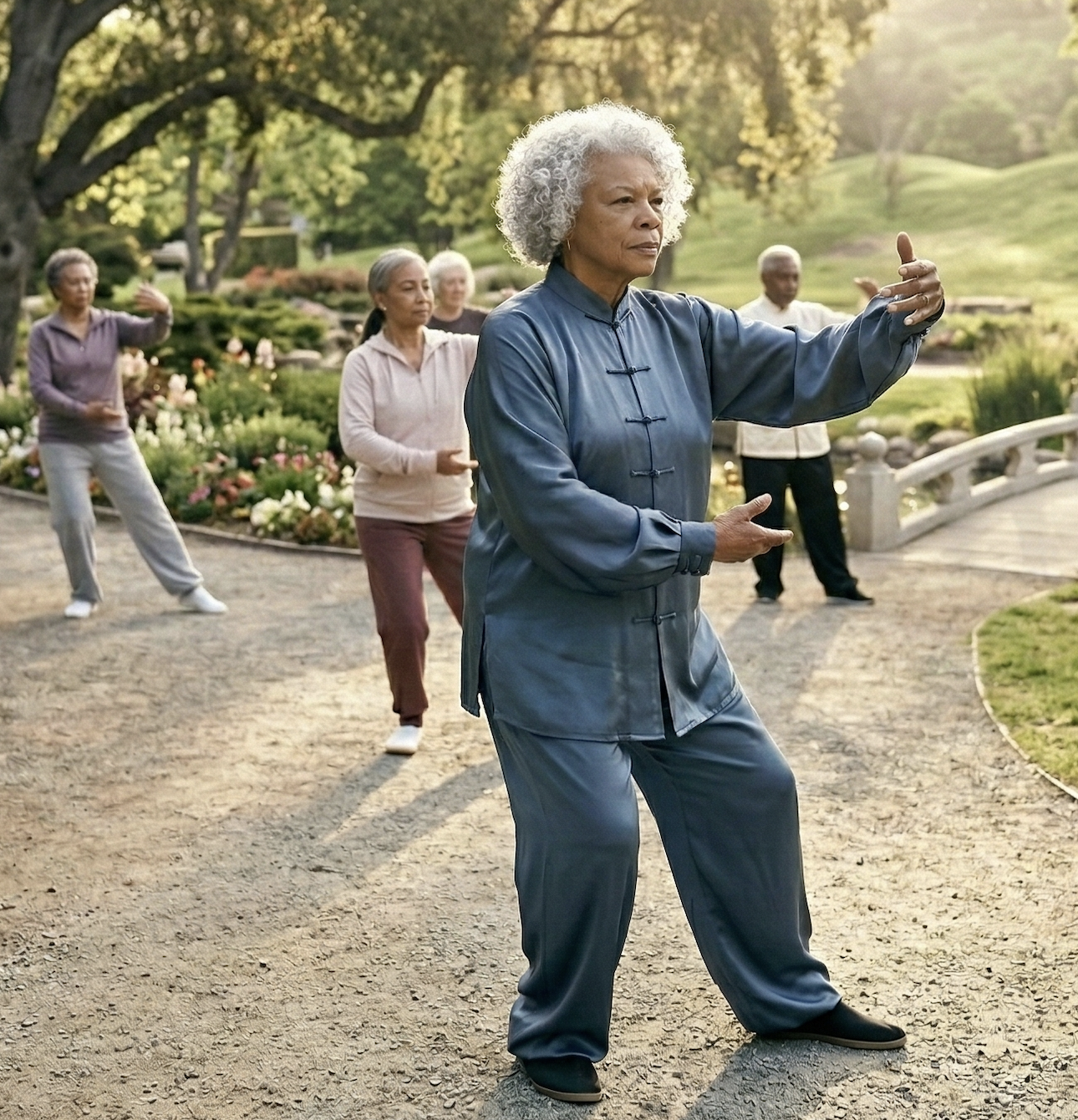
On agebuzz, we want to continue to underscore that maintaining and strengthening your balance is critically important to being independent, mobile, and injury-free as you get older. We’ve recommended a series of exercises to help you stay upright and steady, and in keeping with that goal, it’s also important to make you aware of the value of Tai Chi, a set of purposeful movements and deep breathing with origins in ancient Chinese martial arts, which, in its current practice, not only gives you the confidence and steadiness to keep you balanced but can also help address such aging-related health concerns as insomnia and stress. Backed by real scientific evidence, the benefits of practicing Tai Chi include better balance, bone strength and joint stability, improved cardiovascular health, and better emotional well-being. Given its slow, precise set of movements, it is considered ideal for older adults who may be physically incapable of performing more aerobically demanding exercises, yet providing similar health benefits. For an initial view of what a Tai Chi practice can look like, click here. To understand its health benefits, let’s (carefully) dive deeper into the value of Tai Chi as part of your regular exercise routine.
First, let’s focus on your balance. It’s been estimated that practicing Tai Chi can lead to a 20%-60 reduction in your fall risk. The gentle, slow, flowing motions of Tai Chi can strengthen your legs, improve flexibility and range of motion, and improve awareness of your body as it moves through a space (that is, proprioception). Gradually shifting your weight from one movement to the next challenges your balance and teaches you how to react as your balance is off-kilter. A new study published in Frontiers reviewed existing randomized clinical trials of Tai Chi and found that a Tai Chi practice can significantly improve balance and reduce the risk of falling in older adults. There is even, now, a movement afoot (pardon the pun) to encourage “Tai Chi Walking,” which involves many of the steps and movements of regular Tai Chi but may be easier to learn than a full Tai Chi practice. In contrast to going for just a regular walk, practicing Tai Chi walking (or Tai Chi gait) emphasizes stability and mindful movement, an emphasis that may be valuable when your balance is at stake. As one recent article stated, “Patients who practice Tai Chi walking regularly often report feeling more confident in their gait and less unsteady on uneven surfaces.” For some helpful video demonstrations of what Tai Chi walking looks like, slowly turn and click here, here, or here. While you may not be improving your step count with Tai Chi walking, you are likely doing much more to strengthen your balance and your walking confidence.
There is also new research underscoring the value of Tai Chi for your cardiovascular system. Published in Nature Science Reports, this new study reports that after reviewing the existing data on Tai Chi, it may be that Tai Chi offers clinically meaningful improvements in blood pressure, lipid-related outcomes, and psychosocial health, along with functional capacity. Further new research describes the value of Tai Chi in addressing insomnia in older adults. According to this study published in The British Medical Journal, practicing Tai Chi can be as effective in treating insomnia as Cognitive Behavioral Therapy, which is considered the first line of treatment for this serious sleeping problem. As chronic insomnia affects 1 in 10 older adults and is linked to an increased risk for cardiovascular disease and negative neurologic problems, knowing that Tai Chi can effectively address this health concern, and can be done without needing a medical prescription or visit to a specialist, is good news for the millions of older adults who chronically are unable to get a good night’s rest. For more on this study, take off your bedspread and read here.
Tai Chi classes and instruction are often available at local gyms or senior centers. It is also quite possible to learn the movement of Tai Chi from online videos or classes. To get you started, take a look at classes from The Tai Chi Foundation and from Harvard Health Publishing. Or, you can also catch a glimpse of Tai Chi in an exercise practice by clicking on this recent video from Yes2Next. However you choose, whether alone with online instruction or among peers in an in-person class, you’d be hard-pressed to find a better method for improving your health and well-being while supporting your balance.