Subscribe


Thrown Off Balance: Loss Of Balance Isn’t Inevitable, But It’s A Warning Sign
July 29, 2026
There are many reasons you may feel “off balance” as you get on in years, but if your actual physical balance feels different or less reliable than previously, you’d be advised not to just accept this as another inevitable marker of aging. Good balance is an essential part of maintaining your independence and functional abilities as you get older, and what you may not know is that it’s also critically tied to your brain functioning. Staying upright and stable is not only a workout for your body, but it requires significant brain effort that helps support neuroplasticity and the creation of new neural connections in your brain. So preserving and strengthening your balance is good for your body and good for your brain. Loss of balance can also signal other health problems, including vision or hearing deficits, muscle loss, nerve damage, vitamin deficiencies, and even the early signs of such neurologic problems as Parkinson’s. Experts agree that signs that your balance is off should be the impetus for a doctor visit. Don’t wait for a fall that may cause serious injury or life-altering consequences.
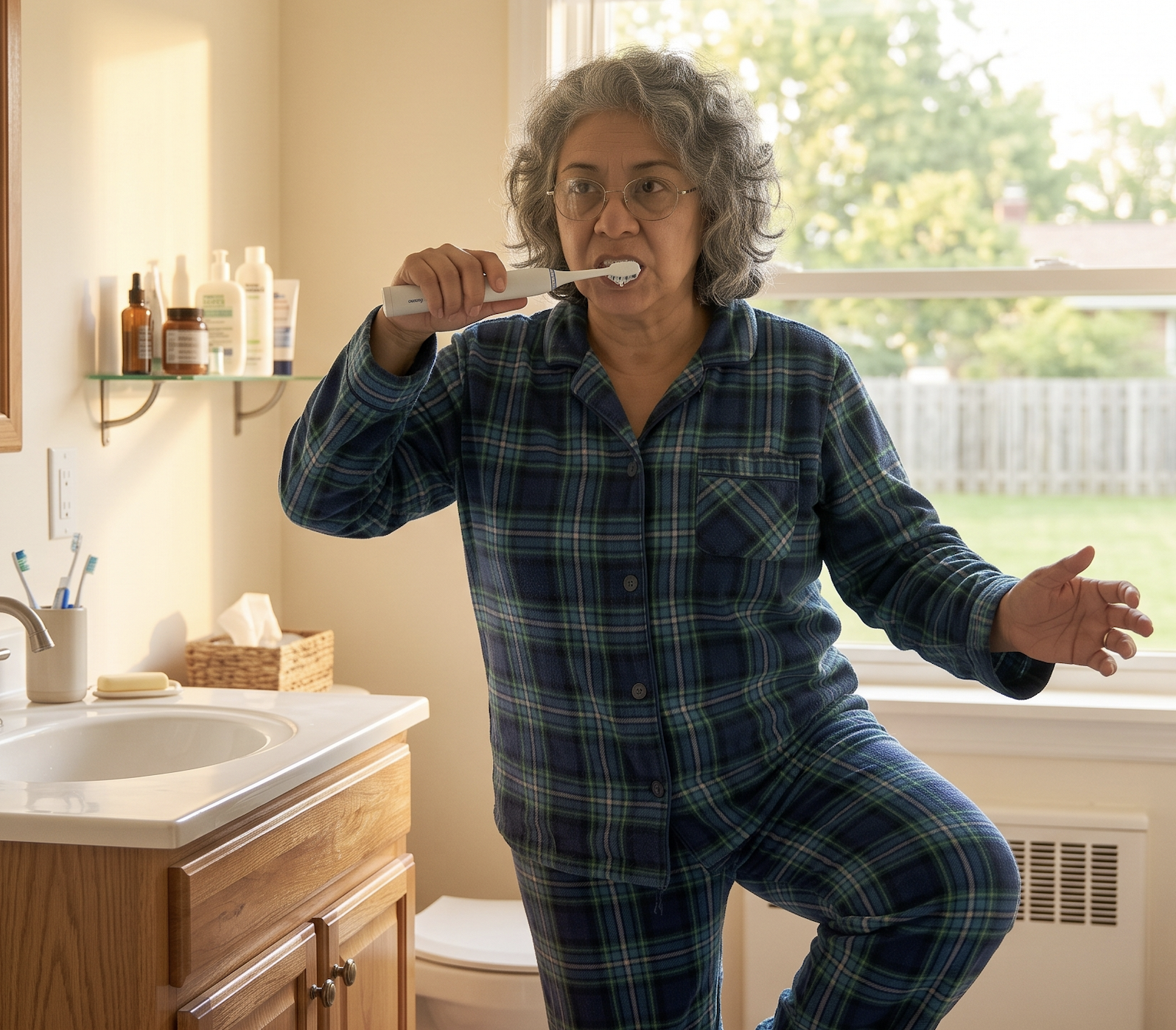
Preservation of your balance requires ongoing effort, but the routines and exercises that help you stay balanced are neither difficult nor time-consuming. Physicians, personal trainers, and physical therapists all agree that working on your balance is something so elemental that it can- and should- be integrated into your everyday routines, the same way you brush your teeth or go about your daily chores. In fact, balance exercises can be a part of your regular activities, seamlessly supporting you while you wait for a bus, climb some stairs, or take a daily stroll. Orthopedic doctors and geriatricians know firsthand that balance exercises are critical to avoiding some of the life-limiting consequences of a bad fall. In a recent article in The Washington Post, geriatric specialist Nathalie van der Velde remarks that she stands on one foot when brushing her teeth and regularly practices getting herself up from the floor. In another recent article in Time Magazine, orthopedic physicians all agree that strengthening your legs is critical if you want to maintain balance and functional independence, so their exercises focus on leg power, heavy strength training, hopping or fast toe tapping while doing other activities, as well as core-strengthening planks. They also regularly check their shoes to make sure they’re in good repair, and their feet are always well supported.
Specific and often simple balance exercises are also essential for trainers who are themselves older or who work with older adults. Consider the routine of 80-year-old trainer Nancy Bruner (who only started training at age 70). Her balance routine requires nothing more than her bodyweight and a few dumbbells, with a focus on her core and legs for good balance, mobility, and flexibility. You can watch her move through 5 simple but essential balance exercises here. Or, for another set of basic but effective balance exercises, take a look at the recommendations of the Women’s Brain Health Initiative here. A recent article in The New York Times stepped up the balance exercise challenge, with a 20-minute routine concentrating on agility (the ability to quickly change direction and speed, which can diminish with age). They suggest using an agility ladder (which you can create by placing tape strips on your floor) to help you focus and control your foot movements, as another way to strengthen balance and reduce your fall risk.
Finally, if you want to insert a bit more fun into your balance improvement efforts, you may want to consider dance. A recent article in The Independent described a 12-week research trial which “disguised” balance exercises as a ballet-type dance class and provided strategies for movement and foot precision that increase proprioception and help with stability. Older women who participated in these twice-a-week Zoom dance classes for 12 weeks improved their postural stability, balance, and calf strength. So put on your ballet slippers and find out how improving your balance can be a fun endeavor put to work for a serious problem.