Subscribe



Myth Making: The Myths That Don’t Hold Up When It Comes To Healthy Aging
October 21, 2026
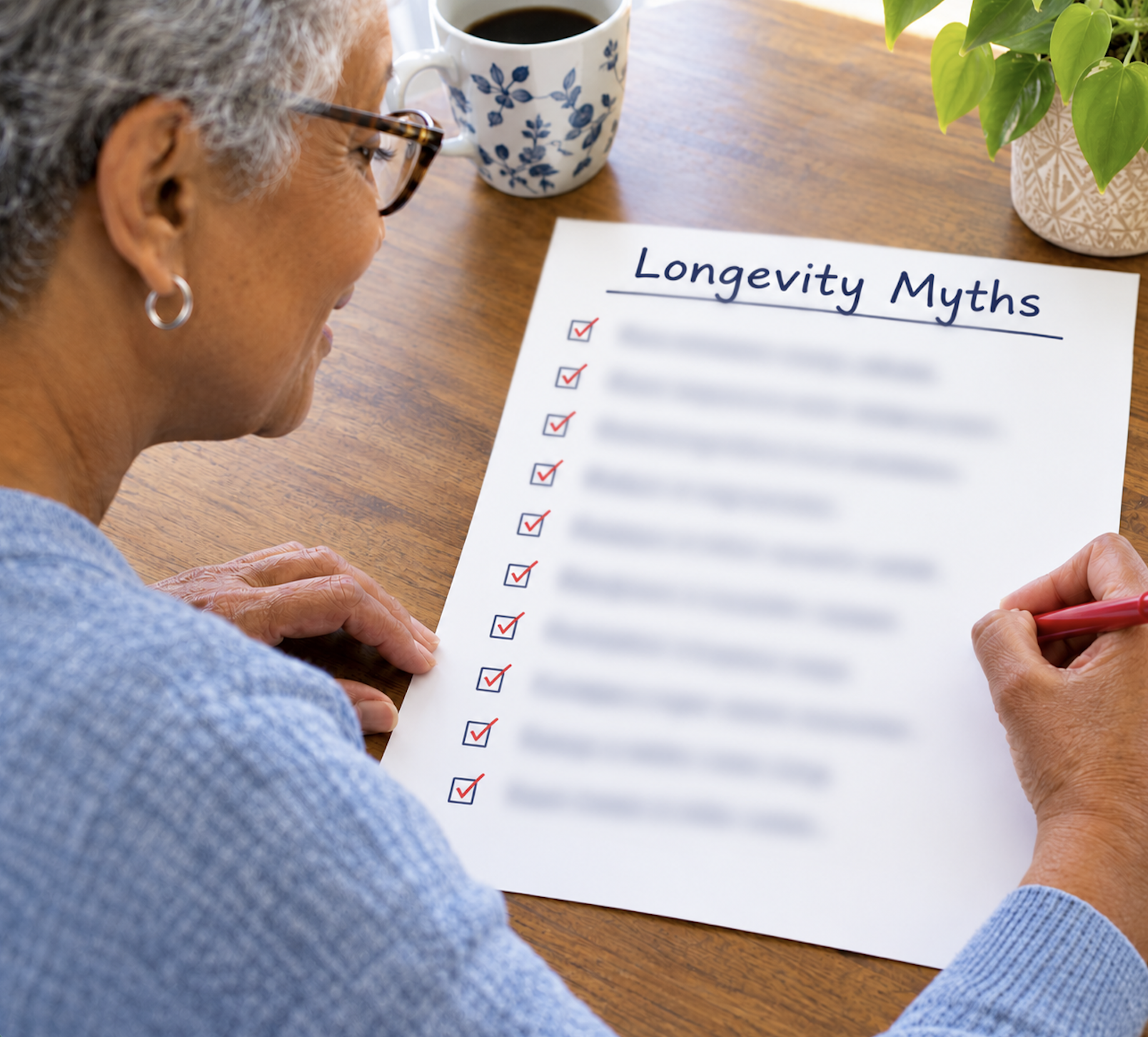
In this day and age, it’s hard to separate myth from reality, truth from scam. While we strive to provide you with solid information and evidence based on real scientific research, sometimes old myths die hard, or new health claims take hold without the requisite science behind them. Especially when it comes to longevity and healthy aging, many are willing to do whatever they can to extend their lives for as long as possible. Just look at the rise of “influencers” and “tech-bros” doing all they can to follow the latest anti-aging advice and use their wealth to pursue immortality. For those of us not in the billionaire class, the good news is that much of what is tried and true regarding healthy aging and a long “health span” doesn’t require endless resources. It just requires a recognition that a consistently healthy lifestyle truly is the gateway to healthier aging.
So let’s take a look at some myths that we can dispel. A recent post in Real Simple highlighted some important myths that can wreak havoc with your health as you age. For example, it’s a myth that you need less sleep as you get older. While you might have more trouble sleeping soundly through the night, that doesn’t mean your body doesn’t require a good 7-9 hours every night. It’s also a myth that getting older automatically means getting weaker. While your muscles will atrophy as you age, that doesn’t mean that with strength training and sufficient protein, you can’t continue to maintain your strength and vitality- it just takes consistent effort. Another myth that many of us succumb to? That supplements are essential for healthy aging and a longer life. While it’s possible that, due to your underlying health or food intake, you are missing an important nutrient in your diet for which a supplement would be useful, the reality is that most supplements are unnecessary if you eat in a healthy way and can even be harmful if taken inappropriately or without understanding their impact. Furthermore, as a recent New York Times article on myths about longevity makes clear, no drugs or supplements have been shown to extend your lifespan.
That same New York Times article also bursts many other aging myth bubbles. For example, it’s not always healthy to lose weight, especially as you get older. In fact, being underweight can raise your mortality risk in certain circumstances. While it’s true that obesity raises your risk for many chronic conditions, it’s also true that excessive weight loss can increase your risk of death, as you lose muscle and bone mass, along with fat. So while you may want to strive for a “healthy weight,” becoming stick thin is no guarantee of better health and may even raise your risk for premature death. One other unfortunate bubble to burst: Living a healthy life will lead you to a long life. Unfortunately, none of us can alter our genetic makeup no matter how much tofu we eat or yoga we engage in. Genetics is said to shape about ½ of a person’s lifespan, and even more so if you live into your 90s. But that other 50% is within your control, and your healthy lifestyle will have a direct impact not only on how long you may live but on how many years of good health you have in your later years.
Super Age recently posited 9 longevity myths that you need to stop believing. While touching on several of the myths we already highlighted, this list goes on to include such fallacies as otherwise healthy living (physical activity, sleep, etc.) can cancel out a poor diet. Unfortunately, your body doesn’t go along with this myth. As Super Age makes clear, “Food is foundational,” and a poor diet of fats, starches, sugars, and low fiber doesn’t get a pass just because you got on the treadmill or lifted kettlebells. On the other hand, another myth is that it takes money to stay on a healthy aging course. Of course, you need to be able to afford health insurance and necessary medications, but you don’t need the latest bio-hacks and measurement gadgets. You just need to consistently commit to a healthy lifestyle of whole foods, regular physical movement, good sleep, and social engagement. One myth about exercise that both Super Age and Prevention want to dispel: If you haven’t previously exercised, it’s probably too late at your age to start. That is wrong! No matter your age or condition, it’s never too late to do better for your body, with a healthier diet and more active lifestyle. Specifically regarding exercise, there are ways to work around limitations or pain, including strategies such as strengthening muscles around a source of pain (for example, if your knees hurt, you may want to work on strengthening your glutes or hamstrings to bring about more strength in your legs and less burden on your knees). And if you think you’re too old to engage in weight lifting for increased strength, think again. Your muscles respond to more challenges, so a gradual increase in the weight you lift will stimulate your muscles in response and increase your levels of strength.
Sometimes, it’s not myths that can pull you onto the wrong track for healthy aging, but outright scams or lies that lure you in regardless of the lack of science behind them. So, for example, receiving a blood transfusion from a younger person will not be your fountain of youth. Nor are the recommendations shared by those celebrated super-centenarians likely to reveal hidden secrets for achieving an extra-long life. In fact, many of those very old individuals are probably not as old as they claim to be. For more tips and revelations about the falsities behind today’s longevity “hacks,” you may want to pick up the brand-new book Morbid: Debunking Modern Longevity Science and find out why much of what’s written today about longevity will not stand the test of time.