Subscribe


Basic Balance: Are You Regularly Doing Balance Exercises?
February 25, 2026
There’s really no debate that for most of us, balance becomes more important- and more fragile- the older we get. You know the drill: One in four adults age 65 and older falls each year, and more than ⅓ of those falls require medical attention or limit activities or mobility. And thousands of older adults die each year due to injuries related to falling. Furthermore, once you have fallen, your risk of falling again rises significantly. It’s a problem that feeds on itself, so it behooves you to do all you can to stop it in its tracks. One way to do so? Frequent, if not daily, balance exercises.
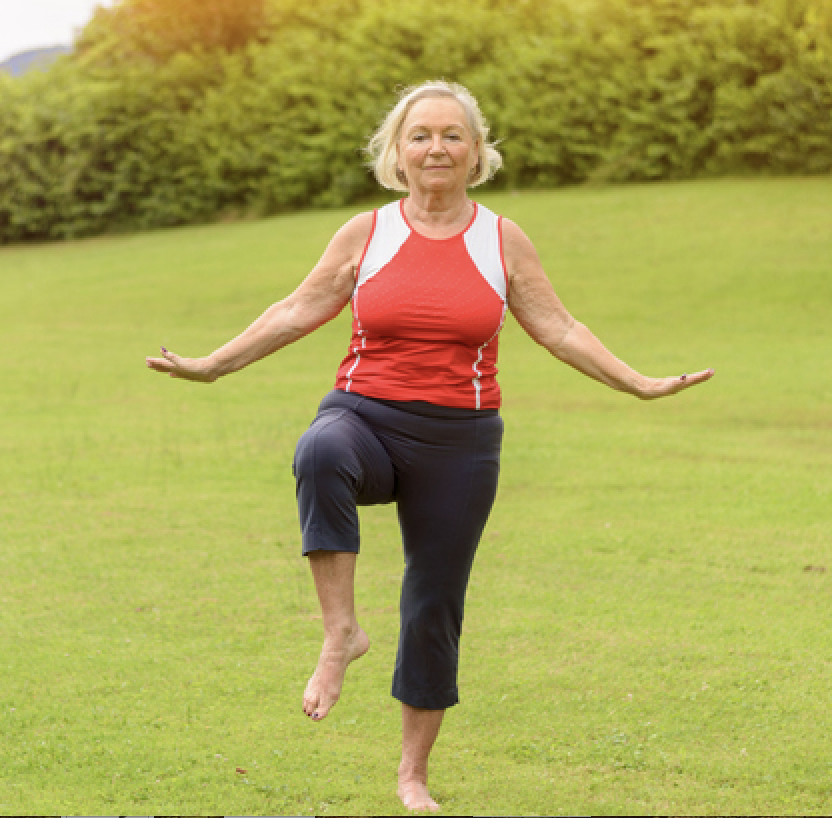
So what are those essential exercises that need to be a part of your fall prevention/balance strengthening routine? Interestingly, the same movements and tests that can assess your balance are also crucial to helping you strengthen it once you understand your areas of weakness. So, for example, Harvard Health recently explained the four-stage balance test to gauge your balance skills and assess your risk of falling. The test includes a series of four positions (each one harder than the last) that you should aim to hold for at least 10 seconds without needing support: feet side by side, feet in semi-tandem position (toes of one foot touching the arch of the other foot; tandem standing (heel to toe) and single leg (lifting one leg and balancing on the other). For a video demonstration of a health professional taking a patient through these tests, stand up tall and click here. Harvard Health suggests you perform these tests barefoot for better grip of the floor while gazing ahead and fixing your eyes on a specific target, with arms at your side or extended (whichever helps you balance). More advanced tests/balance exercises include walking heel to toe and the timed up and go test (TUG), which assesses how quickly you can stand up from a chair, walk ten feet, turn around, and sit back down. With all of these, you may want to first consult your physician, physical therapist, or personal trainer, and perhaps have them be present when you try these out. Or, at a minimum, be close enough to a counter or surface to steady yourself if you feel off balance. Alternatively, if you want to test your balance by attempting one of your daily activities, Inside Hook recommends you try the “Underwear Fitness Test,” i.e., try balancing while putting on your underwear (but stay close to a support if you need to sit down or steady yourself). As the post makes clear, it’s one of those daily rituals you take for granted that underscores how wobbly your balance may have become!
Once you have a better understanding of how well you can (or can’t) balance, it’s time to incorporate balance challenges into your regular exercise routines. Depending on the source of guidance you consult, there are as many as 11 types of exercise you can routinely perform that will help strengthen and maintain your balance. If you only have stamina or interest for just a few, Fit & Well has a physical therapist- prescribed routine intended for beginners or those with strength or mobility problems. Included in this list are sit-to-stand exercises, heel raises, wall push-ups, and standing and marching in place. This is a 5-minute routine easily incorporated into your daily activities with just an available seat. So, grab that kitchen chair and start your routine by clicking here. Moving on to slightly more challenging exercises, Eating Well has 6 balance exercises, with video illustrations, for those over age 50, to boost your balance and strength. Beyond the exercises already mentioned, this post adds such maneuvers as hip hinges, step-ups, and side-leg raises. If you’re feeling even more energetic and ambitious, Self Magazine ups the ante to 9 exercises, adding four-square steps and walking on uneven surfaces (for those who feel steadier). Finally, for those of you with time and energy to spare, consider the 11 balance exercises recommended by Very Well Health, which add movements focused on weight shifting, head turning while moving, and side step-ups.
Of course, you may feel somewhat chagrined that your balance isn’t what it once was. But take heart: Even Olympic athletes, who engage in death-defying acrobatics, need some basic balance training to stay in peak shape. For example, The Washington Post recently ran a piece on the balance workout of Olympic Skier Hunter Hess. Among his Olympic-validated tips for maintaining and strengthening your balance? Spend time standing on one leg; close your eyes on occasion (vision is one of the ways your body maintains balance); try walking on your tiptoes; and walk barefoot (on safe surfaces), which will force you to work a little harder if you’re not wearing supportive shoes. Of course, not all of us aspire to Olympic-level balance. If you’re more of a feet-on-the-ground older adult, you may find the best wisdom from our friends at Yes2Next, who have a series of exercise videos specifically focused on balance. So, whichever advice you take, and whatever challenge you’re up for, the important point is to understand that your balance is critical to staying upright and out of the emergency room as you get older, and it needs some love and attention from you on a regular basis.