Subscribe


Missing Memory: Determining The Reasons For Your Memory Loss
May 6, 2026

There’s a lot to worry about these days. Whether it’s politics, war, the economy, or climate events, many of us are on regular alert with anxiety and distress on a daily basis. If you’re an older adult, you may also have personal issues that add to that worry- your physical health, your aging body, even your cognitive functioning- all may be worrisome, especially if not everything is under your control. How about your memory? Are you worried about occasional memory glitches, or are you experiencing more frequent bouts of forgotten appointments, hazy memories, or embarrassing episodes of not remembering people or places? If you’re worried about your memory, just remember this: You’re not alone. According to a recent survey conducted by Talker Research, nearly 90% of respondents (aged 50-70) report occasional forgetfulness, and the average respondent admitted to forgetting something about 12 times in a typical week. Moreover, 6 in 10 respondents said they would have (should have) prioritized their memory health earlier in life if they had only known what they know now. In essence, their advice to younger people? Start paying attention to your memory and brain health by the time you reach your mid-30s. But what’s the advice for those of us well over 50 who may now be dealing with the realities of faltering memory?
First, it’s important to remember that the occasional memory lapse can just be a normal part of aging and not signify something more sinister. Occasional forgetfulness is not always an early sign of dementia, and if you’re not experiencing major disruptions in your life due to a memory lapse, then likely you have nothing to worry about, at least when it comes to your memory. It’s natural if it takes you a little longer to recall information or to be a little less quick in recall than you used to be. Your hippocampus may begin to deteriorate, the hormones and proteins that protect and repair brain cells may begin to decline as you get older, and even reduced blood flow to your brain can impact memory and other cognitive skills. So, an occasional embarrassing loss of memory is probably nothing to sweat- it’s only when forgetfulness becomes persistent and frequent, affecting your work, your relationships, or your day-to-day life that seeking out medical care might be appropriate. For a good chart to help you sort through the normal from the not normal, take a look below:
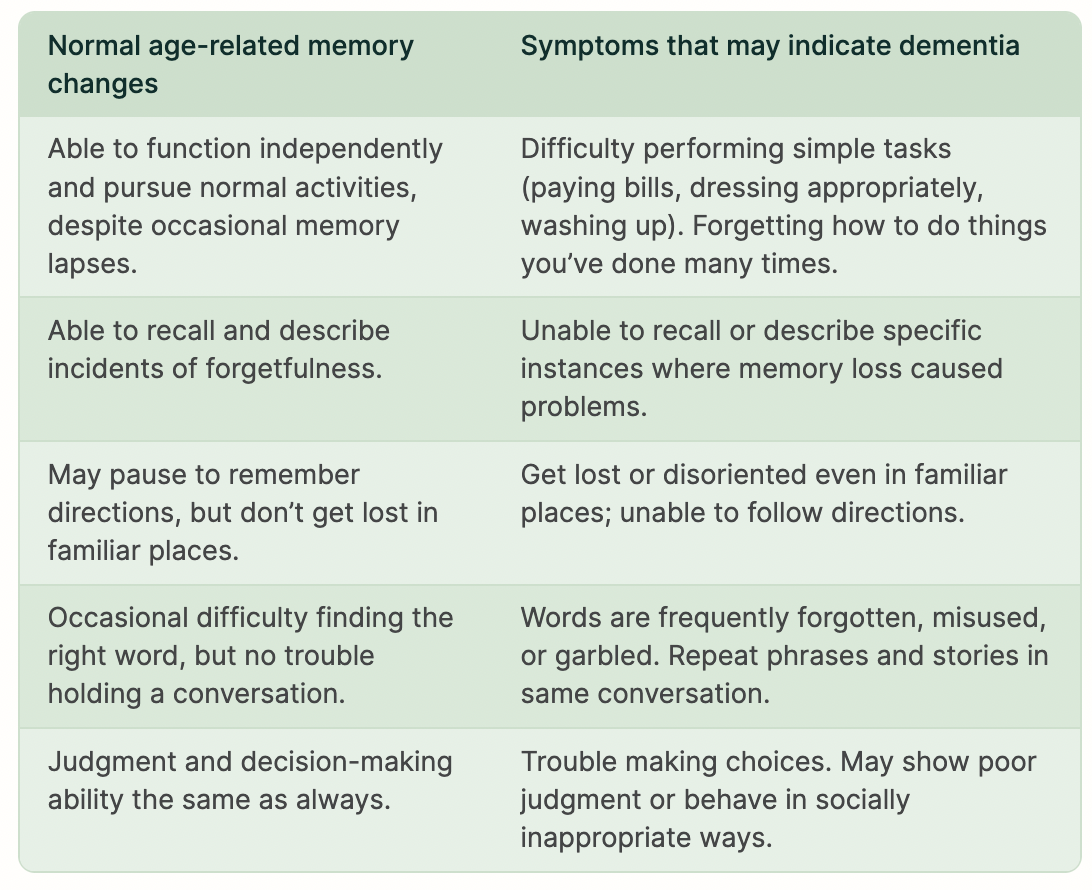
(from HelpGuide.Org– Age-Related Memory Loss)
Recent research studies have probed further into other causes that can affect your memory and recall. First comes a study published in The Journal of Prevention of Alzheimer’s Disease. This study examined psychological factors that shape brain aging, with a particular focus on Chinese Americans, who, due to cultural expectations and stereotypes, may internalize stress and emotional upheaval. In this study, those participants who had internalized feelings of stress and hopelessness had significantly more memory decline than those who did not have such internalized feelings. What this study underscores is that even subtle psychological factors can significantly influence brain aging, including memory loss.
Another recent study examined the connection between gut microbiome and brain health/memory loss. In what is described as a “tour de force” mouse study, published in Nature, researchers from the Arc Institute in Palo Alto examined how the gut-brain connection may influence memory loss in older adults. It seems that in older mice, gut bacteria hindered communication from the gut to the brain and thus led older mice to suffer worse memory in comparison to younger mice. When younger mice were given “old microbiomes” (either through fecal transplants from older mice or even through ingestion of poop from older mice), they too suffered memory lapses in comparison to younger mice with younger microbiomes. Researchers hypothesize that a prime suspect for memory loss as we get older could be due to the bacteria living in our gut that affect brain function through inflammatory pathways. Furthermore, when both old and young mice with “old microbiomes” were treated with antibiotics, their cognitive abilities returned. In essence, then it could be that a future promising therapeutic approach in humans for memory loss could involve particular food or nutritional therapy. While more research needs to be done, we already know from other research studies that in a relatively short period of time, consuming a high-fat diet can affect your brain health, including your short and long term memory. So, continuing the theme that you are what you eat, we can add the addendum that how good your memory is may reflect the foods you ingest.
Finally, one additional study regarding memory and aging is important to note. In a study published in the American Journal of Epidemiology, researchers from Columbia University examined the connection and consequences between memory and cognition and poor financial well-being. What they report is that “Lower average financial well-being and worsening financial conditions were consistently linked to poorer memory function and accelerated decline. Associations were strongest among adults aged 65 and older.” Unsurprisingly, the stress of reduced financial circumstances and the psychological strain, along with material hardship of not accessing health care, healty food or difficulties paying bills, can all take a toll on your memory, so much so that those study participants with poor financial well being were assessed to have memory decline equal to about 5 additional months of aging each year they were studied, compared to those not experiencing poor financial conditions. In essence, economic stability may be a determinant of neurological health, including memory decline. So, if you’re worried about your financial circumstances, it may just be that your memory skills are at risk as well.