Subscribe


Lethal Heat: It’s Getting Harder To Avoid The Lethality Of Extreme Heat Days
April 15, 2026
Although we’re only a few months into 2026, this year is already shaping up to be historic when it comes to weather patterns and climate change. For the past three years, heat records have been broken with historic warming trends. 2026 is expected to be no different, and to date, the weather seems to be bearing that out. In fact, in March of 2026, heat records were smashed in the continental US, and, as one climate expert exclaimed, “Climate change is kicking our butts.” April 2025 through March 2026 was the warmest 12-month span ever recorded in the contiguous US. Extreme heat records throughout the US and world more broadly keep getting broken, and to top it all off, there is the prediction of a strong El Niño this year, which could lead to new record temperatures in late 2026 and into 2027. A strong El Niño (predicted with a 62% chance of beginning this summer) would lead to supercharged weather events, including massive rainstorms or drought in some regions and temperatures that could break global heat records. As one scientist predicted, there is the “real potential for the strongest El Niño event in 140 years.” We can also then anticipate such dramatic climate-related events as water and energy shortfalls and intense fire seasons.
What then will be the impact on humanity from these record-breaking events, especially on older adults who are more vulnerable to the potentially catastrophic effects of extreme heat? As you may know from previous agebuzz posts on the perilous effects of heat, older adults start with less ability to sweat and a reduced blood flow compared to younger people, which means they retain heat more. That heat then puts a strain on the cardiovascular system, meaning your heart has to work harder in hot weather to try to cool down your skin while still providing oxygen to your vital organs. Furthermore, medications and chronic illness can exacerbate the strain on your body due to heat. So, while older adults can become overheated and ill with heat stroke, they are just as likely to wind up in an emergency room during a heatwave from deteriorating conditions such as diabetes, cardiovascular disease, or kidney disease. In fact, a recent study published in Lancet Planetary Health reports that heatwaves are driving a substantial increase in deaths each year among adults aged 65 and older. This is especially true in low-income communities and among Black older adults, who may lack sufficient cooling inside their homes and sufficient green spaces in their communities to provide some relief.
Another study published in JAMA Open Network examined the dangers from heat waves for older adults with heart disease. This was a study of veterans in California, and it found that among those who were living in poor neighborhoods or were even homeless, they were at increased risk of death during extremely hot days: in fact, their risk of death was 44% higher of dying on very hot days compared to cooler days. In particular, those without housing faced higher odds of dying during a heat wave than those who had housing, even if in poor neighborhoods. In some areas, heat is becoming so extreme that even green spaces and shade offer no protection. According to a study published in Environmental Research: Health, “The world is running out of safe hours to be outside, and older adults are losing them fast.” There are now parts of the world where extreme heat has become so dangerous as to be considered “unlivable” due to the heat stress, even if you are outside in a shaded area. Your body simply cannot cool off in such areas, and older adults in particular are extremely vulnerable. Unlivable means that the heat and humidity are so severe that a body cannot shed enough heat to keep up. It’s estimated that about 1.1% of the world population now lives in “unlivable” regions, and across the globe, close to 25% of the population lives in areas where peak summer heat is considered “unlivable” for older people. In essence, then, in many parts of the world, older adults face significant limitations on when and how long they can be outside. One more note about rising heat in certain geographic areas: All of the new AI data centers around the country are thought to raise the surrounding air temperature by several degrees, creating what may be “heat islands” in certain regions of the country.
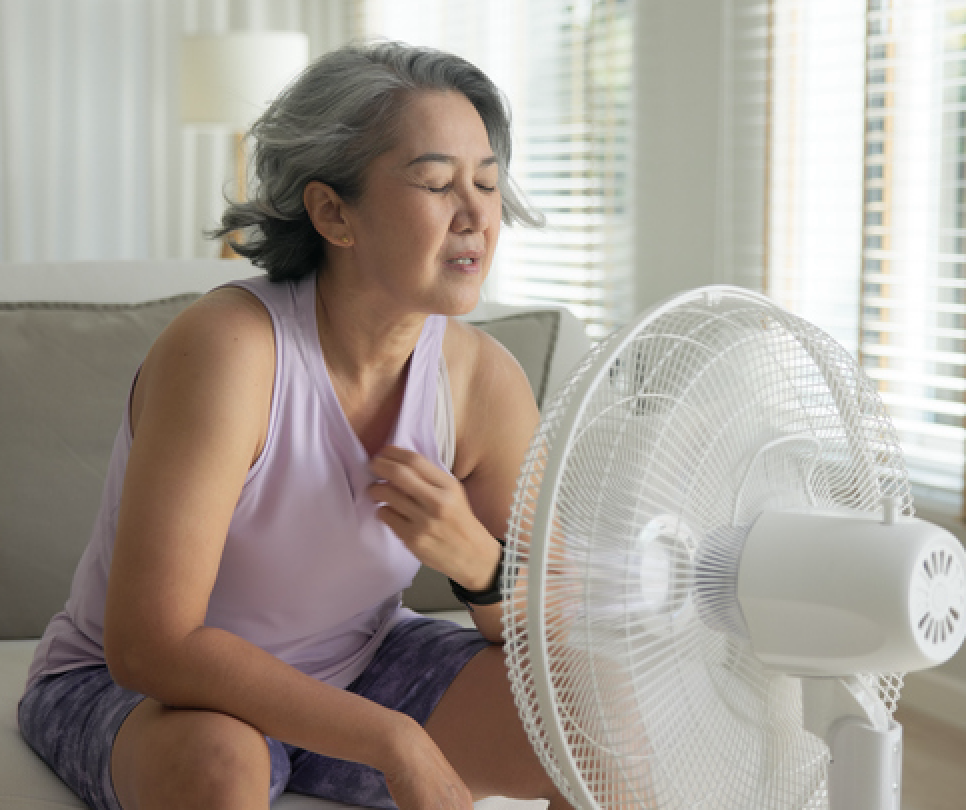
So, as the prospects for extreme weather and heat events climb, and the ability of older adults to weather these climate catastrophes sinks, it’s incumbent upon all of us to make sure the older adults in our lives, including ourselves, are keenly aware of rising heat and humidity and the need to stay indoors in a cooler setting when such heat waves occur. Air conditioning remains an effective bulwark against negative heat effects, though for many, running air conditioning is a costly decision, or it’s not available. But there is also the strategy of keeping the air conditioning at a higher temperature (say 78-80 degrees F) and then using a pedestal fan to spread the air around. It’s also advised that keeping skin and clothing damp will allow your body to produce more sweat and to cool down. You can also immerse your hands and forearms in cold water for 10 minutes every half hour to lower your body temperature and the stress on your heart. For some other cooling strategies, dampen a washcloth with ice water and click here.