Subscribe


Now “C” Here: Consider Vitamin C For Your Brain and Skin
June 17, 2026
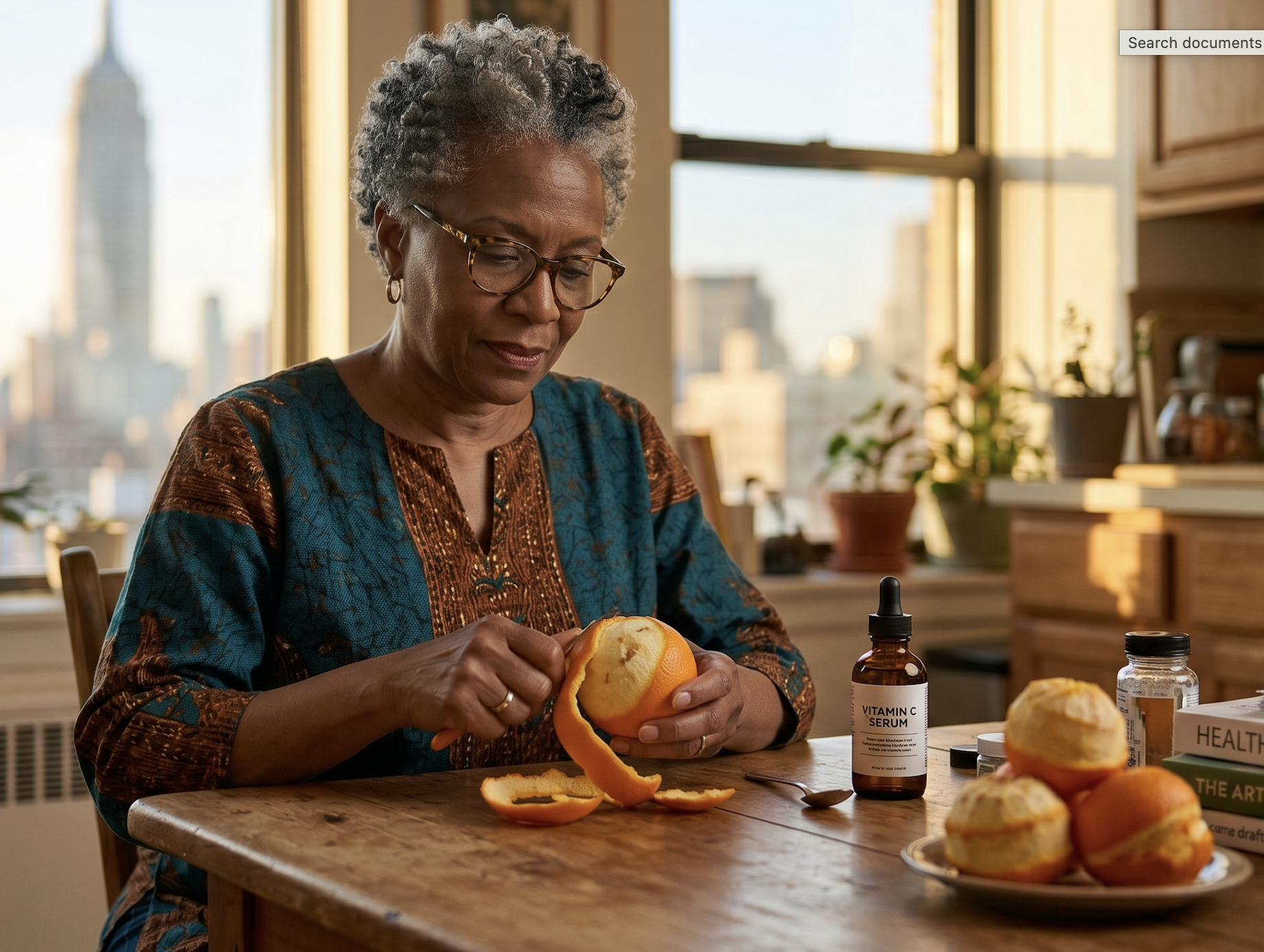
When you think of Vitamin C, what comes to mind? Probably lots of citrus fruits and maybe tales of scurvy surfacing from long-ago voyages when crews had no access to foods containing Vitamin C. Or maybe when you feel a cold coming on, you load up on Vitamin C to help ward it off. In fact, Vitamin C is not produced by our bodies, so we have no choice but to make sure we sufficiently eat foods containing it, or, if necessary, take a supplement to ensure an adequate supply in our bodies. Vitamin C is a powerful antioxidant that plays an important role in your health and well-being. What foods contain significant levels of Vitamin C? Everything from bell peppers to broccoli, and of course, oranges and tomatoes.
And what exactly can Vitamin C do for you? According to the Cleveland Clinic, Vitamin C not only boosts your immune system, but it can help ward off chronic diseases (protecting your cells from damage that can lead to cancer, arthritis, or even Alzheimer’s). It also plays an important role in wound healing, helping to produce collagen for wound repair, and applied topically, it can help with such aging skin concerns as wrinkles, improving skin receptivity of sunscreen, and reducing signs of hyperpigmentation or skin discoloring. In fact, according to a recent study from New Zealand, dietary sources of Vitamin C (such as kiwi), found circulating in blood plasma, can also play an important role in improving skin structure and renewal. So whether inside or out, Vitamin C has an important role to play in your health and well-being as you age.
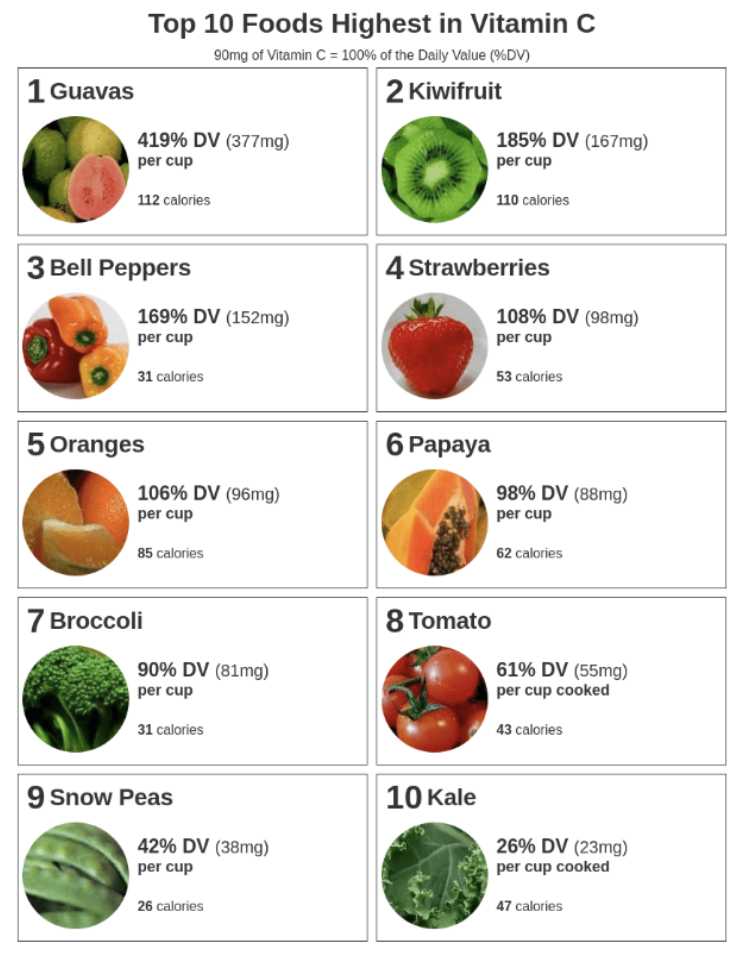
(from the website My Food Data)
Newly published research concerning the role of Vitamin C and brain aging underscores the important role of Vitamin C for older adults. This new study, published in PLOS One, found that low levels of vitamin C in blood plasma correlate with lower brain gray matter volume and less connectivity in the aging brain. Researchers examined the amount of vitamin C circulating in the blood, along with MRI brain images, in over 2,000 Japanese adults over the age of 64. It could be that the antioxidant protection from Vitamin C plays an important role in preserving brain matter as one gets older, and that insufficient Vitamin C levels may play a role in brain atrophy. As the lead researcher made clear, “Maintaining optimal Vitamin C levels could potentially play a supportive role in mitigating age-related cognitive decline and preserving normal brain network integrity.” While this correlation between Vitamin C and brain aging needs more research, and does not support taking supplementary Vitamin C, it does suggest that maintaining adequate levels of Vitamin C-rich foods in your diet may be important for preserving brain function as you get older. For more on this study, prepare to peel an orange and click here.
And when it comes to skin care, Vitamin C has a long track record as a topical ingredient for preventing skin discoloration, brightening skin tone, and reducing the appearance of fine lines. As a recent review in Women’s Health made clear, “Vitamin C delivers multiple skin benefits in a single ingredient.” However, because Vitamin C can be unstable in a skin care product, how you store it and how long you keep it will determine its effectiveness and potency. It needs to be stored in an airtight container and kept in a dark, cool environment in order to maintain its value.
The most lauded Vitamin C product on the market for skincare is Skinceuticals C E Ferulic, which tops the list of best Vitamin C products on The Wirecutter list and from a recent list in Forbes. Other, more budget-friendly recommendations include Timeless Skin Care Vitamin C Serum and Naturium Vitamin C Complex Face Serum.
So, whether for your brain or your beauty, Vitamin C foods and serums should play an important role in your diet and your medicine cabinet. You’ll receive major health benefits, inside and out!