Subscribe


Living While Caregiving: Author Myrna Marofsky Shares Hard-Won Wisdom
July 15, 2026
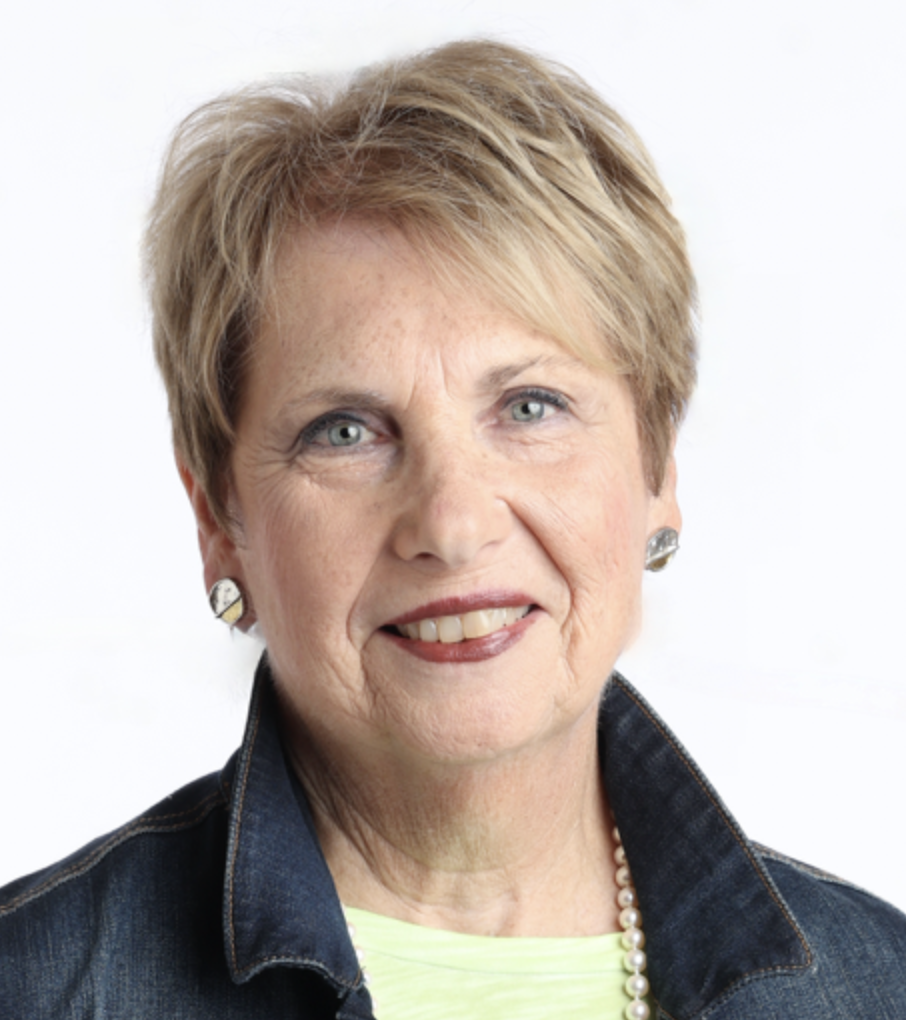
Almost all of us know someone who has filled the role of a caregiver for an aging loved one, or even been a caregiver ourselves. It’s never easy, as the need for help and support increases while the caregiver tries to balance her caregiving responsibilities with other aspects of her life, including her work, her other relationships, and her own need for self-care. Myrna Marofsky, a successful professional business consultant and champion of women, faced this caregiving dilemma: How to be at the side of her husband as he faced a dementia diagnosis while also preserving and protecting her own individual life outside of being Larry’s caregiver. The author of two books based on her caregiving experiences, Myrna was kind enough to sit down with agebuzz Managing Editor Connie Zuckerman to share her experiences and the wisdom she acquired as a result. Below is an edited version of their conversation.
Connie Zuckerman (CZ): Myrna, thank you so much for speaking about your successful business career, your life as a caregiver for your husband, and your mission to support and educate caregivers about how to live while providing care. Can you first give us a bit of background about yourself? Your family life while growing up, and your life with your husband Larry before his dementia diagnosis?
Myrna Marofsky (MM): I grew up in a tight-knit Jewish community in Minneapolis. I believe my parents influenced me more than I realized. My immigrant father was strong-willed and did what he had to do to survive and provide for his family. As a young woman, my mother was an outspoken champion of equal rights and a union organizer. Then she married Dad and stepped into the role of a traditional 1950s mother. That role had a negative impact on me.
At 16, my friend invited me to a community event along with a guy she wanted me to meet. His name was Larry, and he was 17. From that day on, for 51 years of marriage, I was by Larry’s side.
In the 60s, women had very few job options. My high school counselor advised me to become a teacher because I had worked as a babysitter. My father wanted me to become a secretary, but I went to the University of Minnesota against his wishes and earned a degree in elementary school teaching. Larry and I married at 22. He was in law school, and my teacher’s salary was supporting us and paying his tuition. Once Larry passed the Bar Exam and opened a very small practice, we started our family. I gave up teaching because there was no maternity leave at the time.
My life centered around our daughters, but I still felt pulled to do more. Larry’s interest in politics got me involved too, and together we ran campaigns and hosted fundraisers. I also ran for the school board, winning one term and losing the second by a flip of a coin to break a tie. As the only woman on a six-person board, I was under a microscope and learned to speak up and, most importantly, to ask questions because I either didn’t know or was curious. To this day, it’s my questions that I’m known for.
When my friend and I were frantically looking for something for our toddlers to do, we realized mothers like us needed a directory to find children’s activities in our area. So we created one. With investment from a friend and the use of his large mainframe computer, we created Kid’s Network. This was before Google. As we went around town talking about Kid’s Network, people kept asking how to use the computer we were using for the demonstration. That led to the creation of Computer Encounter, where we schlepped computers all over town doing training, even birthday parties with games, and senior citizen classes where we started with “what is a cursor.”
I’m a serial entrepreneur. When I grew restless and needed to earn more money for our family as our lifestyle became more expensive to maintain, someone told me I should be a management consultant. I didn’t know what that was, but I knew I could learn. I was introduced to a woman named Karen (to this day, my best friend). She owned a training company called ProGroup and worked with large corporate clients. I joined her, and for 22 years, together we built a very successful Diversity consulting company. Life was good during that time. I traveled the world, produced successful training tools, and watched my daughters become the strong women they are today.
In 2006, Karen and I sold our company, and I started a consulting practice for businesswomen. That led to my being asked to serve as a Chapter Chair for the Women Presidents Organization (WPO). For 20 years, I had the honor of leading peer groups of women business owners, watching them build sustainable businesses. This role was the highlight of my work experience. I retired a year and a half ago.
These women played a key role in my life as the care partner for Larry. I will come back to this.
CZ: What happened with Larry? When was he diagnosed with dementia? What was the course of his dementia journey? What were your caregiving responsibilities, and how did these impact your life and the lives of those in your family? Did Larry remain at home throughout the course of his dementia?
MM: Larry and I had a loving relationship where we did a lot together and as a family, but we also had our own identities and activities. He had a small solo legal practice, and I was busy with my work. Then our lives took a very difficult turn. My daughter, at age 40, had breast cancer, my twelve-year-old grandson was struggling with serious mental health issues, and Larry was facing a very difficult court case. That’s when I noticed that the man who tried to fix or help everyone had become withdrawn, forgetful, and very quiet. Believing he was “depressed,” I gave excuses. It was a classic case of denial. I didn’t want to believe anything could be wrong. Finally, things got to a point where I sent him to see his doctor to get a pill to relieve his depression. His doctor instead ran a four-hour neurological test that would determine if something more serious was going on.
On Larry’s 70th birthday, we received a diagnosis of early-stage Alzheimer’s. Notice I said “we,” because I got a diagnosis too. I took on one of the hardest jobs I ever had–a caregiver for my beloved husband. Our lives were permanently changed from that day forward. Our dreams of growing old together became living in a world where every day was unpredictable, and not what either of us would ever choose.
I’m leaving out a major component of living alongside dementia– the emotional impact that hits you mentally, often manifesting physically. It would be too hard to describe the conflicting emotions one feels all the time, sometimes all at once. Emotions of love, fear, doubt, guilt, and grief shadowed everything I describe.
One diagnosis didn’t convince me, so we went for a second opinion, which confirmed the first. At this point in the diagnosis, all anyone could offer was what I call “tragedy talk.” They would explain the stages of dementia, what Larry would lose, what to expect, and tell me to get his name on a memory care unit right away because it could take forever. In my book To the Last Dance, I write that these meetings felt like doctors and social workers were repeating a script they had said to hundreds of others, with no consideration for who we were or what our lives had been like before the diagnosis. They didn’t know because they never asked. And no one showed any interest in or concern for me or the role I was about to undertake. We’d leave with pamphlets that included photos of older people bent over walkers, with someone at their side.
I knew from the start that this wasn’t going to be my life. Even knowing the disease would progress and that many things would become more difficult, I wouldn’t let our bad news become a bad life. For five years, I dedicated myself to caring for Larry in ways that honored his personhood, while, at the same time, and not easy, preserving parts and pieces of myself while maintaining the relationships that were important to me. Like so many care partners, there were days when I’d ask myself if I could do this. I wasn’t a natural caregiver, and, in truth, at times I was embarrassed about Larry’s actions or the fact that there were signs of his disability around the house. His incontinence almost put me over the edge.
Then there were people who thought they were helping by saying to me, “Be sure to take care of yourself.” I looked at them and thought, What does that mean? What do you think I’m trying to do? Do you have a clue how hard this is? When I’d go out with friends for a break, the first thing they asked was, How is Larry? I had to kindly train them to understand that this was my time.
When I broke down at a meeting, my lovely WPO women made me commit to finding a therapist who could help me get through it. My book has tales of that adventure, but I did find someone who understood my desire to find a way to lovingly care for Larry without losing myself in the process. With her assistance, I adopted a philosophy of possibilities, asking two questions: How do I want to live each day, and how do I want to feel in the end? I did not want to have any regrets, and I wanted to keep myself alive.
I didn’t know it at the time, but the mindset I lived by became the basis for my two books, a concept which I now call CareLiving. My goal was to keep Larry at home unless I had no other choice. Lately I’ve been watching my friends whose husbands have progressed with dementia to a point where memory care is their only way to stay alive themselves. I get it. All cases of dementia are different.
Daily life as his care partner was never predictable. Plans were always tentative. I learned to assess each day by how Larry seemed and how much energy I had to give. When I tried to fight it and push for one more thing, or believed he could if he tried harder, I would be disappointed. The question I learned to ask was “What is still possible with some adjustments?” Then accept that some things were no longer possible. There is a lot of heartbreak that comes with the constant losses of living alongside dementia. Your loved one is there, but not really there.
Over time, the trauma for our family increased tremendously, and still, I believed I could handle it all and keep him home. It took a family intervention to convince me to bring in more help and eventually Hospice services. Larry passed away with all of us around him. He had lived all the days of his life. He was cared for with devotion, dignity, and love. And I’m still here.
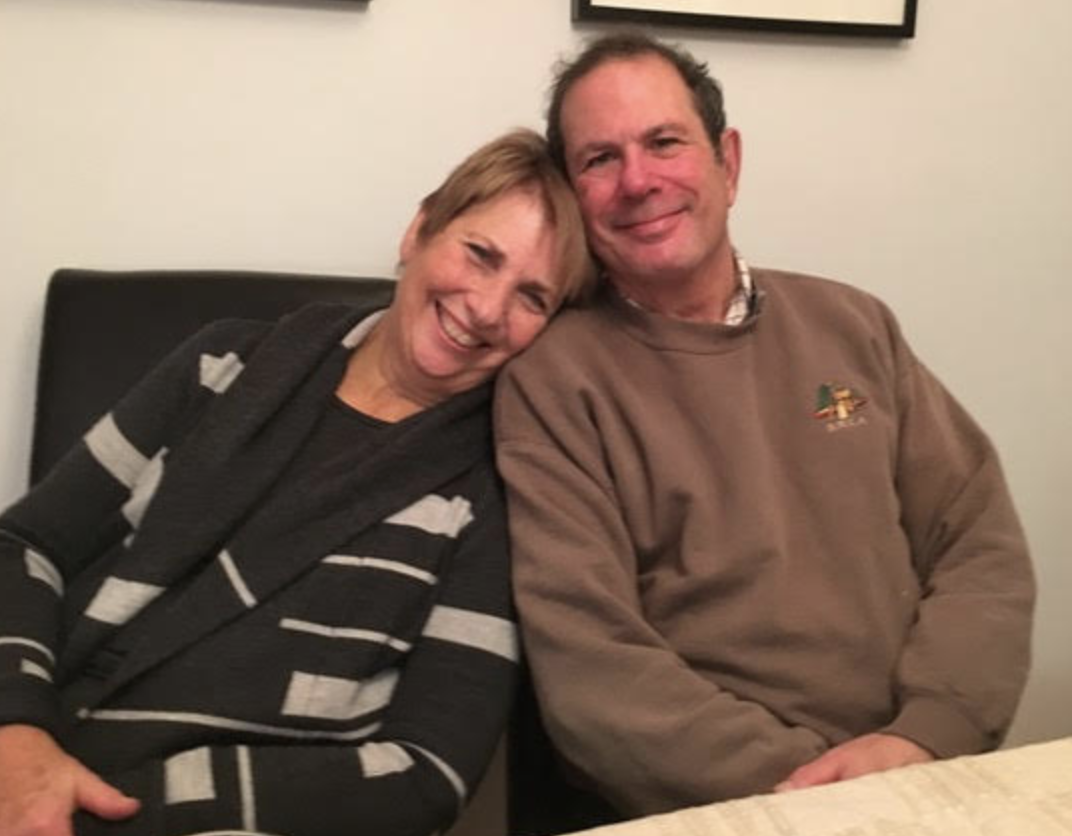
CZ: You’ve written two books about being a caregiver. One, To The Last Dance, about being Larry’s caregiver. And you recently published a second book about caregiving, this time with specific guidance and considerations for how to live while also providing care to another. Can you talk about the impetus for these books, your goals for writing them, and how agebuzz readers can get copies?
MM: I never intended to write my first book, To the Last Dance, A Partner’s Story of Living and Loving Through Dementia; it just happened. Larry passed away just a few months before we were locked down during the COVID pandemic. I sat alone, reflecting on the past five years and on how people would continually ask me, “How did you do it?” I thought about the hundreds of therapy sessions where I dumped my grief over all the losses we were experiencing, and then my therapist would problem-solve with me to figure out how to focus on what was still possible. I thought of the sweet dance in the hallway just days before Larry died, as if he were giving me a gift to say thank you. So I started writing, throwing away draft after draft. It was therapeutic. Each iteration of my writing became more and more personal as I opened my heart to write the memoir it became. To my surprise, I had written a love story.
The big decision was whether to publish it. I wasn’t sure anyone would read it, especially care partners themselves, who have so little time to sit and read. However, everyone who read the drafts encouraged me to get it into the hands of anyone who could benefit from the mindset of lovingly living through dementia. While it is my story, I knew there was something in it for others, and I continually saw it as a gift. The book is available on Amazon.
For two years, I gave presentations about the book to various groups. My goal was to offer care partners encouragement and hope as they do this incredible job. Because I considered this book a gift, I set a goal at the beginning of 2024 to give away 1000 books by May. A sincere ask of my network raised the funds to achieve it within two months. One of my greatest days was when my grandson and I gave away 300 books to various Alzheimer’s support groups in clinics, synagogues, and community centers.
As To the Last Dance began to circulate, I’d hear from readers who had dog-eared pages, taken notes, or found something I wrote that stayed with them. One reader called the tips “Myrnaisms.” I was encouraged, more than once, to write a guidebook, but I resisted. There can’t be a handbook for dementia because every situation is different, and the idea felt wrong to me. Then Joshua Wert came along. He is the owner of English Rose Suites, which provides residential memory care. He wanted a guide to give as a gift to the companions of his residents to demonstrate his concern for them as well as their loved ones. He read my book and felt it contained the content he was looking for, minus my personal story, plus he had expertise to lend. It became our joint project, resulting in the short, concise resource we now call CareLiving: A Companion’s Guide for Living Alongside Dementia. It’s focused on the care partner, not the disease, with a beautiful cover that serves as a quiet reminder to breathe. You can find it on Amazon.
What I’m discovering is that friends are buying it to give to others whose loved one has received a dementia diagnosis. One told me, “I had something to give her to show my support.” A gift. I love that.
CZ: You have been a champion of women throughout your professional career and now in this subsequent stage of life. Can you comment on the roles that women take on as caregivers and how they can continue to have productive and satisfying lives as they age while also fulfilling their roles as caregivers? Can a woman ever assert her own needs and desires over her assigned role as a caregiver for someone else?
MM: Caregivers come from varied and unique situations, span different generations, and have all kinds of relationships with the people they care for. I’ve worked with young women building businesses who saw their father or mother’s dementia as a problem to be solved. I’ve talked with women who find my love story moving, and others who simply can’t find that same love in their own situation. Some are caregiving out of obligation, and others, out of devotion.
Because dementia tends to strike older adults, and many of the women in caregiving roles today grew up in a time when they put everyone else first, especially their husband and their family, they can feel it’s selfish to think about their needs. That’s probably why I find something shifts when I say, “You have permission to ask, ‘What about me?'” Some women are still working while caring for a loved one. Giving that up would be detrimental to both their finances and their identity. Thankfully, some workplaces are beginning to recognize this with accommodations that benefit everyone. In my own situation, my daughter used Family Leave to be with Larry so I could continue working with my women’s groups three times a month. And still — the statistics show that nearly two-thirds of all unpaid caregivers are women, doing this work for free. Don’t get me started on that.
My role is always to champion women — empowering them to see possibilities, even when it’s hard. Things feel possible when you intentionally focus on what matters, the priorities you live by, and the values that drive you, and then permit yourself to let go of what’s out of your control. My consistent refrain is simply this: be kind to yourself. It’s the living part of CareLiving.
CZ: What do you think is the most important lesson to be learned from the experiences and opportunities you’ve had as a professional in the business world and as a caregiver for your spouse in your personal life?
MM: Maybe it’s that old saying, “Where there is a will, there is a way.” I’ve seen women entrepreneurs navigate some of the darkest days with persistence and determination, always guided by their vision. They refuse to let things just happen to them by asking what is still possible. During my time as a caregiver, I carried that same intention. I refused to let dementia take away Larry’s dignity or destroy my sense of who I was. Even when I was fearful of what was ahead, I worked hard to stay present and focused on what mattered most, so I would have no regrets in the end. That intention became CareLiving.
CZ: What most occupies your time these days? What do you find the most fulfilling and rewarding?
MM: As a single woman who loves to stay active, I’ve been writing for older adults, traveling with friends, going to movies, and learning to just sit quietly to watch the birds at the feeder. I’m always putting groups of women together for one thing or another. I’ve started the Game Gals to play board games once a month, held a huge dance party, and organized a retreat for a group called Wise Women. It’s just what I do. With the new book CareLiving just being released, I’m working to get the word out in hopes it reaches those in need. By nature, I’m restless and an entrepreneur, so I love to find ways to turn that into something purposeful and make some fun money as well. I have a hot button around women giving away their talents without being compensated. It’s from my days of consulting, when I saw the inequities.
CZ: Any last bits of advice or comments you want to share with the agebuzz community?
MM: I love that you use the word community. We know that loneliness is one of this country’s biggest problems, especially for older adults. Not many people build groups as I do, but newsletters with real people talking and opportunities to know you are not alone are priceless. Thank you for the opportunity to become part of this community.
Myrna Marofsky is a writer, entrepreneur, and a self-described Champion of Women. She served as President of ProGroup, a diversity consulting organization, where she produced award-winning training programs and tools. For more than 20 years, she has worked to empower women as Chapter Chair for the Women Presidents Organization and as founder of The Business Women’s Circle. Her husband’s dementia diagnosis led her to write two books about her caregiving experience, which she calls CareLiving. She wrote To the Last Dance: A Partner’s Story of Living and Loving Through Dementia and co-authored CareLiving: A Companion’s Guide for Living Alongside Dementia with Joshua Wert. Her work has appeared in Next Avenue and other publications serving older adults. She lives in Minneapolis, Minnesota. We welcome Myrna as our newest agebuzz Guest Blogger.