Subscribe


Friends Indeed: Rethinking Friendships In Your Later Years
May 27, 2026
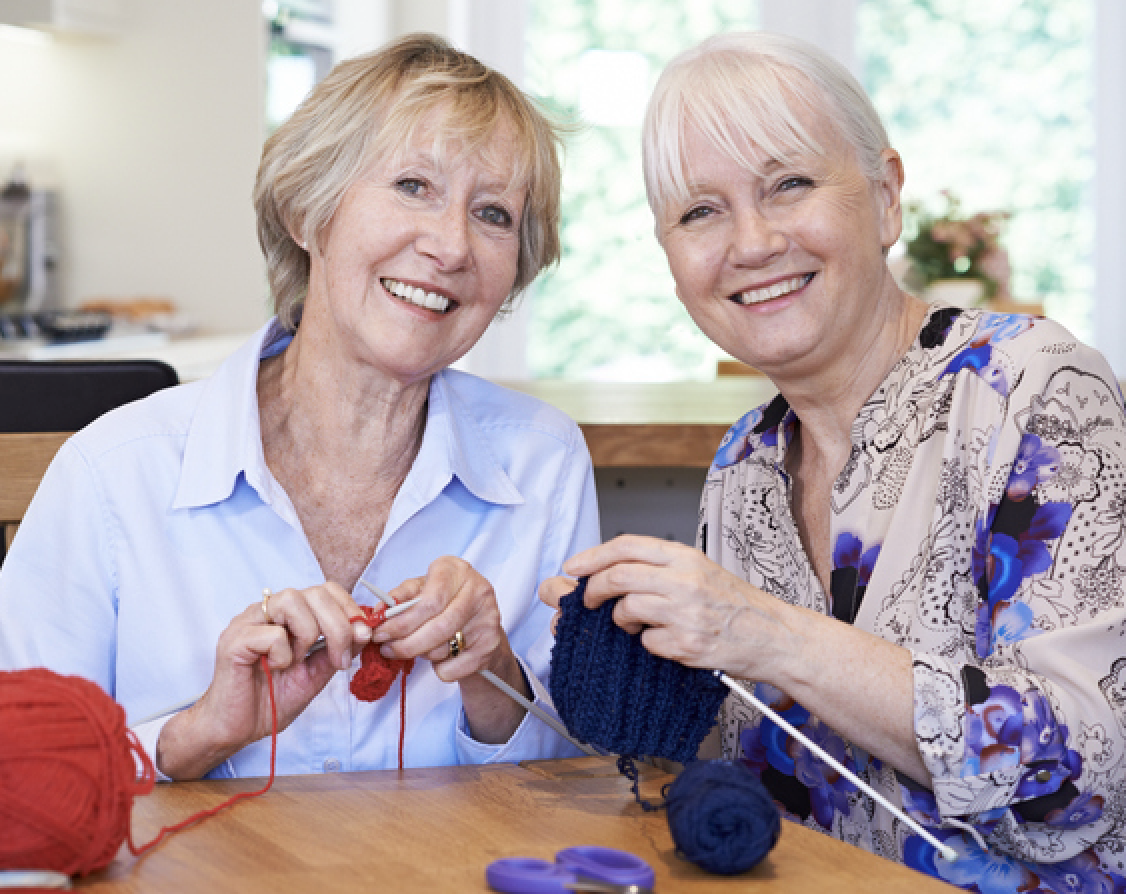
Almost everyone has had the experience of losing a friend as they’ve gotten older. Whether due to death, disease, moving, or just a lost relationship, friendships often fade away as we get on in years. And while we know that social engagement and social connections are critical for maintaining our physical and cognitive health as we get older, the reality is that many of us struggle to hold onto old friendships, to reconsider what we’re looking for in a friendship, or to create new relationships to fill the void. The challenge is to maintain the friendships you have (if you want to) and to create new friendships however you can. Maintaining old friendships may be difficult if you no longer live close, have lost your independence or mobility, or perhaps even “outgrown” the old relationship. But forming new replacement friendships is no easy task. You may no longer frequent places where meeting new people is easy, such as work, clubs, social gatherings, or even cultural events where like-minded people can mingle.
So, how do you open yourself up to new friendship opportunities? Experts have lots of suggestions for how to best position yourself. For example, it’s recommended that you immerse yourself in environments where you’re likely to see the same people, such as a class, hobby club, political group, or even a regular dog-walking routine. A recent NPR “Life Kit” segment urges you to take it even further. If you find someone who piques your interest or you’d like to get to know better, take the initiative and ask for “a date.” The more concrete you are in setting up a plan, the more likely you’ll actually have a get-together with this future friend. (In fact, some experts suggest you actually treat a developing new friendship the way you would date in the 21st century, by using an app, for example, like TimeLeft.) Furthermore, experts suggest you make this a more memorable “date” than just a coffeeshop meet-up. For example, find an activity like a museum exhibit or a music performance you’d both enjoy, something less likely to get cancelled or put off, and something that can help you establish a bond and shared memory.
In particular, experts agree that being the person to take the initiative and reach out a hand (and heart) to someone you’d like to befriend may be difficult, but it makes all the difference. Social psychologist Katharine Esty acknowledges that taking the first step requires courage, as we all fear rejection. Writing in Ageist, blogger Sheri Radel Rosenberg takes it a step further, revealing that the friends she now covets were never within the realm of possibility before, as she was too timid and overwhelmed to attempt a friendship. But now, as she describes it, what she’s looking for in a friendship has changed. “What used to feel intimidating now just feels like being in the right room.”
Even how you approach a new friendship may look different than in your younger days. Since you don’t have a shared past to recall, what you are doing is creating a new bond and a new way to go forward. As Time magazine recently suggested, a small shift in how you approach such new friendships can make all the difference. That is, asking open-ended, deeper questions not only shows your interest in the person but allows for a level of vulnerability and intimacy between new friends that is often hard to achieve when you have no past to rely on. Referring back to Katharine Esty, she has a list of guidelines she turns to to support and sustain relationships that may help you when you’re building a new friendship. Her list includes: Cutting everyone some slack, apologizing when you mess up, not keeping score, understanding we’re all doing the best we can, and acknowledging that we can disagree but still be friends and be close.
And for those of you missing the friends you made at your workplace and who are now no longer in your regular orbit, keeping or maintaining such relationships may be a real challenge. You no longer share the same struggles or office experiences that can cement a friendship. Your schedule or priorities may now be different. Keeping such a relationship going will require some active pursuit on your part. Recommendations for how to do that? As in other relationships, you are urged to take the initiative and reconnect, perhaps in a way that makes it easy for someone still working, such as a Zoom coffee date or lunch near the office. You may also want to pursue joint activities your former office mate enjoys after hours, such as an outside group you can both attend together. And as was previously advised, the more concrete the attempts to connect, the more likely they will actually happen. So pull out your calendar, dial up your phone, and find out more here.