Subscribe


Screen Time: Updated Guidelines For Colorectal Cancer Screening
June 3, 2026
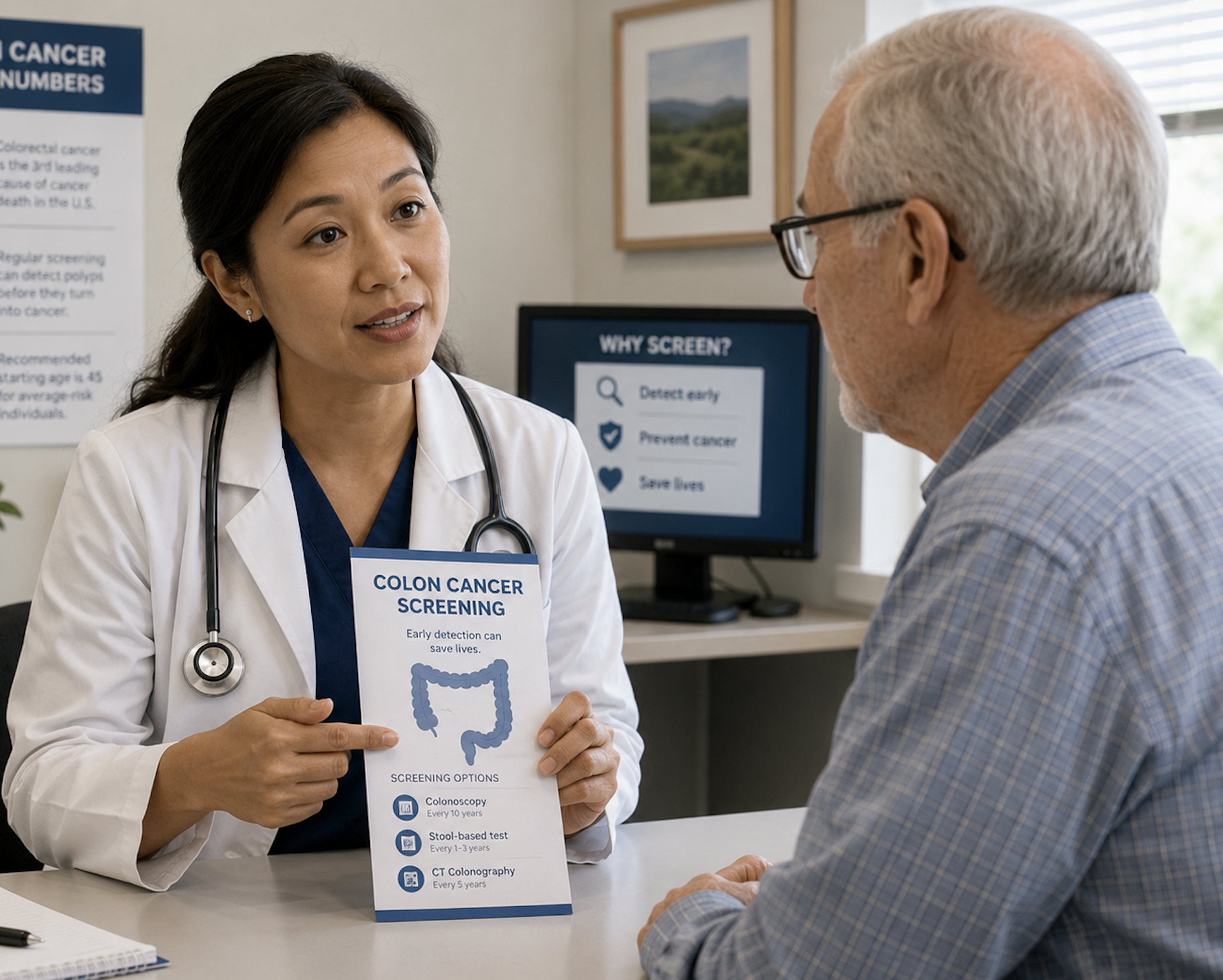
The statistics are grim, and among certain populations are getting even worse. It’s estimated that close to 160,000 Americans will be diagnosed with colorectal cancer (CRC) this year, and over 55,000 deaths will occur because of CRC. While cases are declining among those 65 and older, largely due to screening, among those ages 20-49, cases are rising by 3% per year. Even with current screening methods, it’s thought that some 20 million eligible adult Americans (1 in 3) are not taking advantage of the possibility of preventing the disease altogether, or catching it early enough, when 5-year rates of survival are as high as 90%. Among all adults, CRC is the second leading cause of cancer deaths, and among those under 50, it’s #1. For those at average risk (no prior personal or family history), screening is recommended to start at age 45 and continue until age 75. For those between the ages of 75 and 85, a discussion with your physician will determine whether ongoing screening makes sense. For those over 85, no further screening is considered necessary.
Given the rising CRC rates among younger adults and the increasing technological development of more screening options, the American Cancer Society has just published updated colorectal cancer screening guidelines, broadening the recommended screening options, with the goal of improving participation among US adults. The hope is that with more awareness of the range of options, including options accessible at home and without the prep required for a colonoscopy, more people will be screened, leading to more detection and fewer deaths. Colonoscopy continues to be considered the “gold standard,” as it provides a visual examination of the colon and rectum and allows for the removal of pre-cancerous lesions, an option unavailable with other less-invasive screening methods. And colonoscopies are now less burdensome than in previous times, as the preparation is no longer as onerous.
Nonetheless, many choose not to avail themselves of colonoscopies, either due to cost, risk, or burdensome prep. In that case, the American Cancer Society now recommends additional screening options for people considered at average risk who have no symptoms. Take a look at the chart below to see what they’re now recommending:
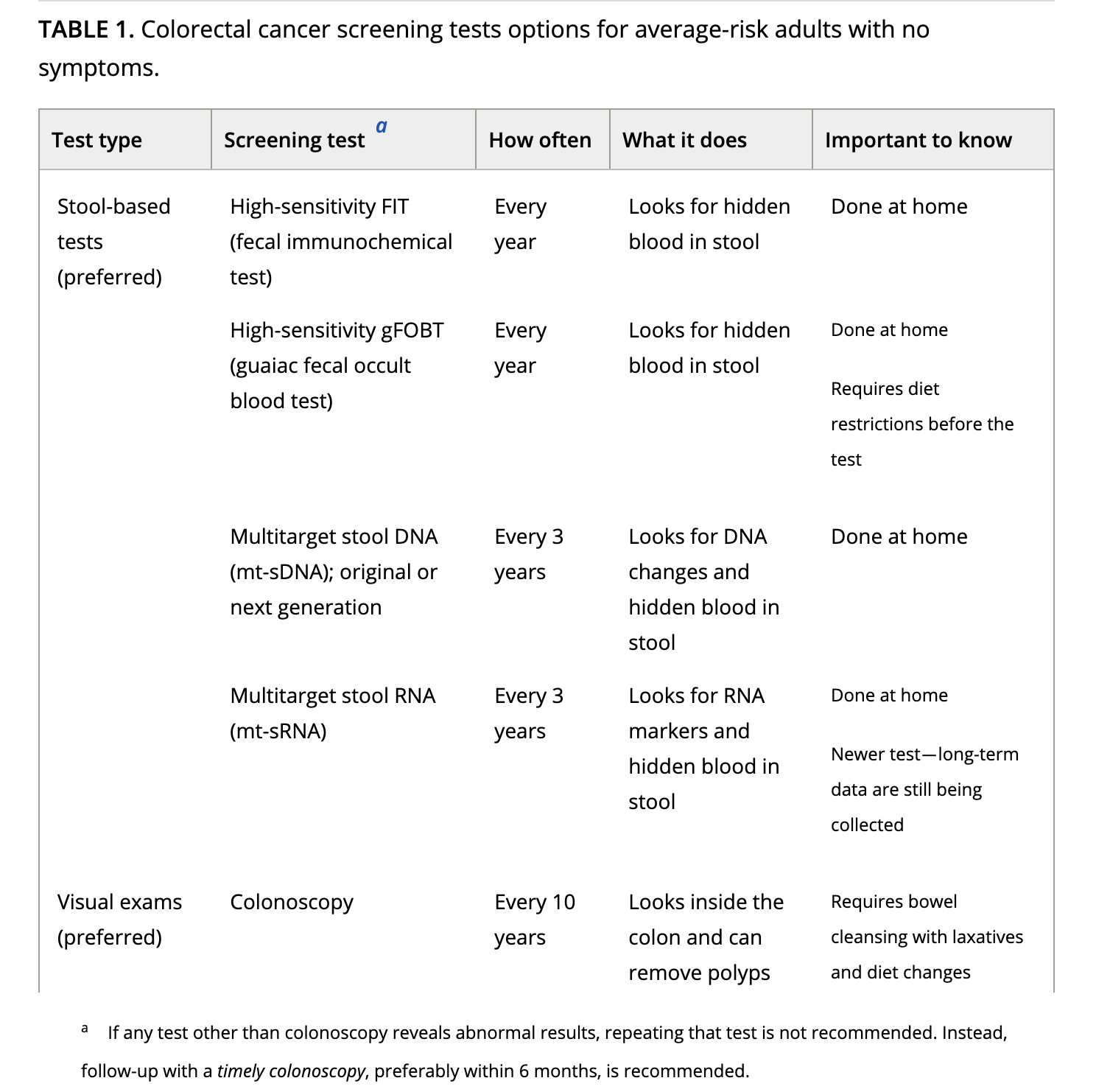
(From The American Cancer Society journal CA: A Cancer Journal For Clinicians: Screening for Colorectal Cancer)
The two most sensitive home-based stool tests are Cologuard Plus and ColoSense, both of which are extremely sensitive in picking up markers for CRC and more modestly sensitive for picking up pre-cancerous polyps. Both require a physician’s prescription, though Cologuard is reimbursed by most insurance companies, whereas ColoSense may not be. For those unwilling to do either a colonoscopy or any of the home-based stool tests, there is also now a blood test available, which can pick up tumor DNA, but is not considered as sensitive and accurate as stool-based tests. Blood tests will also not pick up pre-cancerous polyps. Blood tests and the FIT stool-based tests need to be repeated yearly to detect CRC, while the more sensitive Cologuard and ColoSense only need to be repeated every 3 years. If any of these tests come back positive, it’s then recommended that a follow-up colonoscopy happen within 6 months to confirm whether, in fact, pre-cancerous polyps or CRC are present.
Individuals who are at higher risk- either due to personal or family history or due to a medical history with inflammatory bowel disease- should be screened more often and are advised to utilize colonoscopies. Broadly speaking, everyone should discuss the screening options with their physicians, along with their particular risk factors, before determining which screening method is best, though experts underscore that any screening test you’re willing to take is better than no screening at all. For a comprehensive description of all new American Cancer Society-recommended tests, their benefits, and their limitations, clear your schedule and click here and here.
Of course, no matter your age, if you experience any worrisome symptoms, you should not wait until your next recommended screening, and instead, you should consult with a physician as soon as you can. What constitutes worrisome symptoms? The American College of Surgeons lists the following:
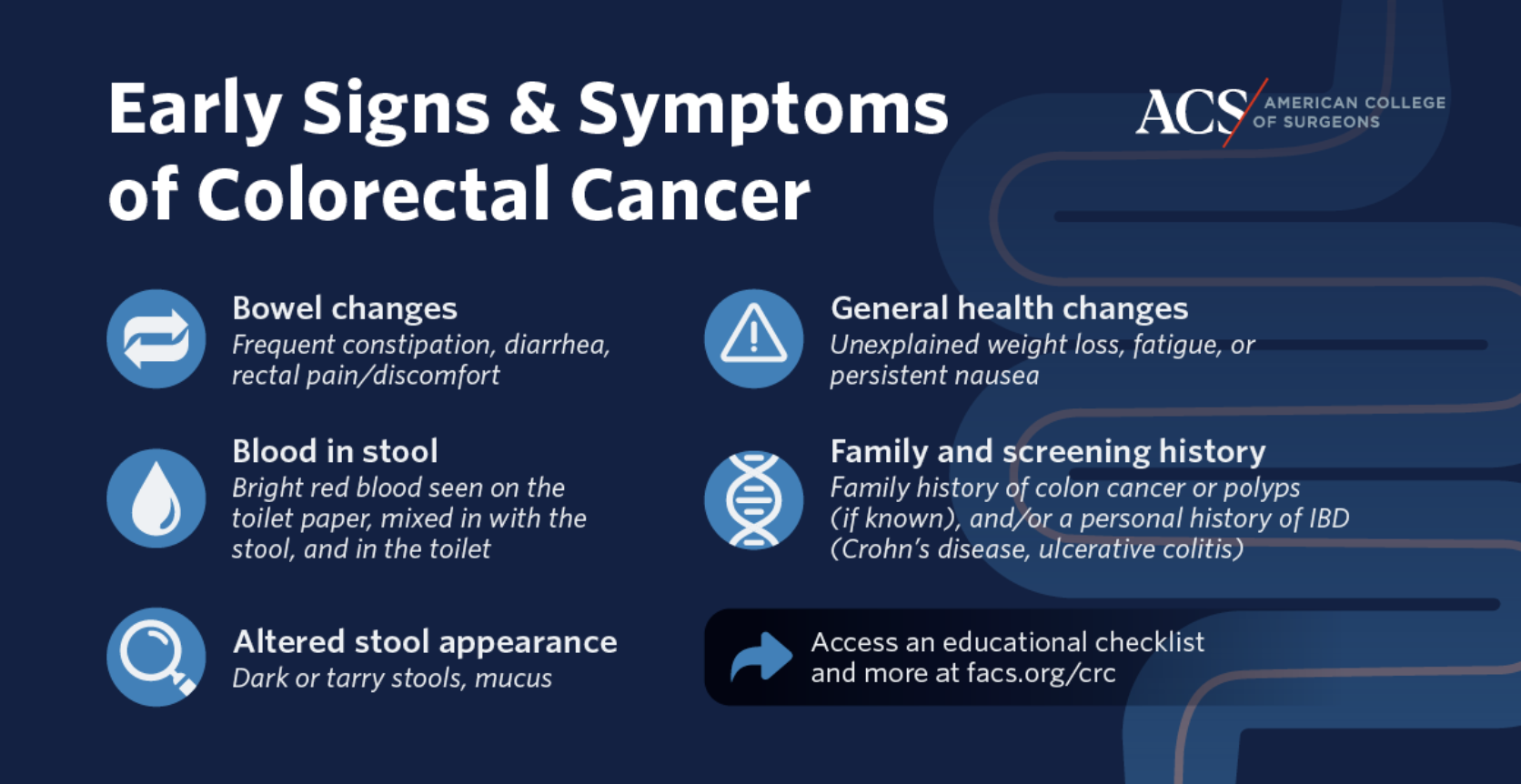
Furthermore, they advise that even though rates of CRC are dropping among those 65 and older, and rising among those under age 50, CRC remains a disease more common among older adults, and 1 out of every 25 men and women will be diagnosed with CRC during their lifetime. And a new study from the Harvard T.H. Chan School of Public Health warns that even if you’ve had pre-cancerous polyps removed, because of gut microbiome alterations, your risk of CRC remains heightened.
How can you reduce your CRC risk? There is some new data that suggests that pairing fiber-rich ingredients with healthy fats in your diet can help clear out damaged cells in your colon before they become cancerous, thus reducing your risk of CRC. For some additional info on that study and creative recipes, take out a baking sheet and read here. Of course, like many aspects of aging, lowering your risk of CRC can also be aided by living a healthier lifestyle, including exercise, a wholesome diet, limited processed foods and alcohol, and no smoking or vaping. To find out specific lifestyle changes that will lower your risk, look here.