Subscribe


A Safe Bet: Vaccines Are Essential For Healthy Aging
February 4, 2026

We are still knee deep in the winter viral season, and flu activity, along with RSV and COVID, continues to remain problematic, and in some states, the number of cases is still rising. However, despite the vulnerability of older adults to the ravages of these diseases, the vaccination rates for flu, along with pneumonia, are falling among adults aged 65 and above. The majority of deaths from flu and pneumonia occur in adults aged 65 and older, yet the rate of vaccination for flu is now 67%, in contrast to 71% in 2019, and for pneumonia, the vaccination rate is 65% compared to a rate of 67% in 2019.
While we know that vaccines lower your risk of infection and serious illness, we are bumping up against challenges to the safety and efficacy of vaccines, in addition to fatigue with all of the protocols that arose during the COVID pandemic. In particular, COVID seems to have accelerated suspicion and outright misinformation and disinformation about the safety and value of vaccines. This is despite the fact that research continues to demonstrate the safety of mRNA vaccines developed to combat COVID. So what’s causing the worry and misunderstanding about the value of vaccines? Certain social media and internet distortions are taking a toll on individuals’ trust in medical information. JAMA recently published a post on where individuals can obtain accurate and trustworthy information about vaccines, including the chart below.
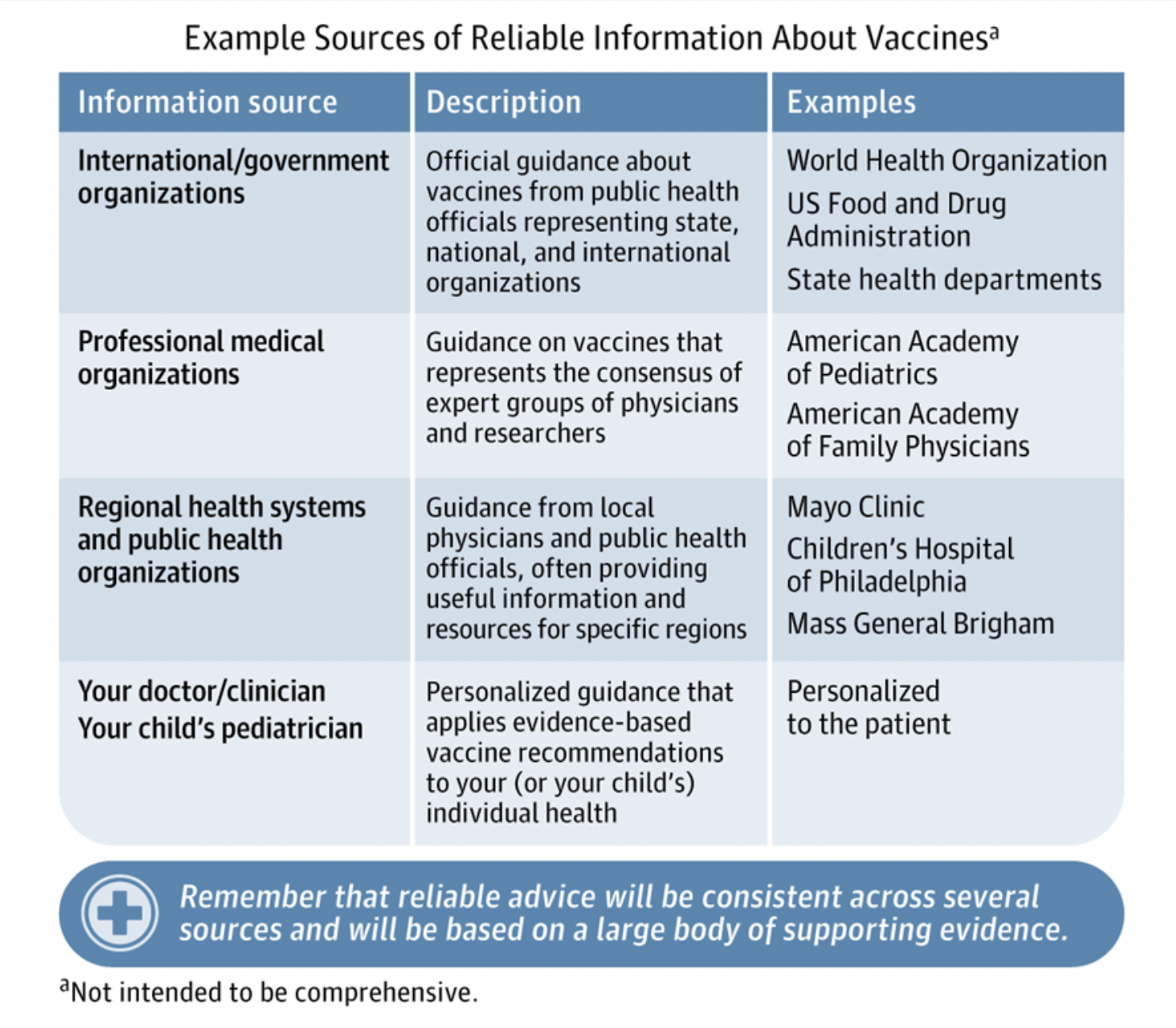
Of course, the changes in childhood vaccine schedules and controversy surrounding the availability of the COVID vaccine this year have also generated distrust and misunderstanding, along with reduced access, reduced funding for further research, and the sowing of doubt around vaccine safety. And if you think you’ll be immune to the implications of changes to the childhood vaccine schedule, think again. Not only does this change in the schedule create additional mistrust of vaccines generally, but with fewer children vaccinated, the spread of preventable diseases will impact older adults as well. For example, whooping cough (which is addressed through the TDP vaccine) is beginning to creep up again, which can have serious implications in older adults. And if children no longer regularly receive a flu vaccine, that means there are more people in the community who may now get sick, and potentially spread flu to vulnerable adults. In essence, just because children may now receive fewer vaccines doesn’t mean the future spread of preventable illness will confine itself just to children.
Most experts not only encourage widespread vaccination for a range of preventable illnesses in older adults, but in fact praise vaccines as critical to closing the gap between longer lives and healthier lives. Furthermore, there is a reason that Medicare covers a comprehensive range of vaccines for older adults, at little or no cost to patients. And one of the most important vaccines currently covered by Medicare is Shingrix, the vaccine that lowers your risk of being infected with shingles. We’ve previously posted about research supporting the benefit of a shingles vaccine, not only in fighting off shingles, but it also appears to help protect your brain from dementia. New research on that front has not only provided more evidence of the dementia fighting properties of a shingles vaccine but also the potential of the vaccine to slow biological aging. According to a new study in The Journals of Gerontology, after looking at multiple biomarkers of aging in over 3800 adults aged 70 and above, researchers found that among those who had been inoculated with the shingles vaccine, there were clear signs of less inflammation and slower epigenetic aging compared to adults who had not been vaccinated. There also appeared to be a link between vaccination and increased immunity. As one researcher posited, “The vaccine may play a role in supporting healthier aging.” For further information on this potentially significant new study, stick out your arm, roll up your sleeve, and look here and here.