Subscribe


Paying It Forward: Activism Today For A Better World Tomorrow
January 28, 2026
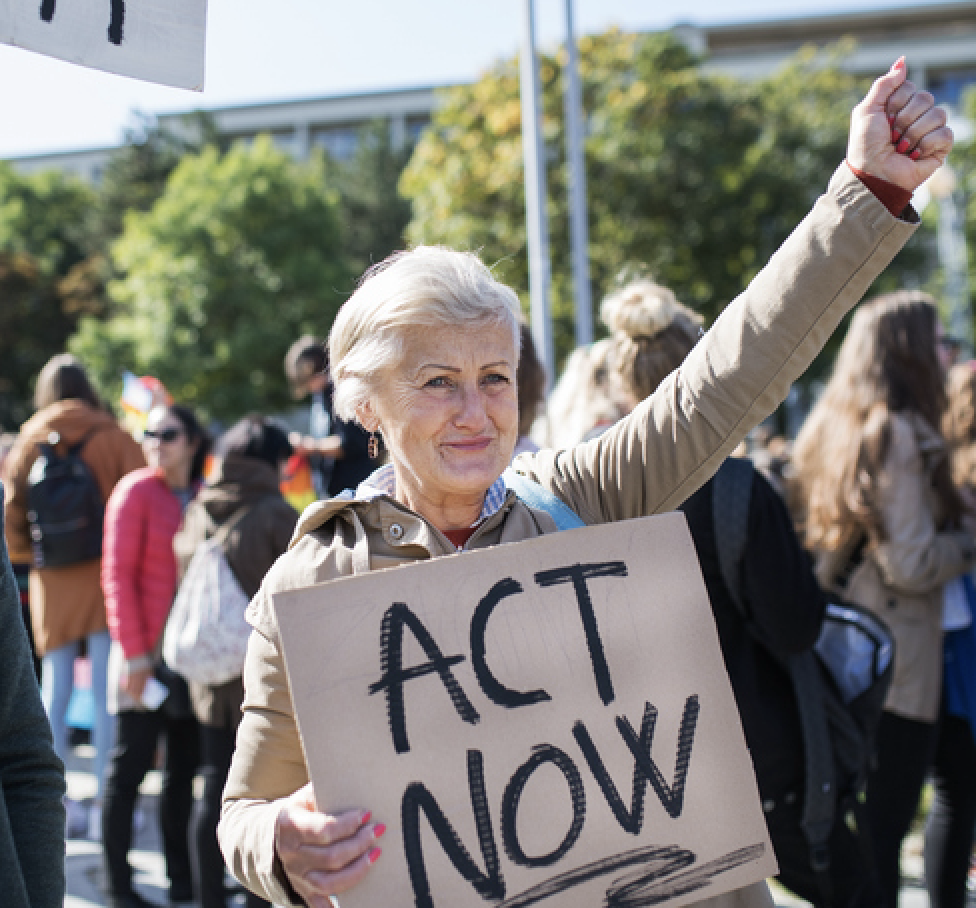
We certainly live in an “interesting” time. Class, cultural, and political divisions are rampant throughout the country, and tensions are high as violence becomes more common and partisanship and social media blind us from universally shared facts and truth. In such times, it’s natural to see younger people front and center, protesting current conditions and hoping to shape the future they will inherit. But what about older adults? Are you surprised to read about the activism currently cropping up among older adults around the country? Estimates are that about ⅓ of the US population engaged in some form of activism in the first quarter of 2025 (the latest figures available, recognizing that those numbers have probably increased). Activism can be defined as passive, online participation, or active, in-person events, boycotts, or other public actions.
In many ways, seeing older adults out in the streets, marching or witnessing scenes of turmoil, makes a lot of sense. After all, Baby Boomers are members of a politically active generation, coming of age when the Vietnam War was a source of deep division in our country, along with such seminal movements as civil rights, women’s rights, and LGBTQ rights. As one current activist has made clear, “I am proud to be an old hippie. I wear that as a badge of honor.” Many who march today originally stepped out and onto the streets when these issues were first being discussed and debated in our country. Moreover, today’s older adults are not constrained in their activism the way some younger adults are: they usually have no jobs or bosses to worry about, no children at home to be cared for, and no special time commitments that can get in the way of devoting themselves to a cause of concern. As Bill McKibben, the environmental activist and founder of Third Act, has made clear, there are over 70 million adults over the age of 60, with 10,000 turning 65 every day. They vote in numbers higher than other generations and own about 70% of the country’s assets. Moreover, they have the experience, resources, and sheer numbers to make their voices heard and their influence felt in the political arena. Many feel a debt of gratitude for what they have been able to achieve and want their children and grandchildren to benefit from what they have built as a country. As one senior activist made clear, “We want to make the world ok for our grandchildren.” Many older activists are also concerned about rising costs and protecting such programs as Social Security, Medicare and Medicaid, and SNAP benefits, in addition to eroding democratic norms.
While not necessarily the goal of being politically active, some geriatric experts in fact laud senior activism as not only good for your heart but good for your health as well. While there’s not a lot of data regarding the health benefits of activism, there’s something valuable in knowing your voice is strong and important. In fact, if you think about healthy aging actions, activism checks many boxes: you’re likely to be physically active, socially engaged, mentally stimulated, and living with a sense of purpose. You may even find a community of friends, so important to healthy aging. Of course, common sense and risk avoidance are also called for: you should be well hydrated, prepared for long periods of standing or walking, understand the risks of large crowds, and avoid the dangers of extreme weather. But as one geriatrician noted, you’ll likely get your steps in that day!
Some older activities use humor and performance as ways to make their points of view visible and their activism fun. For example, there is a national group called The Raging Grannies that uses whimsy and frivolity to draw attention to their causes. You can read about one group of “Raging Grannies” from California here. There are many other groups with local affiliates and nationwide resources if you are interested in becoming more politically involved in your community. In addition to the previously mentioned Third Act, there is also the organization We The Seniors, a grassroots alliance of dozens of political and senior groups around the country who have come together to promote common values and elect candidates who reflect those values. There is also the organization Seniors Taking Action that specifically aligns itself with the Democratic Party. Many more mainstream groups promote and encourage activism among older adults, including AARP’s e-activist network in Los Angeles, The League of Women Voters, and The National Council on Aging, which seniors to send messages to elected officials on matters of relevance to older adults. It appears that, in this day and age, your opportunity to make your voice heard and to become politically active, however you wish, is only limited by your imagination. So best of luck, however you want to make yourself and your point of view visible!!