Subscribe


Down The Road: Difficulties Driving As An Older Driver
March 25, 2026
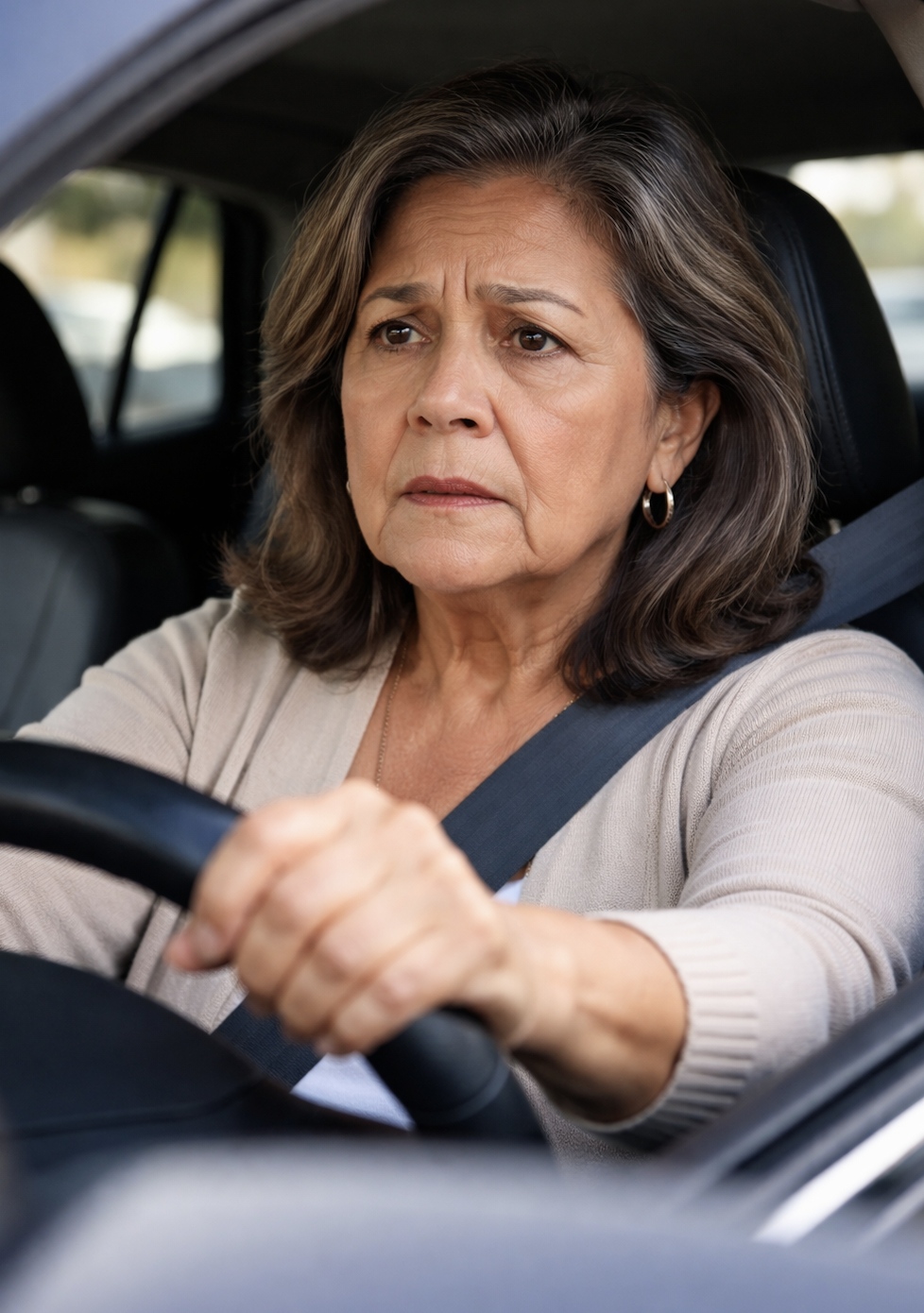
So, are you still driving these days? Can you afford the price of gas, insurance, and upkeep to maintain your car? Do you feel confident behind the wheel, given your present physical and cognitive health? Almost everyone has some concerns about driving, regardless of whether you’re the picture of health or are struggling with maladies such as arthritis pain, failing vision or hearing, or stiffness that prevents you from comfortably maneuvering the car. If you live outside of an urban area with good public transportation, your need for a car is self-evident. But even if a car gives you the independence and quality of life that allows you to keep living in your community, that doesn’t necessarily mean you should continue to drive forever. So let’s take a look at some of the challenges of driving these days for older adults.
Of course, it’s natural to start with car expenses. We know that gasoline prices have gone up considerably since the start of the US war with Iran, with no clear resolution in sight and no timetable for when gas prices will come down, if at all. That means, if you can, you need to try to get as much mileage out of a gallon of gas as possible. Consumer Reports recently outlined some strategies for improving your gas mileage, including checking and comparing prices online (Thanks, GasBuddy), obeying the speed limit (lower speed can improve fuel economy), checking tire pressure, and limiting your use of air conditioning. The Associated Press further suggests that you limit your idling, use cruise control to keep speed below the speed limit, and consider carpooling or combining trips so as to avoid unnecessary gas use. If the price of car insurance has you anxiously grabbing the wheel, take a look at this recent post in Kiplinger’s on how to save on car insurance in 2026.
If you’ve reached the age and stage of life where you wonder how long you can continue driving, you might be interested in a new poll from the University of Michigan about the driving habits of older adults and whether seniors plan for a time when they can no longer drive. According to this poll, more than 80% of people over the age of 65 say they drive weekly (84% say they drive at least once per week), and 62% say they drive almost every day. Only 10% of adults aged 65 and older said they haven’t driven in the last 6 months (either due to safety or health concerns). Yet, less than half of the respondents said they have made a plan for the possibility that their health might make it less safe or even impossible to drive someday. Only 14% of respondents said they use public transportation, and 9% said that was not even an option where they live. And for those who still drive, 68% said they self-censor their driving, avoiding the need to drive under certain conditions, such as bad weather or nighttime, especially because of vision problems. So while most older adults appear to continue to get behind the wheel, it appears that many do so with a sense of caution and concerns for safety.
Yet as a society, the question is whether that sense of self-censorship when it comes to driving is good enough, or whether we can count on concerned relatives or loved ones to discuss the cessation of driving when they notice an older driver appears unsafe or uncertain on the road. Or, whether laws need to be in place to more frequently test the skills of older drivers, for their own safety as well as for the safety of other drivers or pedestrians. A recent story on NPR, of an older driver killing a young boy who was bike riding on the sidewalk when the driver mistook the gas pedal for the brake, shines a light on this tragic reality. Each state determines for itself when an older driver can renew a license or be retested before a license renewal. While crash rates for adults between the ages of 70-79 have been consistent and have even fallen (as people live longer and healthier, and more older drivers are on the road), once a driver hits age 80 and beyond, crash rates begin to rise again. There is some data to suggest that when states loosen their laws about testing older drivers, crash rates do appear to increase.
So, if it’s up to you to decide (perhaps in consultation with a loved one) as to whether you should continue to drive, what factors should you consider? Well, just like your car goes in for a tune-up every so often, you may want to get yourself to your doctor for your own “tune-up”- making sure your senses are working well, your muscles are sufficiently strong and your cognitive awareness is sufficiently reliable to keep you on the road. There are also signs that maybe you should rethink whether it’s safe for you to drive. For example, are you frequently pressing the brake? Are you driving significantly below the speed limit? Are you relying on someone in the passenger seat to help guide you? Are you missing or ignoring signs? And if any of these are occurring, are you beginning to plan for alternative modes of transportation? Are you trying to experiment with alternatives such as ride-sharing options, neighborhood shuttles for older adults, or carpooling with neighbors to accomplish your local chores?
In fact, there is research that shows problems with driving are often early warning signs that cognitive impairment, even dementia, may be in your future. A recent presentation at the American Stroke Association International Stroke Conference 2026 concluded that subtle changes in everyday driving habits may be an early warning of brain changes suggesting a higher risk for dementia, even before any real symptoms of dementia, such as memory loss or thinking problems, arise. The study included 200 adults, with an average age of 73, who did not have dementia when they originally enrolled in the study. Drivers were monitored for decreased driving, fewer trips, repetitive routes, and more driving errors, especially in those who later developed dementia. As one study author explained, “Driving habits in older adults can reveal early changes in brain health. How often people drive, where they go, and how much they vary their routes may signal underlying damage to the brain’s white matter, which is linked to cognitive decline and dementia.” The drivers whose driving patterns served as early dementia warning signs were also more likely to engage in unsafe driving practices and wind up in more car crashes.
Driving involves a considerable array of complex decisions and factors. As one researcher stated, “One of the most complex activities we perform in our everyday lives is driving. When you drive, you must look, listen, think, plan, and control your motor behaviours in a rapidly changing and dynamic environment.” So, while no one would argue about the centrality of driving to keep older adults in so many communities active and thriving, the reality is that to be a fully functional and safe driver, you need to be able to control many of your physical and cognitive functions in a coordinated manner, for your own safety and for the safety of others. It behooves us all to be honest about what we can and can’t do when we are behind the wheel and to recognize that there may come a day when it’s necessary to explore alternative transportation options. Until that time, be safe and drive carefully.