Subscribe


Artificial Intimacy: The Rise Of Romance Scams Among Older Adults
February 11, 2026
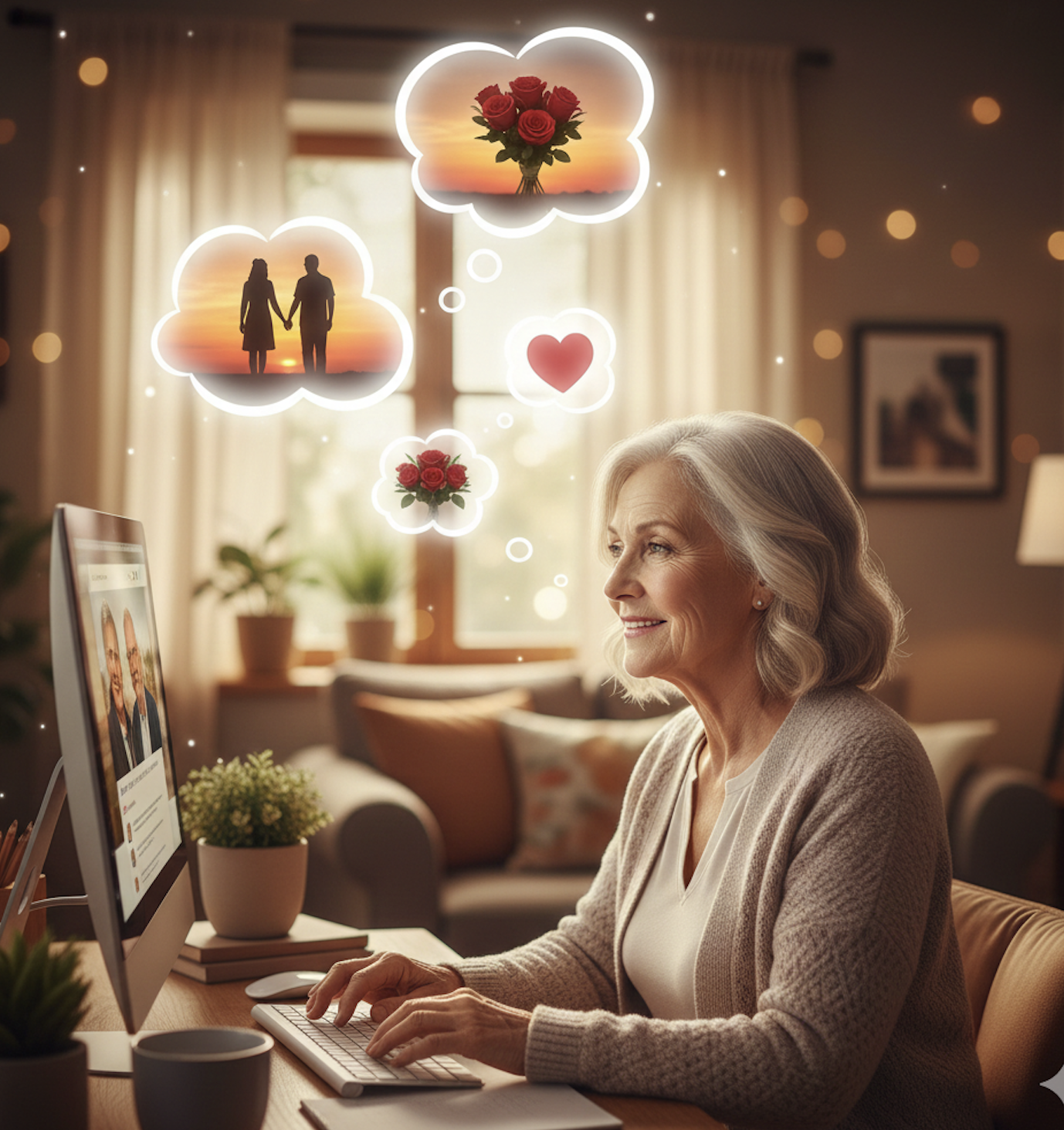
There’s no doubt that today’s technology is a double-edged sword. It allows us to meet new people, sustain long-distance relationships, and explore new possibilities, all at our fingertips. Never before has such a breadth and depth of knowledge and opportunities been so accessible to so many. Yet at the same time, these technological advances can be intimidating or overwhelming to those who didn’t grow up knowing how to use them, and they can also make us vulnerable to exploitation and harm, even if we are well-intended and savvy in our interactions. Nothing reflects this dual reality better than the rise of scams – especially romance scams- targeting older adults.
The data on romance scams is truly frightening. As an AARP survey recently revealed, “The same digital platforms offering meaningful interactions have also opened the door to deceptions,” and a growing number have truly been deceived. According to this new AARP survey, nearly 1 in 10 adults over 50 has experienced some kind of outreach or romantic proposition through technology, which then led to an eventual request for money or enticement to invest. The ideal target audience seems to be adults between the ages of 50 and 64, who are at twice the risk of this sort of scam as those aged 65 and older. Furthermore, about 1 in 6 adults admit that either they or someone they know has lost money in an online romance scam. Older adults are typically targeted for various reasons, including the likelihood of having more savings, less comfort with technology, and perhaps even cognitive deficits that leave them more vulnerable. Romance/investment scams are apparently the biggest opportunity for scammers, with reported individual losses totalling more than 10,000 victims (likely the problem is much larger, given how few people report their losses), and overall fraud losses among older adults have climbed from $600 million in 2020 to $2.4 billion in 2024.
Regarding romance scams, how are scammers so successful, even among savvier older adults? Apparently, it all has to do with a scam strategy known as “Pig Butchering.” In fact, a scammer’s guide to such “pig butchering” was recently found in the Philippines, spelling out exactly how scammers entice naive and vulnerable older adults to believe they are developing romantic relationships with those they meet through online portals, like luring unsuspecting pigs to slaughter. Among the suggested tactics given to those conducting these romance scams? “A woman’s IQ is zero when in love.” “Send daily greetings to make the “client” fall in love.” “As long as emotions are in place, the client’s money will flow naturally.” Scammers are encouraged to create deceptive “expert” personas (like doctors or lawyers) to then be able to assert a level of authority over the unsuspecting target. These personas create fake, intimate details that will encourage their target to share intimate details as well, including birthdays, family information, age, and hobbies, all to create an artificial intimacy. As one recent victim who lost over $100,000 in such a scam revealed, “Those scammers are sick. They’ve got no soul. But they are very, very clever.” As this particular victim admitted, there’s a level of shame and embarrassment that surfaces once the scammer is revealed for who he actually is, and many victims blame themselves, even though they have, in essence, been” groomed” to become a victim. As one expert shared, “We don’t tell people not to fall for a mugging or a sexual assault. (But with these romance scams), We blame the victim for somehow being negligent.”
So what are the red flags you need to be aware of when developing new relationships on social media, or receiving unsolicited outreach from someone who claims they want to help you make money, once an initial communication has occurred? The National Council on Aging suggests you be sensitive to the following:
–Has the outreach come out of the blue from someone you don’t know?
–Is the person who has reached out eager to quickly develop a deeper relationship?
–Does the outreach include an overly attractive photo or lifestyle?
–Has the person suggested taking the conversation to another platform?
–Have you been asked about intimate details of your personal life?
–Has there been a specific mention of an investment opportunity for you, or a sudden suggestion that financial support would be appreciated?
All of these are red flags that should make you suspicious and encourage you to take your time and discuss the situation with loved ones and friends. The Center For Retirement Research suggests you utilize the SLAM method to spot scams: Check the Sender (verify who your contact is- if they don’t have any online presence, that’s another red flag); Links (don’t click through to unverified links); Attachments (don’t open unknown attachments); Messages (Are the messages you are receiving full of errors or unexpected urgency?). The other aspect that should give you pause? The infiltration of AI and deepfakes into these burgeoning scams. Between chatbots that generate life-like conversations and deepfake images, it may be challenging to detect whether the contact you’re dealing with is even a real person. Apparently, 82% of “phishing” emails intended to target you as a victim now use AI to bypass traditional malware detection. As the population ages and more and more of us are vulnerable to this type of cyber exploitation, legislative and regulatory protections have not caught up to the problem. Cyber criminals use deep fake imagery and language to shame unsuspecting older adults into situations of exploitation and injury. Moreover, as chatbots are being promoted for companionship for lonely adults, it may become harder and harder to distinguish which tech advances are helpful and which are harmful. And perhaps we may even someday lose the ability to stop AI chatbots from perpetrating their own schemes on unsuspecting humans.
All of this means, as the saying goes, “Trust but verify.” That is, while you want to be open to meeting new people and enjoying new experiences, you want to avoid being gullible or naive. Try to do your homework before you open up your heart and home.