Subscribe


Let It Go: Decluttering For A Clean Spring Sweep
March 4, 2026
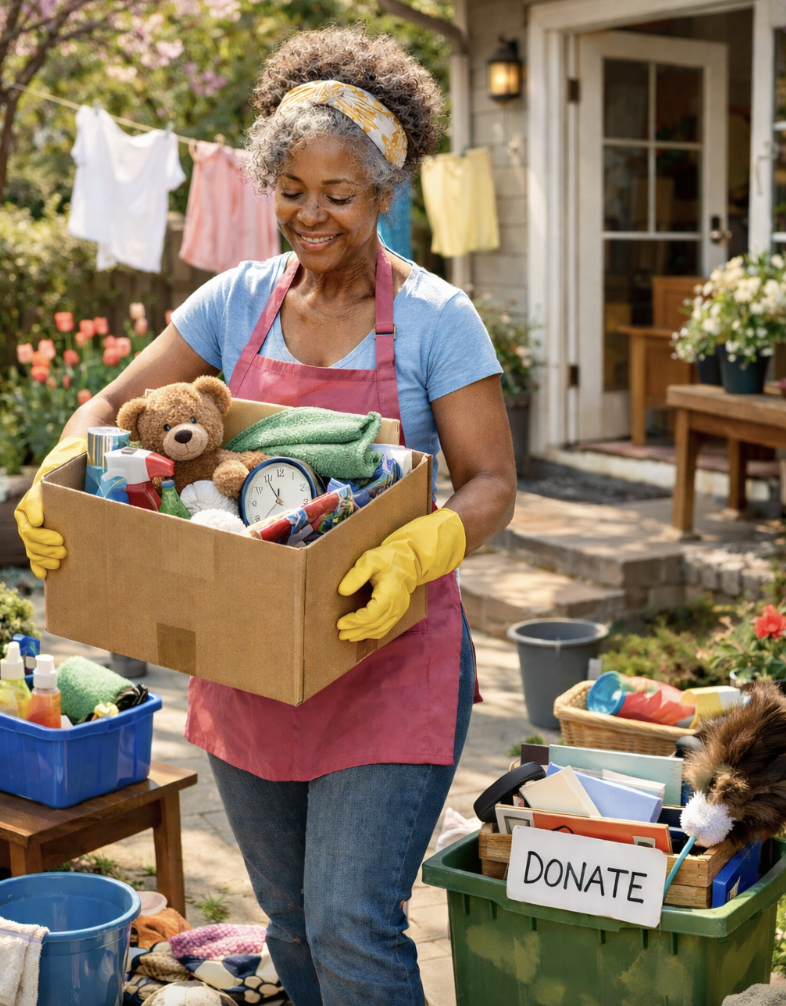
Did you know that this past Monday, March 2nd, was “National Old Stuff Day?” Apparently, every year, March 2nd is set aside as a day to remind us all of the “old stuff” (as opposed to the old people) that clutter and fill our lives. It’s a moment to take stock of what we possess and think about what we can let go of. With the upcoming arrival of clocks changing and spring emerging, perhaps this is the right time to clear out those things we don’t need or will never again use. Moreover, in this economic climate, storing unused or unwanted items is practically economic malpractice. The CEO of eBay recently hypothesized that a typical US household is sitting on roughly $3000-$4000 worth of unused stuff that could be sold online. Moreover, if you have stuff sitting in a storage unit- as nearly 1 in 3 Americans do- you are paying monthly fees that a bit of decluttering might be able to eliminate. So let’s consider some of the recently suggested strategies and resources available to help you streamline and minimize the overflow cluttering your home.
There is no shortage of suggestions when it comes to decluttering. In fact, as a start, experts recommend you start where you enter your house: your entryway that sets an impression for anyone entering your home. Focusing on organizing and eliminating clutter your front hall is an easy and quick win in your clutter battles and will make a huge visual impact on you and your guests. Speaking of your initial entry, Good Housekeeping recently published a list of 8 things that organizers immediately toss the moment they walk into someone’s home. Among the items to be trashed? Receipts, empty envelopes, free samples, empty boxes from packages cluttering your doorway, and many other items of detritus that you no longer need to keep (if you ever did in the first place).
When it comes to thinking about what to keep, the “thinking” concept can be front and center. Apartment Therapy recently suggested that any items you don’t think about- and aren’t even aware you own- are good candidates for tossing. As the article makes clear, “If you don’t know you have something, you can’t be truly missing it.” Moreover, Real Simple suggests you not overthink the decluttering process: If you haven’t thought about an item in the past year (and have not reached out for it), that’s a sign you no longer need it. Among the items they suggest might fit this bill? Medicines and beauty supplies cluttering your bathroom, clothes and shoes overflowing from your closets, or items in your fridge or freezer from an unknown time.
If you want to play a numbers game, consider the strategy espoused in a recent article from Business Insider: For every day of the month, add one more item to your disposal pile. So, on the first day, it’s one item, on day 2, it’s 2 items, day 3, 3 items, and so on. By the end of the month, the declutterer profiled in this article got rid of 496 items from her home (with nothing actually being trashed- it was all given away, donated, or sold). Or, if you want some simpler numbers, another strategy is to just mark your calendar for a decluttering session every 3 months: That way, the piles never get too high, the items never get too buried in your closet, and if you’re on the fence about what to do, the item can be reconsidered in just 3 short months.
For some deeper strategies that include reflecting on the psychological aspects of getting rid of your stuff, consider expert lists from The Washington Post and Bottom Line Inc. Acknowledging that our relationship to our things can be complicated and draw up such emotions as guilt, grief or shame, the Post suggests that you cannot honor a person or a memory by stuffing an item in your closet. You can digitize a photo or select a discreet item for its history, but otherwise, let the rest go. Furthermore, don’t exacerbate your problem by thinking you can outrun it with more storage cabinets or bins. As The Post makes clear, “You don’t have a storage problem- you have a stuff problem.” Bottom Line goes on to recommend a regular closet purge schedule and a fridge purge before you restock essentials. Their post also recommends that you stop storing other people’s things. If that sounds familiar to you- and you have way too much stuff from your adult child who no longer lives with you- take a look at a recent post from Business Insider, which provides strategies for dealing with your child’s “stuff problem” that you should no longer be storing.
In the end, your problem with clutter and too much stuff probably has as much to do with your “ideal” life versus your “real” life. That is, stuff is saved for “someday” or “sometime” when you will lose weight, or some later date when your child will own a larger home, or some other version of life that doesn’t match your present reality. For some additional thoughts on how to live in the real world, and jettison items you don’t need, won’t use, or don’t have space for, consider the expert advice available from the website The Minimalists or The Clutter Free Academy. Their recommendations will help you dig out from the clutter that currently resides in your home, and help you aim for a tidier and more organized future going forward.