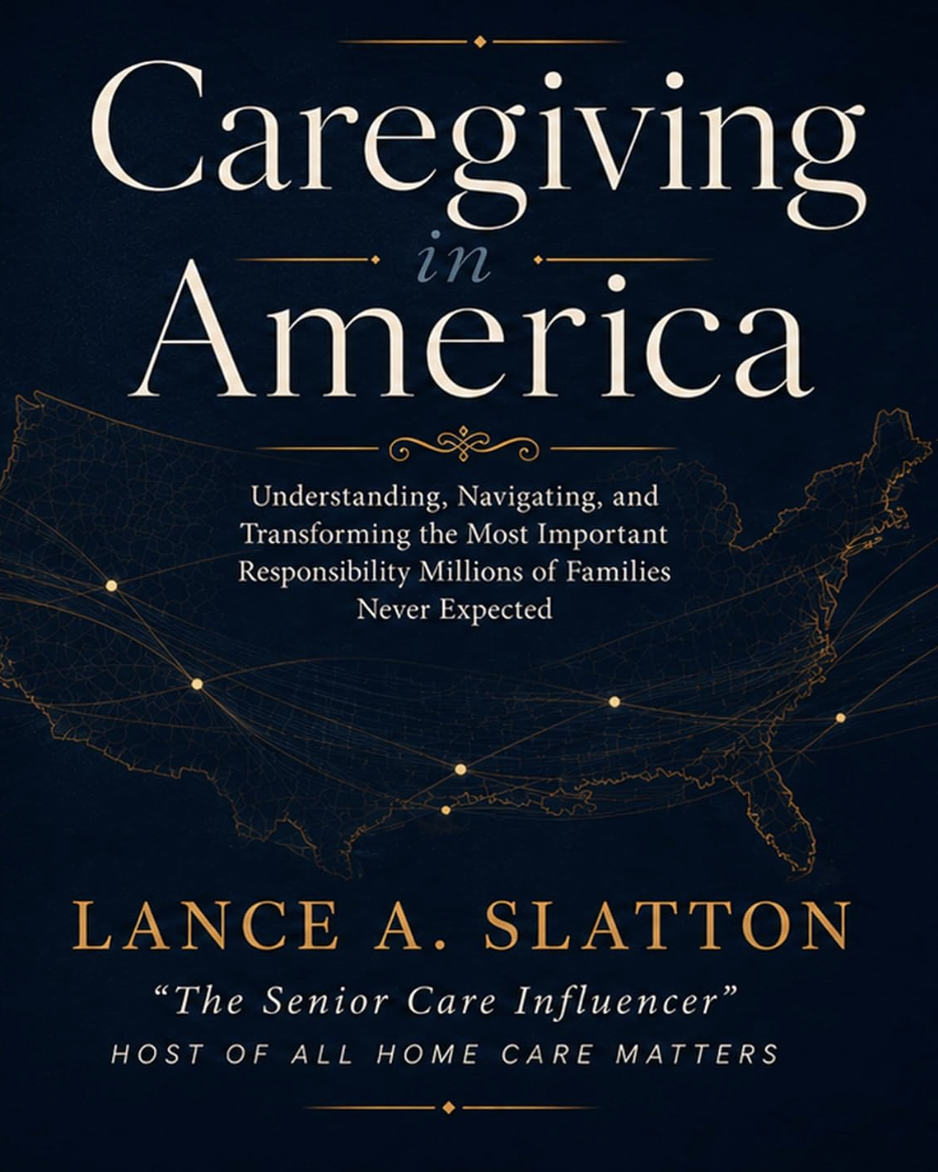
By Lance A. Slatton
There are moments in life that divide everything into a before and an after.
For me, one of those moments began with a phone call about my father.
At the time, I was newly married and pursuing a path toward medicine. I had completed much of the coursework and training that I thought would determine the direction of my professional life. Then my father needed help, and what we initially believed would be a relatively short period of assistance became nearly three years of around-the-clock caregiving through seven major surgeries.
Like so many family caregivers, I did not think of myself as a “caregiver” at first.
I was his son.
I was simply doing what needed to be done for my dad.
But caregiving has a way of expanding quietly. One responsibility becomes another. Medical appointments lead to medications, procedures, rehabilitation, conversations with doctors, insurance questions, decisions about care, and constant uncertainty about what may happen next.
Eventually, caregiving touches nearly every part of life.
That experience changed mine.
It changed the direction of my career, eventually leading me into senior care and home care. Years later, it led to the creation of All Home Care Matters and, eventually, to my work with AlzAuthors. Along the way, I have had the privilege of speaking with hundreds of caregivers, physicians, researchers, advocates, authors, healthcare leaders, and families.
Yet despite all those conversations, I have continued to return to one question:
Why are families expected to take on one of the most consequential responsibilities of their lives with so little preparation for what that responsibility may actually require?
That question is ultimately why I wrote Caregiving in America.
The Book I Wish My Family Had
When my family began our caregiving journey, nobody handed us a roadmap.
There was no single resource explaining what we might encounter, what questions we should be asking, what options existed, or what we should begin preparing for.
We learned through experience.
Sometimes we learned because someone helped us.
Sometimes we learned because something went wrong.
And sometimes we learned because there simply was no other choice.
Years later, working with other families, I realized how common that experience is.
Caregivers frequently enter this world suddenly. A parent falls. A spouse receives a diagnosis. Someone is discharged from a hospital and cannot safely return to the life they were living before. Memory changes become impossible to ignore. A family realizes that Mom or Dad should no longer be driving.
Suddenly, people who may have known very little about healthcare or long-term care are expected to become advocates, coordinators, decision-makers, and problem-solvers. Even professional experts, whose work brings them into this world, are often clueless about some of the practical challenges.
Caregivers are asked to understand terminology they have never heard before and make decisions with enormous consequences.
I wanted Caregiving in America to be the resource I wish someone could have handed my family and said, “You may not need all of this today, but here are the things you should know. Here are the questions you may eventually need to ask. Here are some of the decisions that could be ahead.”
Why Now?
Connie Zuckerman, agebuzz’s Managing Editor, asked me why I believe now is the right time for this book.
In many ways, I believe it has never been more necessary.
According to the 2025 Caregiving in the U.S. report from AARP and the National Alliance for Caregiving, approximately 63 million Americans are providing ongoing care to someone with a complex medical condition or disability.
That number is staggering.
But what concerns me even more is what sits behind it.
Behind every statistic is a person.
A daughter who leaves work early again because her mother has another appointment.
A husband learning how to care for the person he has shared his life with as dementia changes their relationship.
A son trying to coordinate his father’s care from another state.
A family trying to determine whether they can afford home care, assisted living, or another long-term care option.
A caregiver sitting awake at 2 a.m. wondering whether they are doing enough — while quietly reaching the limits of what they can physically and emotionally manage.
America is aging. Families are smaller and often geographically separated. People are living longer with chronic illnesses. Dementia is affecting more families. Healthcare has become extraordinarily complex, and the cost of long-term care can be overwhelming.
At the same time, millions of caregivers are balancing these responsibilities with jobs, children, relationships, financial obligations, and their own health.
We often talk about caregiving as though it is a private family matter.
I do not believe we can afford to think about it that way anymore.
Caregiving is a healthcare issue.
It is an economic issue.
It is a workforce issue.
It is an aging issue.
And it is increasingly an issue that will touch almost every American family in one way or another.
I Did Not Want to Write Another Book That Simply Says, “Take Care of Yourself”
There is a great deal of well-intentioned caregiving advice that tells people to practice self-care, ask for help, and remember that they cannot pour from an empty cup.
Those messages are important.
But I also know what it feels like to be standing in the middle of a caregiving crisis.
When someone you love has just received a dementia diagnosis, when a hospital is preparing to discharge a parent, when you are trying to understand Medicare and Medicaid, when siblings disagree about what should happen next, or when the money available for care simply does not match the amount of care that is needed, you need more than encouragement.
You need information.
You need options.
You need context.
You need to understand the questions you should be asking.
And sometimes you simply need somewhere to begin.
That was one of the guiding principles behind Caregiving in America.
The book became much larger than I originally envisioned because caregiving itself is much larger than most people realize.
Its 766 pages address subjects ranging from dementia, burnout, and family dynamics to healthcare navigation, home care, long-term care settings, Medicare, Medicaid, Veterans benefits, long-term care insurance, legal planning, finances, long-distance caregiving, grief, and what happens when the caregiving journey ends.
There are also worksheets, checklists, self-assessments, planning tools, and national and state resources.
I wanted it to be something families could actually use.
A Book You Do Not Have to Read From Beginning to End
One thing I hope readers understand about Caregiving in America is that I did not write it expecting someone to sit down and read all 766 pages in one weekend.
Caregiving does not work that way.
The questions you have at the beginning of a caregiving journey are not necessarily the questions you will have six months later.
A family may initially need information about noticing changes in an aging parent.
Later, they may need to understand dementia.
Then home care.
Then finances.
Then a transition to another level of care.
Eventually, they may need help understanding grief, loss, or what life looks like when caregiving ends.
My hope is that this book can remain with a family throughout that journey.
Maybe today you need ten pages.
Six months from now, perhaps you need a completely different section.
What matters is that when one of those moments arrives, and you do not know what to do next, there is somewhere you can turn.
What Years of Listening to Caregivers Have Taught Me
My own caregiving experience is where this journey began, but this book is not simply the story of my family.
Over the years, I have been fortunate to hear from countless caregivers and families.
Different circumstances. Different diagnoses. Different financial situations. Different cultures and family structures.
But there are themes that appear again and again.
Caregivers want to do the right thing.
They worry that they are failing.
They often wait too long to ask for help.
Families do not always agree.
The healthcare and long-term care systems can be incredibly difficult to navigate.
Financial pressures influence decisions more than many people are comfortable discussing.
And caregivers themselves can slowly disappear beneath the responsibilities they have taken on.
Those conversations deeply influenced this book.
They also reinforced something I learned while caring for my father: there is no perfect caregiver.
There is no family that handles every decision perfectly.
There is only the next decision in front of you and the hope that you have enough information, support, and perspective to make the best choice you can at that moment.
What I Hope Families Take Away
If I could choose one thing for readers to take from Caregiving in America, it would not be a particular checklist, chapter, or piece of advice.
It would be preparation.
I want families to understand that asking questions early is not an admission that something is wrong.
Planning does not mean giving up someone’s independence.
Discussing finances does not make caregiving less loving.
Acknowledging burnout does not make someone a bad caregiver.
And asking for help does not diminish the care you are providing.
We cannot prevent every crisis.
But we can help families enter those moments with more knowledge and fewer surprises.
I also hope the book helps caregivers recognize the significance of what they are doing.
Family caregivers are often the invisible infrastructure surrounding the person receiving care.
They notice changes.
They coordinate appointments.
They provide transportation.
They manage medications.
They communicate with healthcare professionals.
They advocate.
They reassure.
They make sacrifices that many people outside the caregiving world will never fully see.
They deserve more than our gratitude.
They deserve to be informed, supported, and included in the larger conversation about how America cares for people as they age or live with illness and disability.
The Conversation I Hope This Book Starts
When I began writing Caregiving in America, I wanted to create something useful for the individual caregiver sitting at a kitchen table trying to figure out what to do next.
I still do.
But I also hope the book contributes to a much larger conversation.
If approximately 63 million Americans are caregivers today, then caregiving cannot remain something we primarily discuss after families are already overwhelmed.
We need to talk about it around kitchen tables before the crisis.
We need employers to understand it.
We need healthcare systems to recognize caregivers as essential partners.
We need communities to support them.
And we need policymakers to understand the extraordinary amount of care taking place every day inside American homes.
Most of all, we need families to know that preparation matters.
I cannot go back and hand my younger self the roadmap I wish my family had when my father’s caregiving journey began.
But perhaps I can hand it to the next son, daughter, husband, wife, sibling, friend, or neighbor who suddenly finds themselves standing where I once stood.
That is why I wrote Caregiving in America.
And that is why I believe this conversation matters now more than ever.
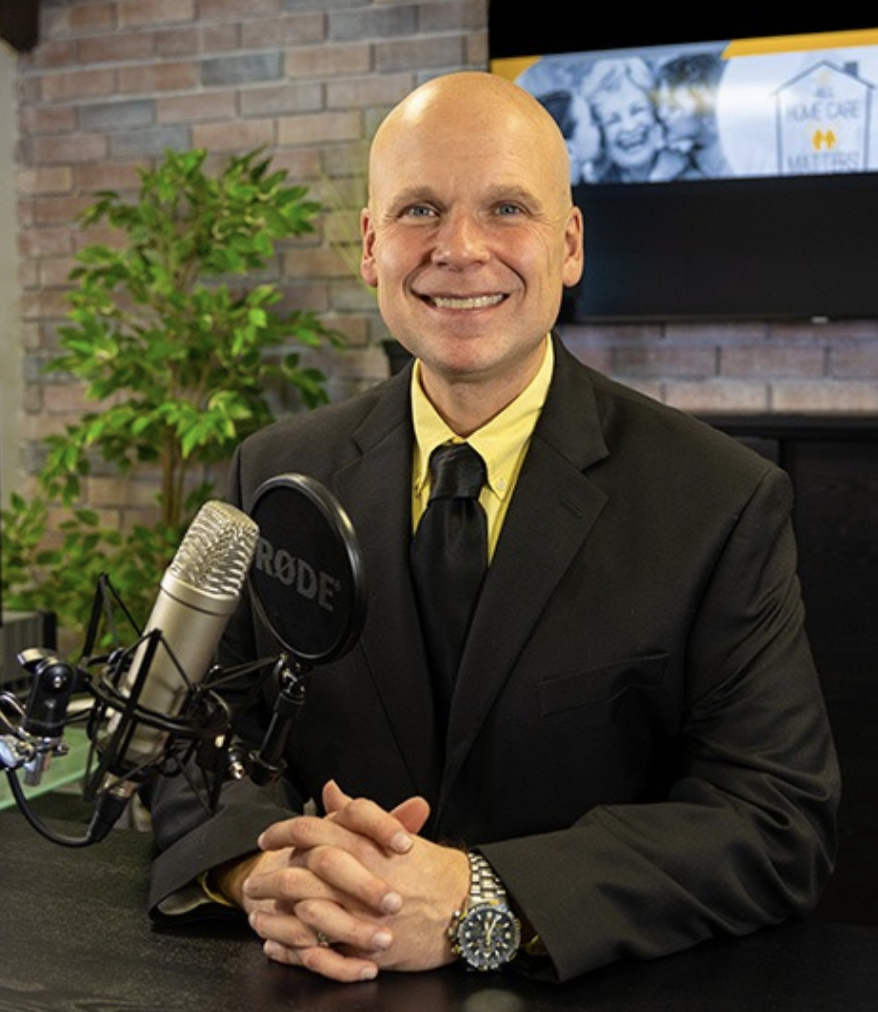
Lance A. Slatton, widely known as “The Senior Care Influencer,” is an award-winning author, caregiving advocate, media host, and healthcare professional with more than two decades of experience in healthcare and senior care. He is the Founder and Host of All Home Care Matters, President and Owner of AlzAuthors, and Co-Founder and Senior Case Manager of Enriched Life Home Care Services. He is the author of the award-winning The All Home Care Matters Official Family Caregivers’ Guide and his newest book, Caregiving in America: Understanding, Navigating, and Transforming the Most Important Responsibility Millions of Families Never Expected.




Sign up for agebuzz’s free weekly newsletter sent every Thursday
 Subscribe