By Louise Applebome
End of summer.
End of year.
End of daylight saving time.
Ending, endings…and more endings.
At this age, it’s quite common to be living amidst illness, decline, and the ends of lives as we’ve known them.
It’s also a time when familiar and/or long-term living situations may end. Perhaps a spouse dies, and the surviving partner is living alone for the first time in years…or ever. The loneliness and heartbreak can be unendurable.
Maybe the agility for navigating stairs is diminished, and a beloved house has outlived its usefulness. Or the upkeep of what was once a treasured garden becomes unmanageable and burdensome.
Traumatic and cataclysmic eventualities.
As much as we would like to hold onto and assert our independence, the inevitable will arrive. Help will be needed. The era of autonomy and self-reliance will come to an end. Maybe the changes evolve slowly and incrementally. Maybe there’s an acute or traumatic occurrence that changes everything in an instant. The truth is, we really don’t and can’t know what the future will bring. There’s simply no way to predict.
But what we may be able to salvage and/or cultivate is the embrace and understanding that endings and ultimately death are all a part of life. We’re all part of the big, vast cycle of death and birth and lifetimes in between.
The challenge is to proceed through these later months, years, and maybe decades minus torment, discouragement, inertia, and debilitating grief.
For many, religion provides a blueprint and salve for mitigating experiences of loss, grief, and despair. For others, it might be a more metaphysical approach. Atheists and agnostics may ground their capacity to weather the difficulties encountered during the twilight of life in more knowledge-based, factual realms.
There is no one-size-fits-all solution for making our way through rough waters. However, I’m thinking we can each open our hearts, eyes, and minds to the fact that loss and mourning await. And to ask ourselves what we will do and how we will react when challenges and sorrows arrive. And I’m thinking the answers may dwell deep inside each of us and require some inner solo archeological expeditions.
An ongoing meditation practice might help get us to the quiet and calm place needed to access our innermost self, unique needs, and techniques for coping. Psychotherapy is another path toward nurturing understanding and tools for negotiating our way through new, next, and final chapters.
Psychedelic drugs seem to be making a comeback for helping to set partakers on healthier, sounder trajectories.
Having a support system of like-minded friends, loved ones, family members, and colleagues helps in building a foundation of resilience. Isolation is not generally recommended. And giving ourselves permission to fully feel the sadness, disappointment, heartache, without a timetable dictating an “appropriate” schedule for processing and/or absorbing the unwanted “new normal.” Because nothing about horrific tragedy and melancholia is normal.
Wallowing in anticipation of the next devastating lightning bolt to strike is not productive either. Although it’s not always easy to avoid sinking down into that morass of terror and fear.
Attending to daily life and its joys and pleasures is surely a healthier path to take. Once again, there’s no one-size-fits-all formula for embracing and enjoying each and every day. And the worldwide geopolitical noise, din, and spin will still be raging around us. And maybe bombastic family dramas and disarray are closer to home than we would like. Then the goal is to pull back the curtain on our perspective and to expand our field of view in all directions.
It’s up to each of us to figure out where to find solace. How to invite and accept comfort. What brings us to serenity and peace?
People.
Places.
Preparing food.
Eating food.
Reading.
Poetry.
Literature.
Music.
Painting.
Writing.
Walking.
Yoga.
Exercising.
Napping.
Volunteering.
Extending a kind gesture to a stranger.
I’ve barely scratched the surface. The list of possibilities goes on and on.
And if we can rise above the imminent, earth-and knowledge-bound precepts, and, instead, connect with the transcendent, that list of possibilities becomes infinite.
Good news: That vastness and boundlessness are available to everyone.
All are welcome in that unearthly place. None are judged there. No bias, no hatred, no racism or sexism, no misanthropy. No political vitriol.
Just space and love.
And there are many conveyances for getting us there.
Maybe religious ritual connects you with that unnameable realm.
Maybe meditation and yoga. Or walking, or listening to music, or sitting at the pottery wheel or standing in front of an easel. Maybe it’s attending a silent retreat. It could be through daily prayer. Watching grandchildren playing in the park might transport you into celestial bliss.
The options are endless.
Tapping into the unlimited choices offered in the ether may just provide us with the elasticity to bounce back, recover, and adapt when adversity rocks our worlds.
The intention for each of us is to find our own flow and bespoke keys for surviving and flourishing as time marches on.
A Sisyphean mission?
Let’s hope not.
But not an easy one, either.
English playwright William Shakespeare said it so well in the first act of Hamlet:
“To thine own self be true.”
Namasté.
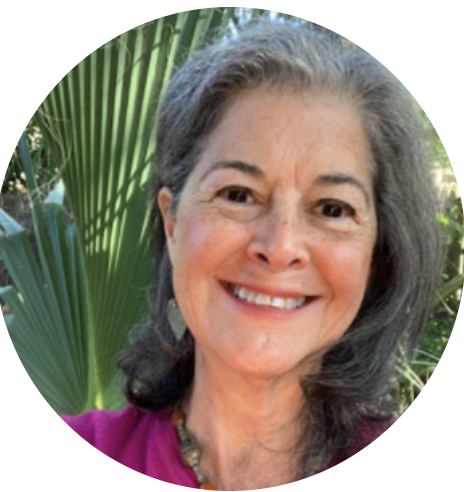
Louise Applebome, 72, is a Certified Yoga Instructor in Dallas. After “retiring” from a vibrant and varied professional career, she became a yoga teacher. She teaches all her classes on Zoom right now and accepts students, young or older, from wherever they are, both geographically and in their pursuit of a yoga practice. Louise will help you stay fit and flexible, and release tension, aches & pains from the body…and the mind. Her yoga studio in Dallas is del norte yoga. You can reach out to her at [email protected].



Sign up for agebuzz’s free weekly newsletter sent every Thursday
 Subscribe