By Kathleen Rehl, Ph.D., CFP®, CeFT® Emeritus
Sometimes we discover whether a new place has truly become home by leaving it.
One year ago, my husband and I moved into independent living at Oak Hammock at the University of Florida. In earlier articles—including my agebuzz essay, “Between Letting Go and Landing: My First Weeks in CCRC Life”—I chronicled our adjustment.
I named our second-floor home the “Treehouse” because it overlooks towering oaks and a garden atrium. On the anniversary of that move, I am now writing from our summer home in upstate New York.
Charlie has owned this place for 40 years. Maintaining the Saratoga Springs house, expansive lawn, gardens, flower beds, shrubbery, and pool is nearly a full-time job. For now, he enjoys being the caretaker. But he knows his energy and physical stamina will eventually wane, so he is clearing the basement and shed—selling, donating, and giving away decades of belongings for the time ahead, when we will no longer have this property.
I call this place my “writer’s retreat.” This summer, I completed an eBooklet about later-life housing, care, and support, made substantial progress on the second edition of my guidebook for widows, wrote several articles for publication, recorded podcast interviews, and prepared for a national conference presentation. Almost a full-time job for me, too.
We also hosted our blended family’s annual gathering. Our children and grandchildren traveled from four states to be together for several precious days. We have already set the dates for 2027 and hope to continue this treasured tradition for several more years.
Yet being away from our primary residence in Florida has clarified what Oak Hammock has come to mean to me. I miss it. More precisely, I miss the people.
Ready to Make It Home
During my first weeks at Oak Hammock last summer, I wrote to friends across the country, “I LOVE IT HERE!” and “Already, Oak Hammock feels like home.”
Was that simply the excitement of arrival? I don’t think so. Charlie and I had spent years considering the move and researching later-life housing, care, and support. By the time we arrived at the continuing care retirement community (CCRC) we ultimately chose, I was ready not merely to occupy an apartment, but to make a home and join a community.
Attitude helped. I came expecting to participate and meet people. I made a spreadsheet to help me remember names, shared homemade gingersnaps, joined exercise and art classes, took field trips, invited neighbors to our place for dessert, attended lectures, participated in monthly floor parties, and added my rusty soprano voice to the choir. I did not wait for belonging to find me.
That does not mean I immediately felt—or even now feel—fully woven into the community. Many residents share friendships and histories extending back a long time. After one year, Oak Hammock is home, although I sometimes still feel like a newcomer.
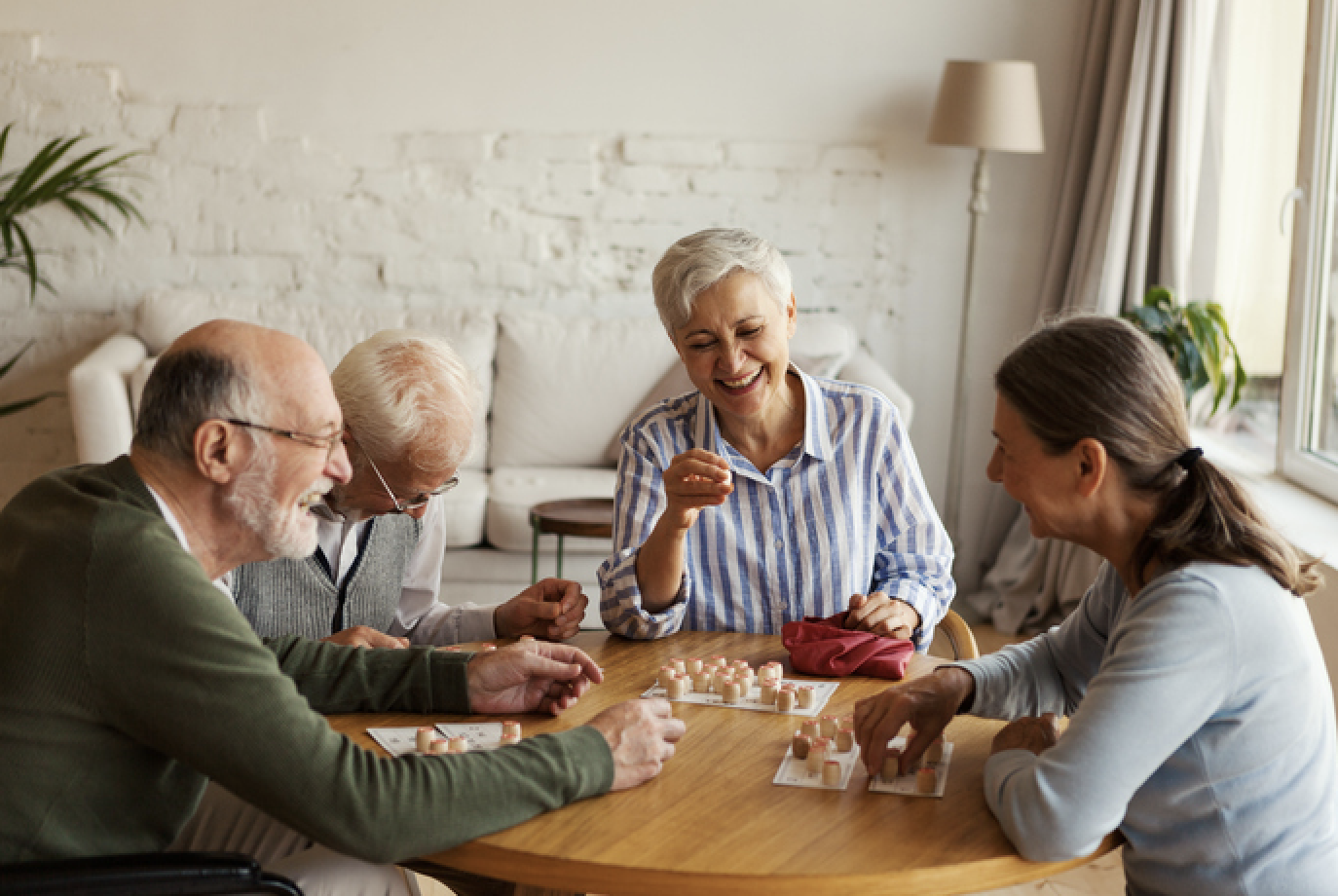
Genuine friendships are growing. A retired attorney on the charitable giving committee supports my work and stops by just to say hello. A friend and I work together on our community newsletter, sometimes exchanging ideas as we walk through the neighborhood. My next-door neighbor watches our home when we are away. I share lunches, laughter, and jigsaw puzzles with friends. Another neighbor shares fresh basil from her garden. Friendships often grow through simple acts repeated over time.
Even while I have been up north for the summer, friends from Oak Hammock have emailed—sharing Florida news, asking when I will return, or simply keeping in touch. I genuinely feel they have missed me. For someone who still sometimes feels like a newcomer, that means a lot.
More Than a Calendar of Activities
In Saratoga Springs, I attend church, exercise at the Y, occasionally meet a friend for tea, and enjoy local musical performances with Charlie. Yet many interactions do not go beyond “Hi, how are you?” Because I spend only part of the year in upstate New York, relationships remain casual. Deep conversations are rare.
Sure, I miss Oak Hammock’s art classes, yoga, Fitness for Life programs, choir, committees, and my book group. But I miss more than the activities: I miss the connections—the true relationships.
I miss doing those things alongside the same people week after week—seeing familiar faces, exchanging ideas, laughing together, learning their stories, and gradually becoming part of one another’s lives.
That may be one of the most important things CCRC living has taught me: community is not simply having people nearby. It is having repeated opportunities to know them—and to be known.
A brochure can list the art studio, health and wellness center, choir, committees, and classes. It cannot convey the relationships that grow around them. The activity gets us into the room; the relationships bring us back.
Living at Oak Hammock has also reinforced something I believed before the move: accepting support does not necessarily reduce independence. Sometimes it expands it.
I moved while I could still choose the place, organize the transition, and enter the community with energy. Housekeeping, dining, maintenance, transportation, and a nearby fitness center remove daily friction, leaving more time for writing, mentoring widows, volunteering, exercising, making music, and learning.
Of course, no community is perfect. Oak Hammock is both a neighborhood and an institution. Inconveniences and sometimes slow responses require patience—or polite persistence. Major remodeling and new construction have also brought their share of noise and disruption. But, hey, the work should make Oak Hammock even better in the future. Residents do not give up their voices. We remain responsible for asking questions, expressing concerns, and helping improve our community.
I have also learned that a full calendar is not the same as a full life. Oak Hammock offers more activities than I could possibly fit into my days. Belonging involves saying yes, but also knowing when to say no. I am still working on that lesson.
One Move, Two Timetables
Charlie and I moved to Oak Hammock as a couple, but we experience it differently. We walk the campus, share meals, and attend some events together. I spend more time in the fitness center, choir, classes, newsletter, and charitable giving committee. Charlie has gravitated toward woodworking and gardening.
I plunged into community life; Charlie is making the transition more gradually.
That difference became clear this summer. I will return to Oak Hammock in September; Charlie will remain in Saratoga Springs a bit longer. The house here was his home for four decades, and our blended family treasures it as the setting for our annual gathering. When we announced our CCRC move, they worried that this tradition—and perhaps the house—would disappear immediately.
For now, we are keeping both residences, with Florida as our primary home. Saratoga Springs gives me three months of moderate weather, relaxed time with Charlie in his long-loved location, family traditions, focused writing, and a change of pace. Oak Hammock provides the stronger fabric of everyday community. They each serve different purposes; one does not make the other expendable.
Couples may move together without making the emotional transition at the same speed. Would I have moved earlier? No. The waiting list helped determine our timing, and neither of us was ready to relocate much sooner. Looking back, last summer was the right time for us—even if we continue adjusting at different paces.
One other transition lingered longer than we would have preferred. Our former winter home, a St. Petersburg condo, sat on the market for many months. Even as we settled into Oak Hammock, it occupied a corner of my mind. When it finally sold, I felt relieved: the last unresolved piece of our old life had fallen into place.
Feeling Younger—and More Mortal
There is another truth about living in a community of older adults: illness, changing care needs, widowhood, and death become more visible.
We hear that someone has moved to a higher level of care, a spouse is now living alone, or a familiar resident has died. These losses are part of community life, not abstract possibilities. Being close to them has made me more conscious of my mortality.
Paradoxically, Oak Hammock also makes me feel younger. At nearly 80, I am a few years younger than its average resident. In Saratoga Springs, I am usually older than those around me and feel my age more acutely. The number has not changed; the context has.
Living close to the realities of aging does not have to make life smaller. It can sharpen the value of the day before us. The art classes matter. The walks matter. So do the songs, shared meals, committee meetings, and a cookie delivered to a neighbor—because none of us has unlimited time.
What the First Year Taught Me
Before moving, I knew a lot about CCRC contracts, costs, health-care services, financial reports, and selection criteria. Those things matter, but they could not teach me what daily life would feel like from the inside.
This first year taught me that readiness matters. Support can create freedom. Activities gain meaning as relationships deepen around them. Couples may adjust at different paces. Belonging develops gradually through participation and small acts of friendship. Sometimes distance reveals which connections have truly become part of us.
Would I make the move again?
Yes! Yes! Yes!
In mid-September, I will return to the Treehouse while Charlie remains in Saratoga Springs a little longer. I am already excited to go back.
I will not simply be returning to the place where I live. I will be going home.
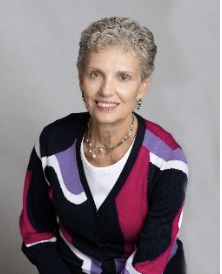
Kathleen M. Rehl, Ph.D., CFP®, CeFT® Emeritus, is an author, educator, speaker, and mentor whose work focuses on later-life planning, widowhood, purposeful aging, and legacy planning. She is the author of the award-winning Moving Forward on Your Own: A Financial Guidebook for Widows and the eBooklet Planning Ahead: Staying in Control of Later-Life Housing, Care, and Support Decisions. She is also an INELDA-trained end-of-life doula. Learn more at KathleenRehl.com.




Sign up for agebuzz’s free weekly newsletter sent every Thursday
 Subscribe