By Renee Langmuir
In a scientific attempt to measure whether animals are capable of perceiving a change in their physical appearance, scientists have used the Red Spot or Mirror Self-Recognition Test. In this test, a red spot is placed on an animal’s body where it cannot be seen unaided. The animal is then placed in front of a mirror. If the animal reacts to the spot, it supposedly indicates the animal has a physical concept of self, and it reacts to the spot as something alien. Out of the thousands of animal species, only a few apes, dolphins, whales, elephants, magpies, and fish seem to embody self-recognition (and there is still dispute among scientists about the efficacy of this test). Surprisingly, toddlers easily pass this test between the ages of 18 and 24 months when they first recognize themselves in a mirror. That is when human preoccupation with physical appearance officially begins!
Milestones in Changes to Human Appearance
To be honest, I was not paying rapt attention to my ongoing physical changes through the years. My guess is that women are just too busy looking after others to focus on micro changes in themselves. Of course, adolescence, pregnancy, and menopause do not go unnoticed, but far more interesting and compelling things are going on in life that require our attention.
It is somewhat comforting, however, to view physical changes through an evolutionary lens. This softens the blow of what can be perceived as a sudden onslaught of wrinkles and sags. Here is what has occurred while we weren’t looking:
What are the culprits for these signs of aging?
There are two main causes for physical aging: intrinsic aging, which is our genetic makeup responsible for cellular aging (don’t blame me – blame my parents!), and extrinsic aging, which includes all those things largely within our control: our behaviors, environment, UV exposure, diet, lifestyle, etc.
Recently, a landmark study at Stanford University discovered massive biomolecular shifts in our 40’s and 60’s. Aging is not a smooth ride. By examining study participant blood and biological samples every few months for several years, scientists were able to track age-related changes in 135,000 specific molecules and microbes.
The takeaway was that in our 40’s, we react strongly to the consumption of alcohol and caffeine, our lipids and cardiovascular health react to diet, and the state of our skin and muscles declines. The other significant age-related changes are a bump in our 60’s, when we are affected by carbohydrate and caffeine consumption. These and our slowing metabolism, weaker immune system regulation, and kidney function seem to contribute to cardiovascular disease and declines in skin and muscle tissue.
Body Image through the Lifespan
How we feel about our bodies seems to change drastically throughout our lifespan. There is a childhood curiosity at the ages of 2 and 3, when that joyful recognition of self occurs. This is followed by the critical Teenage/Young Adult stage, which is put under the microscope today by social media, resulting in body dissatisfaction and social pressures. We seem to go into a latency period in our 40’s and 50’s, probably because we’re so busy, but many women emerge in their 60’s surprisingly with a healthy shift of focus from looks to valuing health, mobility, and strength!
This positive shift can certainly be negatively affected by how much capital was accrued on an ideal body image in youth, or earlier trauma. Our personal body image is constructed slowly over time, based on our general beliefs and feelings about our appearance. Our body sense is highly related to body image. It is the ability to feel and experience our internal body sensations, rather than feeling a disconnect.
The Pitfalls of Vanity
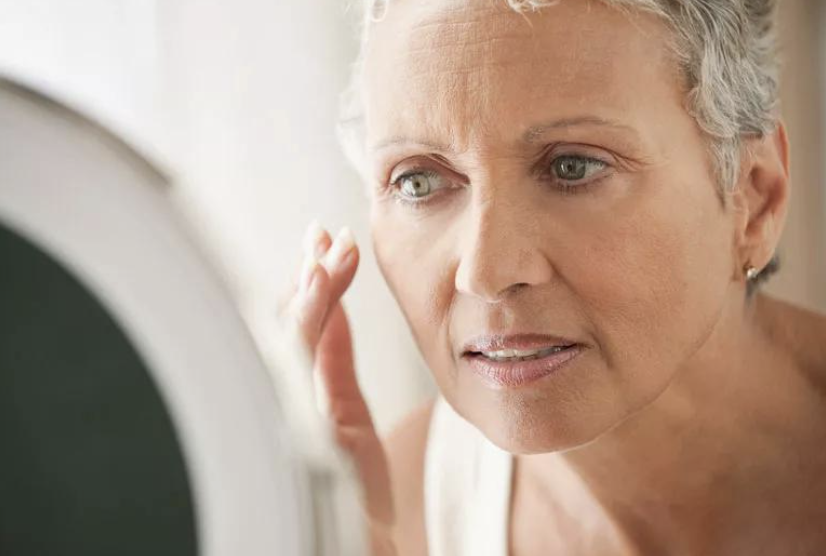
Even the most emotionally confident among us are susceptible to “mirror shock.” This concept describes the difficulty of reconciling your inner youthful self with the real external self. Most of us feel about 20% younger than our chronological age. A recent AARP survey finds that older women feel very much misrepresented by the media, but are really much more comfortable with their physical selves than expected. Most prioritize health over beauty. However, who among us hasn’t been hijacked by a recent unflattering photo?
Toby Makmel, writing on Clinicminds.com, examines this phenomenon. Offering advice to beauty clinicians, Ms. Makmel unlocks the reasons why we feel more comfortable in front of our bathroom mirrors than seeing ourselves in a photo. Our bathrooms are familiar and comfortable. We are products of the “more exposure effect,” which touts that we prefer what we see most often. Photographs, on the other hand, create a cognitive dissonance for older women. The setting, lighting, and camera angles are all unfamiliar compared to the trusty bathroom mirror. Such photos can create strong emotions, low self-esteem, and body image issues. Guilty as charged!
Coming to terms with our looks
It is fair to say that a large majority of our cohort still displays remnants of the vanity of an earlier age. Vanity was honed through social comparison over the years, and it is perpetuated by filtered media images and incessant targeted internet ads.
However, vanity is not wholly evil. Vanity was important in our youth because it conveyed to potential partners the state of our health and suitability for mating. Even in older age, an attractive, well-groomed woman will always get a better reception from others. Many women see a more youthful appearance as an act of resistance, a way of staying relevant, and a preservation of identity. In addition, an attractive appearance can signal better brain health, memory, and cognitive function.
A healthy understanding of biology and human evolution can go a long way, but there will inevitably be that shocking new photo! A helpful coping strategy is to realistically acknowledge that your looks have changed since you were in high school. One therapist suggests taking a long, hard look at your yearbook photo and asking yourself if you would really want to go back to that time. Thoughts of gratitude for all of life’s experiences, which have bestowed their wisdom, can replace the visual shock.
I have taken to smiling at myself when I pass a mirror. Positive affirmations also help. I’ve given up all hope that any skin cream or make-up item is capable of reversing the passage of time. I’ve noticed many of my beauty products simply do not work anymore, and I facilitate frequent purges. I do, however, value my Cerave and Cetaphil creams and inexpensive NYX and ELF products. I hope I never give up on my physical self. After all, this is the persona I present to the world.
Renee Langmuir was an educator for 34 years in public schools and at the university level. After an unplanned retirement, Renee chronicled her transition to retirement through a series of personal essays. As challenges arose, research was done, and essays were penned, all helping her gain perspective in this new landscape. These reflections are housed on the website, https://www.therookieretiree.com. She writes from both a research and mindfulness basis. Renee is excited to receive your feedback and comments! Please contact her at [email protected].


Sign up for agebuzz’s free weekly newsletter sent every Thursday
 Subscribe