By Renee Langmuir
Every Monday afternoon, a most curious thing happens to me. After eating a large cheese sub and catching up with my husband, my eyes begin to droop, and I cannot resist the urge to take a nap. When I awaken about twenty minutes later, I have just enough energy to read the local newspaper on my iPad before returning to dreamland. After awakening a second time, I read the New York Times and head for a bubble bath. Sometime around 3:00 PM, I announce that my bodily reboot is complete, and I resume my regular duties.
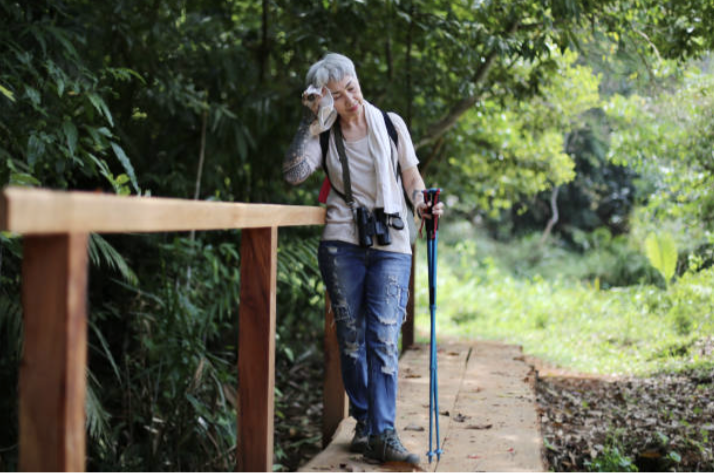
On Mondays, in the early morning hours, I have just been engaged in hauling long, heavy hoses beneath the floor of Longwood Gardens in Kennett Square, Pa., and watering the plants in the conservatory. Usually, there are seven walkways that require the dragging of five hoses to water the designated plants. This weekly ritual would never be possible at the age of 73 if the payback was not so great: being surrounded by beauty at a world-class level, the camaraderie of the volunteers and gardeners, and the physical thrill of such an incredible workout. However, until recently, I was not quite sure why I needed so much recovery time, and why I could never schedule any activity immediately after my shift.
Although my other physical activities (yoga, cleaning, walking trails, gardening, and caring for goats) are not nearly as taxing, I am finding, lately, that I need a noticeably increasing amount of recovery time for everything!
What does age have to do with recovery time?
Teens and young adults, with their healthy muscle tissue and fibers and robust growth hormone levels supporting repair and regrowth, need the least amount of recovery time, 24-48 hours. By one’s 40s and 50s, those growth hormone levels decrease, and the needed recovery time increases. Although younger generations can return to their physical baselines in a day or two, older adults often need 3-4 days/week to balance out taxing physical pursuits.
According to a certified physical therapist on Loseit.com, sarcopenia (muscle loss), decreased circulation, and a reduced ability to repair tissue are some of the culprits. In addition, the brain-muscle connection weakens, and movement becomes more effortful. Connective tissue declines, and there is a degradation of collagen and elastin (hello, knee brace). There is less blood flow to skeletal muscles, and tendons are tighter. It is pointless to do the same workout as younger folks when our equipment is entirely different.
Exercise has been described as “beneficial stress.” It is the process of breaking down and rebuilding stronger muscles. It should come as no surprise that there is a cost for this well-articulated bodily process. The body has been disrupted from its resting state, homeostasis, and it wants to return to normal. Aging elite athletes are no exception. The same progression of bodily changes happens to everyone!
Hydration, Nutrition, and Rest are the stars of the recovery process
Immediately after an exercise session (or other physical activity), the body wants to rebuild muscle and restore spent energy. Muscles might have been stressed, and the body tries to repair micro-tears. Glycogen stored in muscles, composed of complex carbohydrate molecules, needs to be replenished. There are three simple ways for recovery to prevail.
During exercise, the body loses fluids and electrolytes: sodium, potassium, and magnesium. These minerals carry the electric charge, which powers muscles and other bodily functions. Drinking 16-20 ounces of water within two hours of activity is highly recommended.
One is also advised to eat protein and carbohydrates before and after a workout, but emphatically within the post two-hour period. Proteins help muscles recover faster and prevent soreness. Carbohydrates replenish the energy sources of glycogen.
My Monday morning body does not even allow me to wait until the evening before demanding some rest. Sleep allows the repair and growth of muscles, regulates hormones that boost the immune system, and repairs cells and tissue. Waste is removed from the brain, which promotes cognitive functioning.
Active and Passive Recovery
After a grueling Monday, my body screams for passive recovery for the rest of the day. However, by Tuesday, I am not doing myself any harm by participating in gentle yoga. Active Recovery is recommended for all ages. It promotes the idea of alternating days of more taxing workouts with light exercise. Yoga, walking, and biking are the desired activities. By gently moving one’s body, the increased blood flow repairs tissue and prevents soreness. Lactic acid produced during more intense work is flushed out, and there are boosts to one’s flexibility and mood.
Lisa Nielson, writing on Healthcare Extraordinaire, recommends seniors create a mix and match week of exercise, passive recovery, and active recovery. Individual preferences will dictate how the body feels and what it needs after an exertion. Generally, there should be at least 3 days each week away from more challenging physical activities. Heavy cleaning and gardening days should be treated as active workouts!
Attitude and Acceptance
Understanding the changing needs of an older body can be tremendously comforting in making good personal decisions. I now relish the idea that much less is required of me in so many areas of life. Although it still seems strange to need so much recovery time after moving my body, I now have a new challenge: how to fill those sedentary hours.
Renee Langmuir was an educator for 34 years in public schools and at the university level. After an unplanned retirement, Renee chronicled her transition to retirement through a series of personal essays. As challenges arose, research was done, and essays were penned, all helping her gain perspective in this new landscape. These reflections are housed on the website, https://www.therookieretiree.com. She writes from both a research and mindfulness basis. Renee is excited to receive your feedback and comments! Please contact her at [email protected].




Sign up for agebuzz’s free weekly newsletter sent every Thursday
 Subscribe