By Katrina Love Prescott
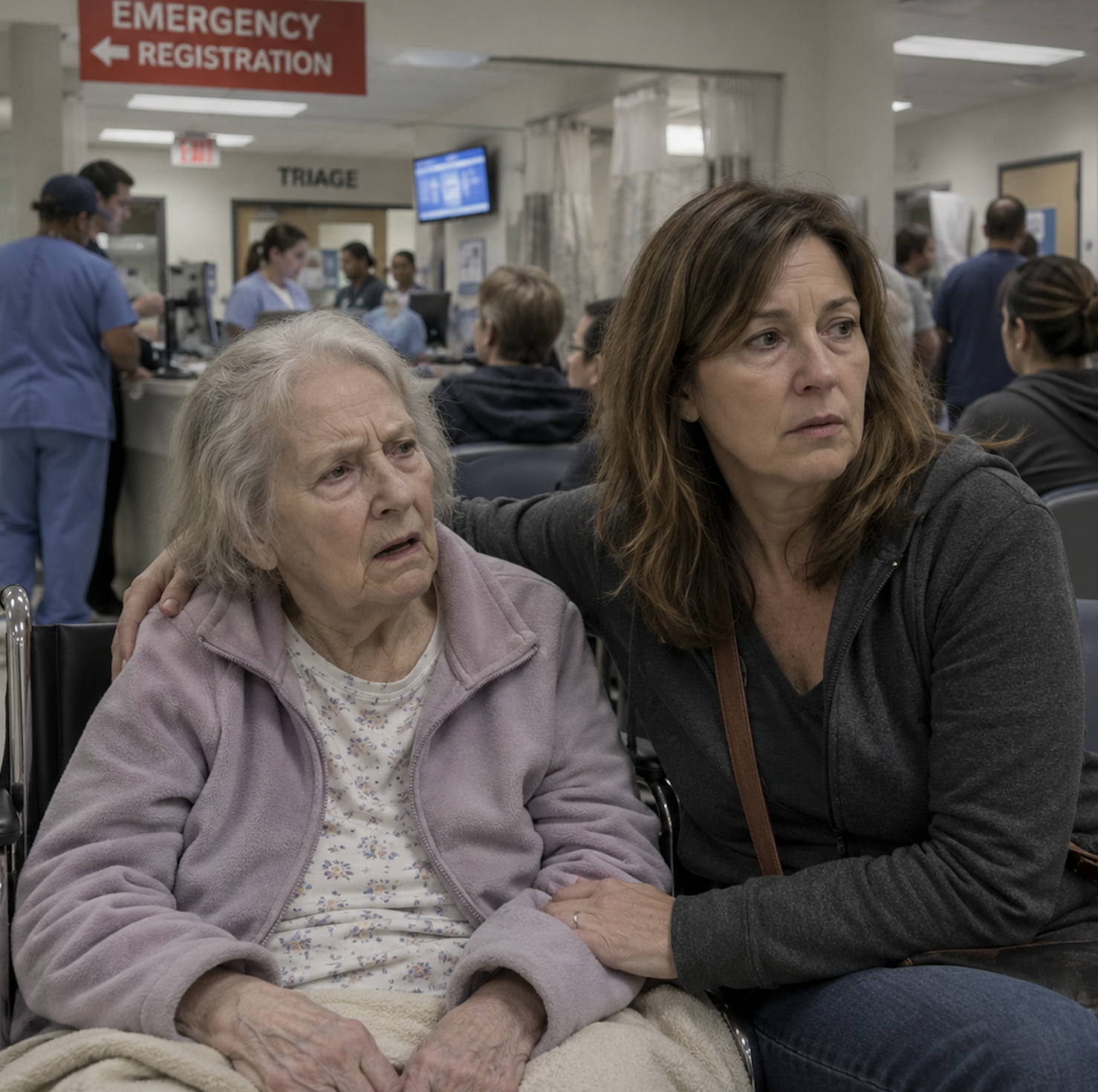
I’ll start with the truth: Taking someone who is living with dementia to the emergency room is one of the most stressful experiences for caregivers. That’s because the multiple noises, voices, fluorescent lights, long waits, and constant stream of strangers in the ER are the opposite of the environment that helps a person living with dementia (PLWD) feel comfortable and safe.
I know this because I lived it. I cared for my mother, who was living with young-onset dementia for seven years. And as a coach for caregivers, I’ve walked alongside many who are navigating the same scenarios. This is some of what I’ve learned.
And please note this: While this piece is written through the lens of dementia caregiving, much of what follows applies to anyone supporting an older or frail adult during an Emergency Room (ER) visit.
Can the ER be avoided?
Yes, it can. But sometimes it can’t. When the ER is needed, it’s needed. And when the decision is made to go to the ER, it’s because every other option has been exhausted. Believe me, it’s not an easy call.
One of the things that makes medical care challenging is when the person living with dementia doesn’t have all of their words. Saying “I don’t feel well today” might not be an option for a PLWD, and by the time it becomes obvious that medical help is needed, the situation may have escalated from maybe to urgent. Sometimes the ER is the only accessible option: the doctor’s office is closed, there is a long wait, it’s late at night, or it’s in the wee hours of the morning. There are also times when we do get to the doctor, and they tell us to go straight to the ER. That said, there are some things that can be done to catch problems earlier.
Keep regular doctor’s appointments.
If you can schedule regular appointments with the doctor, it could prevent an ER visit. A dementia-friendly practice will understand the situation and accommodate it. It’s better to have an appointment scheduled and to cancel rather than to have no appointment on the books. If house calls and virtual appointments are available, excellent. When you have an in-person appointment, it helps to call ahead and ask if the doctor is running late, because even sitting in the doctor’s office waiting room can be a lot. While it’s sometimes challenging to find a family doctor familiar with caring for a PLWD, something subtle happening with your person could be noticed, preventing the ER visit.
Know their baseline — really know it.
Keeping track of what’s happening with a daily log helps enormously. What happens when other health conditions are active? What are the regular eating, sleeping, and eliminating patterns? What triggers up-and-down moods? What positive things have happened? Have there been any bad things? Did anything new get introduced into their world? What is it? How often? Referring back to your log will help you better understand their baseline, which will help with decision-making.
Build a team before you need one.
Know which pharmacist, family doctor, or nurse practitioner to call first — and whether a 24/7 option exists. Pharmacists are an underused resource. We had a 24/7 pharmacy, and it saved us more than once. Having a plan and knowing who you can call eases the worry and helps us make better decisions in the moment. Keep a list of names and numbers on the fridge.
When the ER can’t be avoided, there are some tips that help:
Do the homework on hospitals.
Find out which hospitals are the most dementia-friendly. Ask other caregivers, people living with dementia, and online dementia communities in your area about hospitals. Who had a good experience, where, and why? Some hospitals have geriatric emergency teams, dementia-aware protocols, and senior-friendly spaces. Knowing which hospital is the most dementia-friendly before a crisis hits is the goal.
Pack a Go Bag.
I suggest this to every client. Go Bags are mostly talked about in the parenting world, and they’re a game-changer for caregivers as well. Our bag had mom’s favourite snacks and items: dried mango, apple slices with cinnamon, Barbara’s Cheese Puffs, water, headphones and something to listen to music from with a playlist she loved, a photobook, extra pants, top and underwear because incontinence happens and being ready beats being caught off guard, wipes and gloves, warm socks, a hat and sweater (hospitals are chilly), medications and a written list of them, ID for both of us, power of attorney paperwork, and a phone and charger. Remember to bring things for yourself too — snacks, your own sweater, tea bags (hot water is usually free), water, and a to-go cup.
If you have the bandwidth, build an “About XX” one-pager and keep it in a plastic sleeve. It’s a reminder to everyone interacting with your person that they are more than their diagnosis. Include who they are, what calms them, what agitates them, what they enjoy, and any past trauma that might affect how they respond to being touched or examined. There’s no guarantee staff will read it, but when they do, it helps everyone. Keep it simple and short, with possible bullet points and categories, large font.
Dementia is highly stigmatized. When it’s disclosed, reactions include both compassion and eye rolls. You need to tell them, though, because without context, staff can misread everything. A person with dementia might seem hostile, withdrawn, hysterical, or uncooperative, and that’s what will be written in their patient history. With context, staff can help.
You can change the whole dynamic when you say something as specific as “My mom has dementia, and because she isn’t feeling well, she’s more stressed than usual — she does better when she’s moving around. I know that might seem disruptive, but it will help her relax and support the process.”
Here’s something very important that hospital staff often miss: people are often not at the ER because of dementia. They are living with dementia, and something acute is happening, and it needs to be addressed. When a person with dementia is experiencing a medical issue, their dementia symptoms will probably be elevated or present in new ways: “My husband isn’t normally like this; the last time he had X, he was the same way, so we think it’s back.” If staff assume the visit is about dementia, they will focus on that, which often means sedation, and the medical issue gets missed. That’s a route worth avoiding if at all possible.
A practical note nobody talks about: getting things done in the ER is just harder when someone has dementia. Imaging is hard. Blood work is hard. If the person is incontinent, a urine sample is a next-level challenge (pro tip: ask for a hat for toilet collection before doing anything invasive). And even though it may seem hard, you need to be able to explain that waiting for your person to be ready is better than doing the procedure when the staff is ready. The path of least resistance is the one worth walking.
The waiting room is a barrier.
The waiting room is one of the biggest obstacles to effective care for someone with dementia in the ER. The experience there can make or break the visit. An eight-hour (give or take) visit is a long time for anyone under any circumstances. For a PLWD, the loud, busy, unpredictable environment can be genuinely destabilizing.
Making friends is the best way to have a successful experience. Talk to staff kindly and clearly, and let them know the person you are accompanying is living with dementia. Explain that sitting in the ER is challenging and ask if waiting outside is possible. Reassure them that you will stay close by and ask them to phone you when they’re ready to see you. If that doesn’t jive, offer to pop in every 10 min. They have the power to help you, and being friendly can go a long way to tap their assistance.
It’s easy to become invisible in the ER, which can further delay things that won’t work for you. We’re told that the squeaky wheel gets the grease, but squeaking too loudly in this circumstance could mean becoming someone the staff will want to avoid. What works is being genuinely friendly, acknowledging that staff are stretched, and framing every request as a way to make their work easier. If a person with dementia isn’t escalating in the waiting room, that’s better for everyone. Come at it from that angle. It’s a strategy, and it works.
Use statements, not questions, while you’re at the ER.
Questions are often challenging for people with dementia. Even simple ones can create confusion and anxiety. Statements work so much better: “I’m going to hold your hand now.” “We’re going to take a little walk.” “Look at me – breathe with me.” “The doctor is here to help you.” “Here’s something funny that happened…”
When things were escalating with my mom, I redirected to change her state: a walk, a suggestion to get a coffee, an offer of a snack, music, or we would call a friend, and they could connect with her for a few minutes. What’s known as therapeutic fibbing also helped. It means meeting someone where they are rather than correcting them, going along with their reality in a compassionate way to keep them calm and safe. It sounds counterintuitive. It is also, in practice, a gift.
Avoid arguing. Avoid correcting. Agree, redirect, move. Meet them where they are instead of trying to push them to somewhere they don’t want to be.
When a procedure needs to happen — a needle, an IV — explain what’s coming calmly, make eye contact, breathe together, use humour, lean on a happy memory. “I love thinking about that time when we…” A caregiver is the anchor in the examining room. And that anchor can set everyone up for success.
Bring a backup friend/advocate if you can
Caregiver burnout gets talked about constantly, and it’s real. (The newer term is caregiver distress, and burnout is just one part of it.) But here’s something worth saying out loud, and it might be hard to hear: perhaps the person being cared for is also a little tired of being around us. A fresh face, different energy, someone with new jokes, that’s a gift for everyone.
One of my best friends came with me to the ER and was an absolute shining light. New tricks, more energy, no personal history; another set of ears, extra entertainment, a teammate. And NOT triggered because it’s not her mom. A friend/advocate is always a win.
Keep it human
People with dementia get othered, talked over, talked about as if they’re not in the room. It happens in healthcare and in everyday life. They feel it even when they can’t name it. People living with dementia understand more than we often give them credit for. And like us, they can also experience joy, laughter, and cooperation. Be inclusive. Keep the conversation going. Talk about something ordinary — the day, a funny thing that happened, a memory you share.
Being at the ER probably won’t ever be fun, even if you adopt everything I’ve suggested. But it will help you and your person move through the experience. And along the way, you’ll discover more ways of being together as you navigate the course you’re on together.
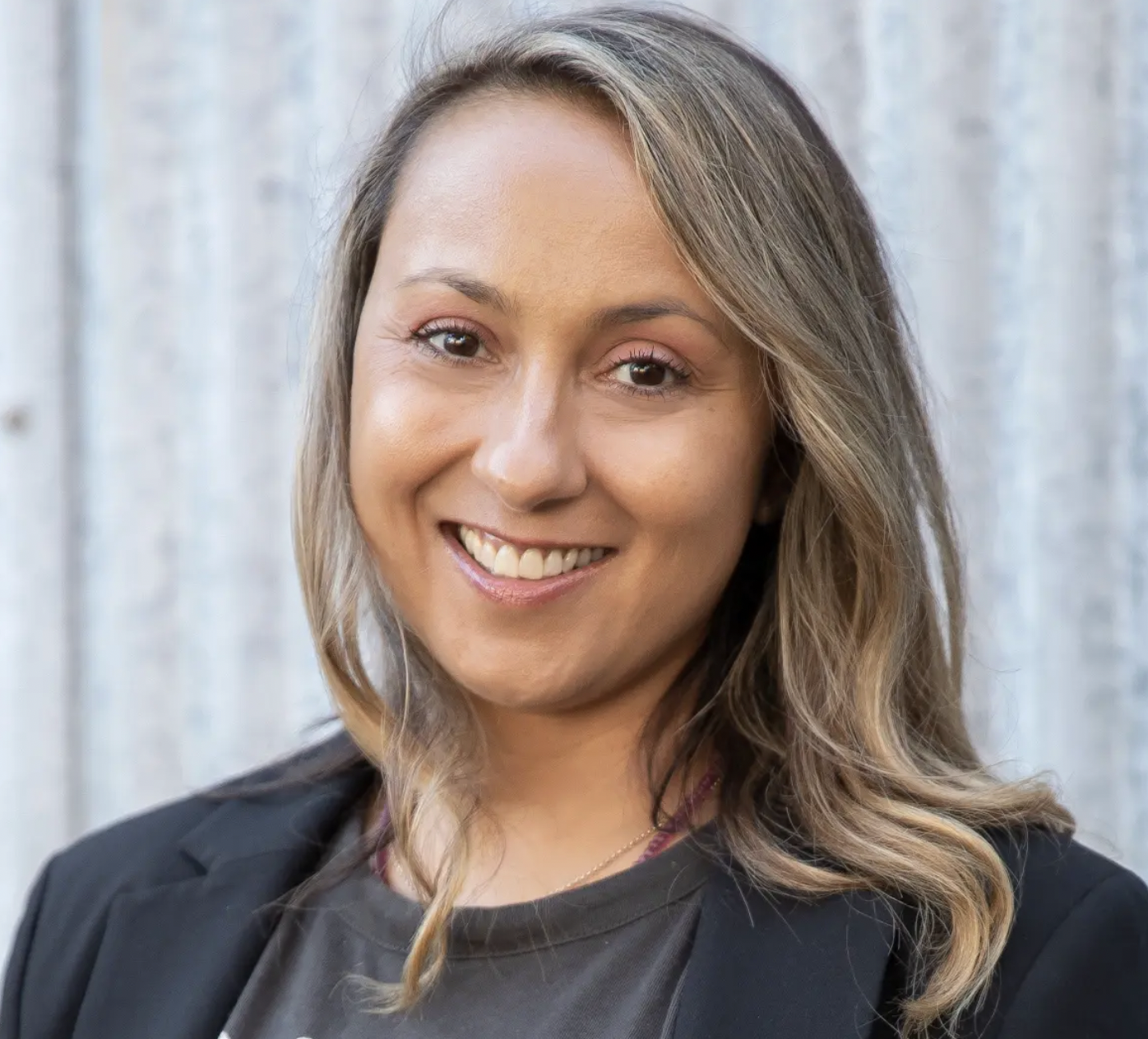
Before caregiving reshaped her life, Katrina Love Prescott was a producer, yoga teacher, and life coach. Her mom’s young-onset dementia diagnosis thrust her into a new role, revealing societal stigmas and healthcare gaps as she became her mother’s primary caregiver. Blending mindfulness, dementia care, and coaching, Katrina eased the stress of the situation and enriched her mother’s well-being. Katrina has gone on to create the “Things Not to Say to a Caregiver” web series (over 1M views), co-founded Care Nation Society, earned a Canadian National Caregiving Advocacy Award, and has shared her insights across a range of mainstream news outlets and social media. Because caregivers are a caregiver’s best resource, Katrina can help fellow caregivers. Find out more about Katrina and the services she offers on her website: https://www.katrinaloveprescott.com.




Sign up for agebuzz’s free weekly newsletter sent every Thursday
 Subscribe