By Carolyn Brandly
New drugs for the treatment of people with mild cognitive impairments and early-stage Alzheimer’s disease are grabbing headlines and attracting worldwide attention.
While the treatments may hold promise for some people, practical actions hold promise for many more people to prevent or delay dementia. Prevention deserves more attention.
Not a future problem
Prevention was a hot topic at the recent 37th Global Conference of Alzheimer’s Disease International (ADI), where the Alzheimer’s Disease Atlas was launched. The new tool tracks the global prevalence of dementia by country and enables comparison of key indicators of support and care, such as differences in diagnostic pathways, access to treatments, caregiver support, and national policies.
The new Alzheimer’s Disease Atlas illustrates clearly that dementia is not a ‘future problem’ – the impacts of dementia are clear today and will continue to increase in step with global population aging.
While dementia can occur at any age, most dementia occurs in older adults. Dementia is not a part of aging; it is a progressive neurocognitive condition.
Up to 45% of cases of dementia can be prevented
In addition to your age, your gender and genetic predisposition cannot be changed or controlled in order to prevent or delay dementia.
However, the great news is that there are at least 14 factors that you can act on across your life span to reduce your risk of dementia or slow the progression of dementia post-diagnosis.
In fact, according to the 2024 Lancet Commission on dementia prevention, intervention, and care, a growing body of research indicates that lifestyle changes may prevent or delay nearly half (45%) of future cases of dementia.
Keep your brain healthy
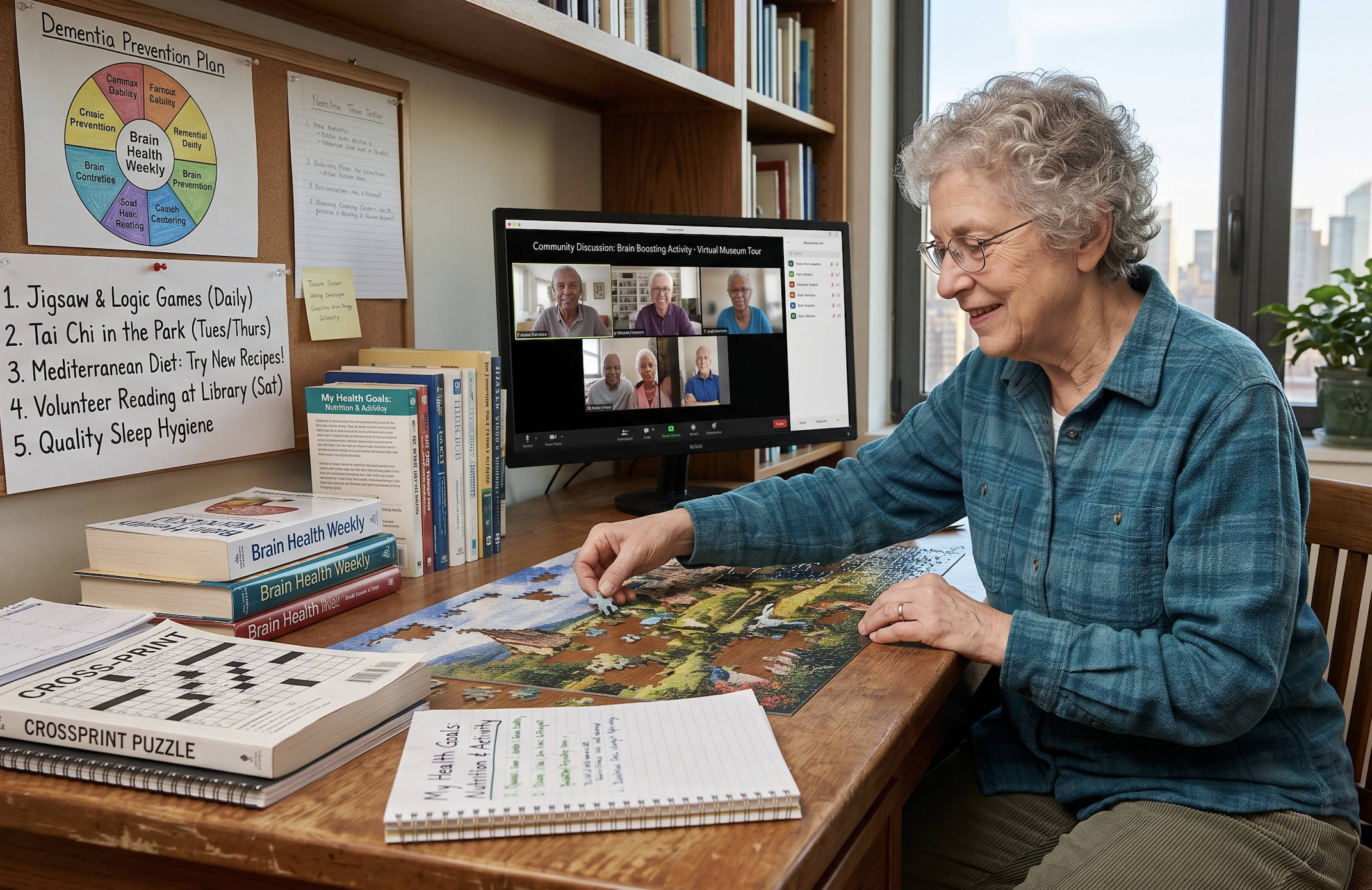
Addressing lifestyle factors early in life and keeping risk factors low over the life course may prevent dementia risk from building up over a lifetime.
Risk factors for dementia occur in early life, mid-life, and later life. There are protective measures that can be taken at each stage of life to prevent or delay the impacts of dementia.
In early life, evidence indicates that less education is a risk factor. Good quality education for all and cognitively stimulating activity at every age may protect cognition.
In mid-life, preventing or treating hearing loss, high LDL cholesterol, depression, traumatic brain injury, physical inactivity, diabetes, smoking, hypertension, obesity, and avoiding excessive alcohol are actions you can take to prevent or delay dementia.
In later life, evidence-informed actions to prevent or delay dementia include remaining socially active and avoiding social isolation, correcting vision loss, and avoiding air pollution.
Looking after your long-term brain health not only reduces your risk of dementia – brain-healthy choices protect also protect your overall health.
Start where you can, set small goals, and get active together with a friend so you both gain the benefits.
Support to make lifestyle changes
Making and sustaining lifestyle changes is challenging for most of us.
More information can help build commitment to making change. The Wicking Dementia Centre provides an interactive, evidence-based, free online course (Preventing Dementia) that is ideal for anyone who wants to learn about preventing dementia and the modifiable risk factors for dementia.
Research into lifestyle interventions to support brain health indicates that lifestyle changes can last longer and be made more effective when combined within programs that are tailored to address diet, exercise, heart health, cognitive challenge, and social engagement preferences, and supported by coaching.
Look for multi-component brain health programs, such as programs that combine exercise and socialization, in your local community to support lifestyle changes that protect your brain health.
After a diagnosis
Even after a diagnosis of dementia, attention to modifiable risk factors is likely to improve the quality of everyday life and may also delay worsening of dementia-related symptoms, according to ADI’s World Alzheimer Report 2025.
While rehabilitation programs for people with cognitive changes can be hard to find, evidence indicates personalized rehabilitation improves everyday functioning and extends independence.
While similar to rehabilitation, reablement refers more specifically to supporting people living with dementia to improve their overall quality of life. Reablement programs are developed in partnership with the person living with dementia with the goals of supporting everyday living activities, supporting mobility and physical function, and supporting cognition and communication.
Both rehabilitation and reablement programs have been shown to protect and preserve brain health.
What’s next
While researchers assert the potential for prevention of dementia is high, more research is needed to understand how cognitive and physical reserve develop across the life span and how this contributes to a reduction in age-related dementia incidence. Importantly, some risk factors originate at societal rather than individual levels, signalling opportunities for future risk reduction at scale.
Researchers with the Lancet Commission continue to track new hopeful evidence on dementia prevention, intervention, and care. New evidence will support an updated list of modifiable risk factors, likely in 2026. Among other factors, sleep and the impacts of hormone replacement therapy on brain health are being closely examined as potentially modifiable risk factors to protect brain health.
Take an action, make a change, pay some attention to prevention. It is never too early or too late to reduce dementia risk.

Carolyn Brandly is a PhD Candidate at the University of Victoria, Canada, with 20+ years of experience working with older adults and people living with dementia. She is also the Editor of Dementia Connections, a newsletter that shares inspiring stories, expert advice, and the latest developments in dementia care and research. Sign up for free at dementiaconnections.org.




Sign up for agebuzz’s free weekly newsletter sent every Thursday
 Subscribe